

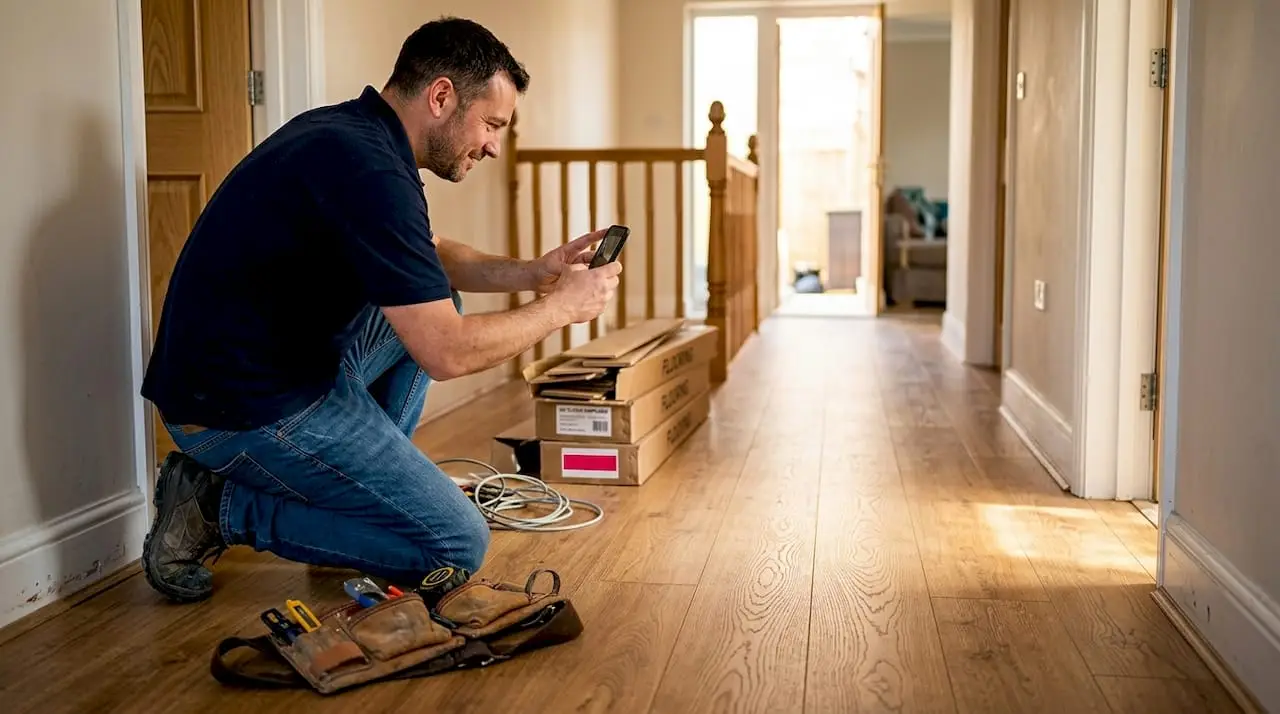
Flooring retailers and installers across the UK know that showcasing completed projects online is essential for winning new customers. Yet many struggle to present their work effectively through website photo galleries. Poor image quality, confusing navigation, and slow loading times can undermine even the most skilled craftsmanship. This article delivers practical, evidence-based tips to transform your flooring website gallery into a powerful sales tool that builds trust, demonstrates quality, and converts visitors into paying clients.
Key Takeaways
| Point | Details |
|---|---|
| Authentic project photos | Showing real installations builds credibility and boosts conversions compared with stock photography. |
| Before and after visuals | Before and after sequences demonstrate transformative impact more effectively than testimonials. |
| Encourage customer photos | Encourage customers to share their own photos to broaden authenticity and social proof. |
| Smart filtering approach | Use room based categories, flooring type filters, and overlapping tags to improve navigation and help visitors find relevant examples quickly. |
Use high-quality, authentic photos of real flooring installations
Nothing builds credibility faster than showing real completed projects. Stock images and manufacturer catalogues might look polished, but they lack the authenticity that converts browsers into buyers. Flooring contractors using structured portfolios close 45% more high-value projects because potential customers can see exactly what you deliver.
Photograph every project you complete, capturing multiple angles and lighting conditions. Before-and-after sequences prove your transformative impact better than any written testimonial. A tired kitchen floor replaced with gleaming LVT tells a compelling visual story that resonates with homeowners facing similar challenges.
Pro Tip: Photograph installations at different times of day to show how natural and artificial light affects appearance. This helps customers make informed choices about colour and finish.
Encourage satisfied customers to share their own photos months after installation. These authentic images provide social proof that your work stands the test of time. User-generated content also diversifies your gallery beyond your own photography style, making it feel more genuine and relatable.
Capture diverse project types to appeal to different customer segments. Residential installations differ from commercial work, and luxury projects require different presentation than budget-conscious renovations. Your gallery should reflect the full spectrum of your capabilities, helping every visitor find examples that match their specific needs and budget constraints.
“Authentic installation photos demonstrate real-world results that resonate far more powerfully than staged showroom images. They answer the customer’s fundamental question: what will this actually look like in my space?”
Organise your photo gallery for easy navigation and customer matching
A beautifully photographed gallery becomes useless if visitors cannot find relevant examples. Structure matters as much as content. Organise by flooring type and room to help client matching and reduce the time visitors spend searching for inspiration that fits their project.

Room-based categories help customers visualise flooring in their specific space. Someone renovating a bathroom wants to see moisture-resistant options installed in similar conditions, not dining room hardwood. Create distinct sections for kitchens, bathrooms, bedrooms, living areas, hallways, and commercial spaces.
Flooring type filters target customer preferences directly. Separate galleries for hardwood, engineered wood, LVT, laminate, carpet, and tiles allow visitors to focus on materials they are already considering. This focused browsing experience increases engagement and reduces bounce rates because customers quickly find what they need.
Project scale and style filters add another layer of helpful organisation. Budget-conscious customers appreciate seeing cost-effective solutions, while luxury buyers want to browse premium installations. Contemporary, traditional, and rustic style tags help match aesthetic preferences efficiently.
Pro Tip: Use multiple overlapping tags rather than rigid categories. A single project might appear in “Kitchen”, “LVT”, “Modern Style”, and “Medium Budget” filters, maximising its visibility to relevant audiences.
| Category Type | Examples | Customer Benefit |
|---|---|---|
| Room | Kitchen, bathroom, bedroom, hallway, commercial | Helps visualise flooring in their specific space |
| Material | Hardwood, LVT, laminate, carpet, tiles | Targets material preferences directly |
| Style | Contemporary, traditional, rustic, industrial | Matches aesthetic preferences |
| Budget | Economy, mid-range, premium | Sets realistic expectations |
| Feature | Underfloor heating, pattern work, restoration | Highlights specialist capabilities |
Implementing smart navigation transforms your gallery from a random collection into a targeted sales tool. Visitors spend more time exploring, view more projects, and contact you with clearer ideas about what they want. This qualified engagement leads to higher conversion rates and more profitable projects.
For more guidance on effective website structure, explore these flooring website navigation tips. If you want a comprehensive assessment of your current digital presence, request the flooring growth pack for personalised recommendations.
Optimise your images for faster loading and better SEO
Stunning photography loses its impact if pages load slowly. Optimised images reduce load times by 50-70% and boost conversions by 30% because visitors stay engaged rather than abandoning slow sites. Technical optimisation also improves search engine rankings, helping more potential customers discover your gallery.
Follow these steps to optimise every gallery image:
- Resize images to a maximum dimension of 2048×2048 pixels before uploading. Most screens cannot display larger sizes, so excess pixels waste bandwidth without improving visual quality.
- Compress files to under 200KB using WebP format or JPEG at 80-85% quality. Modern compression algorithms maintain visual fidelity while dramatically reducing file size.
- Use descriptive filenames that include relevant keywords, such as “oak-herringbone-kitchen-installation-manchester.jpg” rather than “IMG_4721.jpg”. Search engines read filenames as ranking signals.
- Add alt text to every image describing what it shows, such as “Engineered oak herringbone flooring installed in modern kitchen with underfloor heating”. Alt text improves accessibility and SEO simultaneously.
- Enable lazy loading so images only download when visitors scroll to them, speeding up initial page load dramatically.
- Implement responsive images that serve different sizes to mobile and desktop users, ensuring optimal performance across all devices.
“Fast-loading galleries keep visitors engaged and signal quality to search engines. Every second of delay costs you potential customers who expect instant access to visual content.”
Batch processing tools automate optimisation across your entire gallery. Services like TinyPNG, Squoosh, and ImageOptim compress hundreds of images quickly without manual intervention. Most modern content management systems also offer plugins that automatically optimise uploads, removing the technical burden from your workflow.
Regularly audit your gallery performance using Google PageSpeed Insights or GTmetrix. These free tools identify specific images slowing your site and provide actionable recommendations. Maintaining fast load times requires ongoing attention as you add new projects, but the conversion benefits justify the effort.
For broader strategies on visual content that drives sales, review these image optimisation techniques used in successful flooring advertising campaigns.
Enhance engagement with interactive features and customer-generated content
Static galleries serve a purpose, but interactive features transform passive browsing into active engagement. Modern web technologies enable experiences that help customers visualise flooring in their own homes, dramatically reducing purchase hesitation and increasing conversion rates.
Layout choices affect how visitors interact with your gallery. Grid or masonry layouts with 3-5 columns create visual consistency and allow quick scanning. Ensure thumbnails are large enough to show detail but small enough to display multiple options simultaneously. Mobile-responsive designs automatically adjust column counts for smaller screens, maintaining usability across devices.
Zoom and lightbox functionality let visitors examine installation details closely. A customer considering intricate parquet work needs to see joint precision and finish quality up close. Click-to-expand images with smooth transitions create a professional browsing experience that builds confidence in your attention to detail.
Pro Tip: Prioritise AR visualiser tools for moisture-resistant LVT and SPC installations in kitchens and bathrooms. These high-consideration purchases benefit most from in-context visualisation that addresses common buying hesitations about colour matching and pattern scale.
AR apps and customer photos engage users and ease visualisation, especially for complex patterns. Augmented reality tools overlay flooring options onto photos of customers’ actual rooms using their smartphone cameras. This technology removes the imagination barrier that prevents many people from committing to purchases online.
Customer-generated content adds authenticity that professional photography cannot replicate. Create simple submission forms where satisfied clients upload photos of their completed installations. Offer incentives like maintenance product discounts or entry into quarterly prize draws to encourage participation. These real-world images provide social proof and show how your work ages over time.
| Gallery Type | Features | Engagement Level | Best For |
|---|---|---|---|
| Traditional | Static images, basic categories | Low | Simple product catalogues |
| Interactive | Zoom, lightbox, advanced filters, customer uploads | Medium | Showcasing craftsmanship detail |
| AR-enabled | Room visualiser, pattern previews, interactive tools | High | Complex patterns, high-value projects |
Integrating these features requires technical expertise but delivers measurable returns. Visitors who interact with AR tools or zoom features spend 3-4 times longer on your site and convert at higher rates because they develop stronger confidence in their purchasing decisions.
Explore how comprehensive digital marketing services can help implement advanced gallery features that set your flooring business apart from competitors still relying on basic image slideshows.
Discover how Truth Digital can elevate your flooring business
Implementing these gallery optimisation tips requires time, technical knowledge, and ongoing maintenance. Truth Digital specialises in building and optimising flooring websites that showcase your craftsmanship through expertly designed photo galleries. We understand the unique challenges flooring retailers and installers face because we work exclusively with businesses like yours.
Our flooring website development services create fast-loading, mobile-responsive galleries with advanced filtering and interactive features that convert visitors into customers. We handle technical optimisation, implement AR visualisation tools, and design intuitive navigation that helps potential clients find relevant project examples quickly.
Beyond websites, our email marketing for flooring businesses nurtures leads by showcasing your latest installations directly to interested prospects. Combined with our flooring SEO services, we ensure your gallery reaches customers actively searching for flooring solutions in your area. Partner with Truth Digital to transform your online presence and grow your flooring business through strategic digital marketing.
Frequently asked questions
How can I encourage customers to submit photos for my gallery?
Offer incentives like discounts on future services or maintenance products to motivate submissions. Create simple upload forms directly on your website rather than requiring email attachments, reducing friction in the submission process. Run quarterly contests where the best customer photo wins a prize, generating ongoing engagement. Feature submitted photos prominently with customer names and locations to provide recognition that encourages others to participate.
What is the ideal number of images per project in my gallery?
Use 8-12 images per project showing multiple angles, close-up details, and context shots that tell a complete story. Always include before-and-after pairs to highlight the transformation your work delivers. Capture wide shots showing the entire room, medium shots focusing on the flooring itself, and close-ups revealing craftsmanship details like joints and transitions. This variety helps customers understand both the overall impact and the quality of your installation work.
How do I optimise image files for faster website loading?
Resize images to a maximum of 2048×2048 pixels and compress them to under 200KB using WebP or JPEG format at 80-85% quality. Use descriptive filenames that include relevant keywords rather than generic camera-generated names. Add alt text to every image describing what it shows for both SEO and accessibility benefits. Enable lazy loading so images only download when visitors scroll to them, dramatically improving initial page load speed. For comprehensive guidance, review these website image optimisation tips.
Are augmented reality tools worth integrating into a flooring website?
Yes, AR visualisation tools help customers see how flooring options look in their actual spaces, removing the imagination barrier that prevents online purchases. They prove especially valuable for complex patterns like herringbone or chevron where scale and orientation significantly affect appearance. AR tools particularly benefit moisture-resistant LVT and SPC sales in kitchens and bathrooms where customers worry about colour matching with existing fixtures. The increased engagement and conversion rates typically justify the implementation investment within months.