

TL;DR:
- Effective wood flooring digital advertising requires targeting the right audience, using compelling messages, and building trust through credibility. AI-driven targeting and a strong organic presence improve lead quality and reduce wasted ad spend. Success depends on aligning team practices with marketing promises and fixing foundational website and reputation issues first.
Most flooring businesses treat digital advertising as a switch you turn on and off. Run some Google Ads, post on Instagram, wait for the phone to ring. That thinking is exactly why so many campaigns underperform. Wood flooring digital advertising is a specific discipline. It requires knowing which channels reach buyers who are actually ready to spend, what messages convert browsers into enquiries, and how your website and reputation reinforce every pound you put into paid media. This guide covers all of it, with no filler and no generic advice.
What is wood flooring digital advertising?
Wood flooring digital advertising is the practice of using online channels, paid and organic, to attract, engage, and convert customers who are looking to buy, install, or renovate with wood flooring products. It spans Google Ads, Meta campaigns, display retargeting, email, and local search. But the channel is only part of the picture.
The real distinction between effective and ineffective campaigns comes down to audience and message. Wood flooring buyers are not the same as people shopping for carpet or LVT. They tend to have higher budgets, longer decision timelines, and specific concerns around durability, finish, and installation quality. Your advertising needs to reflect that.
The main channels worth your attention:
- Google Search Ads — capture buyers actively searching for wood flooring near them
- Meta (Facebook and Instagram) — reach homeowners in renovation mode with visual content
- Display and retargeting — re-engage visitors who viewed your products but did not enquire
- Google Business Profile — drive local leads organically through reviews and project photos
- Email marketing — nurture previous enquiries and past customers for repeat business
Messaging matters as much as placement. Wood flooring buyers respond to value, quality signals, and longevity. Phrases like “lasts a lifetime with proper care” or “refinish rather than replace” speak directly to what justifies the premium price. Pair that with a clear, frictionless call to action. Simplified booking forms in your ads reduce friction and speed up lead conversion, so do not make people hunt for your contact details.
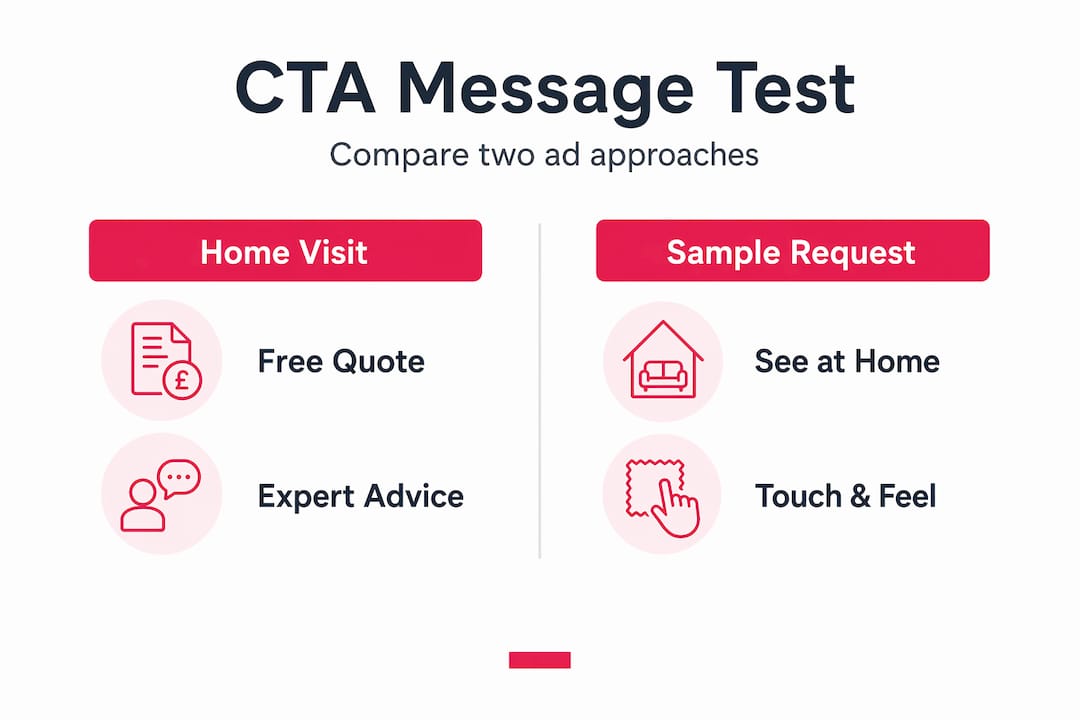
Pro Tip: Test two versions of your call to action. One focused on a free home visit, one on requesting a sample. Wood flooring buyers often want to see the product before committing, and a sample request can outperform a generic “get a quote” prompt.
AI and data-driven targeting for flooring ads
Broad keyword targeting is the most common waste of ad spend in wood flooring marketing. Ranking for “wood flooring” sounds appealing until you realise you are paying to reach people who are researching general options, not ready to buy.
This is where AI targeting changes the economics. AI-powered flooring ads that target buyers who are financially ready to purchase consistently outperform campaigns aimed at general inspiration or browsing audiences. The AI analyses signals including real estate activity, recent home searches, credit behaviour, and browsing patterns to identify homeowners who are actively in a renovation or purchase decision.
“Smart flooring ads combine AI-driven targeting with trust-building organic elements to sustainably grow the sales pipeline.” — Flooring advertising ideas: winning strategies for 2025
In practical terms, this means your campaigns stop spending money on people who are five years away from a flooring decision. Instead, your ads appear in front of someone who just moved into a new home, is actively comparing products, and has the budget to act now. That shift alone can dramatically improve your cost per lead.
Real-time CRM integration takes this further. When a lead comes in through your ad, your CRM can immediately categorise it by product interest, budget range, and location. Your sales team then follows up with relevant information rather than a cold, generic pitch. If you want to understand how to build this kind of system, read more about AI in flooring marketing and how it generates qualified pipeline at scale.

The data story also includes flooring buyer research which increasingly starts online. Digital content is not supplementary to your sales process. It is the first stage of it.
Building a trustworthy digital presence
Paid ads get attention. Trust converts it. The businesses winning the most wood flooring enquiries online are not just outspending competitors. They are building credibility at every touchpoint.
Here is how to do it properly:
Optimise your Google Business Profile. Add high-quality project photos regularly. Respond to every review, positive or negative. Update your hours, service areas, and product categories. Organic trust-building through a well-maintained Google Business Profile often outperforms paid campaigns for generating local leads.
Build a before-and-after gallery. Nothing sells wood flooring faster than seeing a tired, dated room transformed. Use real projects, not stock photography. Customers recognise authenticity immediately.
Create helpful content. Write short guides on caring for engineered hardwood, choosing the right finish for a busy family home, or what to expect during installation. This content builds organic search visibility and positions your business as an authority. It also keeps people on your website longer, which improves your ad quality scores.
Audit your website for conversion. A slow website or a poorly laid out enquiry form will kill campaign performance regardless of how good your ads are. Make sure your site loads quickly on mobile, your phone number is prominent, and your contact form takes less than 60 seconds to complete.
Pro Tip: Ask every satisfied customer to leave a Google review within 24 hours of job completion. The timing matters. Send them a direct link to your review page by text message. Conversion rates on review requests are significantly higher when sent within a day of the install.
Marketing wood flooring products specifically
Wood flooring is not a commodity product. The way you talk about it in your advertising needs to reflect that. Generic “buy now” messaging does not work here. Buyers are making a long-term investment, and they know it.
Here is a comparison of how to frame common wood flooring selling points in digital advertising:
| Customer concern | Weak ad message | Strong ad message |
|---|---|---|
| Longevity | “Quality wood floors” | “Engineered to last 30+ years and be refinished” |
| Climate suitability | “Suits all homes” | “Multi-ply core prevents warping in central heating” |
| Value for money | “Competitive prices” | “Costs less than replacing carpet every 8 years” |
| Appearance | “Beautiful finishes” | “See how it looks in real homes, not showroom lighting” |
Engineered hardwood is preferred for modern homes because its multi-ply core prevents warping in climates with variable humidity and central heating. That is a genuine selling point. Advertise it plainly. Customers who understand the engineering are more confident buyers, and more confident buyers convert faster.
Visual content is your most persuasive tool. Video ads showing craftsmanship during wood flooring installations achieve higher conversion rates because they reassure homeowners about the quality and longevity of the work. A 30-second clip of a skilled fitter laying herringbone oak in a Victorian terrace tells a story that no headline can match.
One more point worth taking seriously: accuracy in your product descriptions matters legally. Under the Digital Markets Act 2024, retailers face penalties of up to 10% of global turnover for misleading terms such as using “solid” to describe engineered or composite flooring. Advertise accurately.
If you want to see what effective wood flooring ad formats look like in practice, browse flooring ad examples that have demonstrably improved online enquiries.
Aligning your team with your digital ad promises
You can run the most targeted, well-crafted digital campaign in your sector and still lose customers if what you promise online does not match what happens after someone calls. This is one of the most underrated problems in wood flooring marketing.
Mismatch between ads and actual service delivery markedly reduces digital advertising effectiveness. A customer who books a survey after clicking your ad and is then told the earliest slot is six weeks away will leave a bad review, not a good one.
To avoid this, focus on a few practical areas:
- Brief your showroom staff on what your current ads are saying. If your campaign promotes a spring offer or a specific product range, your team needs to know about it before the calls come in.
- Match your advertised turnaround times to reality. If your fitters are booked out, adjust the messaging before you scale ad spend.
- Review your digital campaign messages in team meetings. Treat campaign promises as service commitments, not just marketing copy.
- Internal marketing alignment between sales, showroom staff, and installers is often the difference between a campaign that delivers ROI and one that generates complaints.
Digital advertising drives the lead. Your team closes it. Both sides need to be working from the same script.
My honest take after working in this niche
I have worked with flooring businesses across the UK, and the pattern I see repeatedly is this: companies invest in ads before they have fixed the fundamentals. Their Google Business Profile is incomplete. Their website loads slowly on mobile. Their showroom staff do not know what the current campaign is promoting. Then they wonder why the cost per lead is high.
In my experience, the flooring businesses that get the best results from paid advertising are the ones that have done the organic groundwork first. Reviews, project photos, helpful content, a fast website. These are not optional extras. They make every paid click more likely to convert.
I also think the industry underestimates AI targeting. Most campaigns I see are still running on broad match keywords and hoping for the best. The businesses moving to intent-based and behaviour-based audience signals are seeing real improvements in lead quality. Not volume, quality.
The uncomfortable truth is that there is no shortcut here. Wood flooring digital advertising works when you treat it as a system, not a switch. Channel strategy, audience targeting, trust signals, product messaging, and internal team alignment all have to work together. Fix one part while ignoring the others and you will always be chasing your tail.
My advice: start with an honest audit. Where are you losing potential customers right now? The answer is usually in the basics, not the advanced tactics.
— John
Want better leads from your wood flooring marketing?
At Truthdigital, we work exclusively with flooring businesses. That means we understand wood flooring buyers, the products you sell, and the questions your customers ask before they spend. We do not apply generic agency templates to your campaigns.
We manage SEO for flooring businesses and run Google Ads for flooring companies that are built around buyer intent, not broad traffic. Whether you want to improve your organic rankings, launch a targeted paid campaign, or both, we can put a plan together that fits your business. If you want a practical assessment of where your current digital marketing for flooring stands and what would move the needle, get in touch with the Truthdigital team today.
FAQ
What is wood flooring digital advertising?
Wood flooring digital advertising is the use of paid and organic online channels, including Google Ads, Meta campaigns, and local search, to attract buyers who are actively researching or ready to purchase wood flooring products and services.
Which digital channels work best for wood flooring?
Google Search Ads consistently deliver the highest-intent leads for wood flooring, while Google Business Profile optimisation generates strong local enquiries without ongoing ad spend. A combination of both typically performs best.
How does AI improve wood flooring ad campaigns?
AI analyses browsing behaviour, real estate activity, and financial signals to identify homeowners ready to buy. This removes low-intent audiences from your targeting and improves both lead quality and return on ad spend.
What should wood flooring ads focus on?
Effective wood flooring ads focus on longevity, climate suitability, refinishing benefits, and visual proof through project photography or video. Generic quality claims are less persuasive than specific, product-grounded messages.
Do you need a good website for wood flooring ads to work?
Yes. A slow or poorly designed website will undermine even the best-targeted campaigns. Fast load times, mobile usability, and a simple enquiry process are all required for paid traffic to convert into genuine leads.