Most flooring retailers believe a great showroom and competitive pricing guarantee sales. Yet many overlook the digital touchpoints that shape customer decisions long before anyone steps through your door. Your website, Google Ads, social media, and email interactions create the first impression and guide potential buyers through their journey. This guide reveals how to recognise and optimise these touchpoints to increase engagement and sales. You will learn practical digital strategies tailored for flooring retailers and installers across the UK, helping you capture more enquiries and convert browsers into buyers.
Key Takeaways
| Point | Details |
|---|---|
| Digital touchpoints shape journey | Your website, Google Ads, social media and email interactions create the first impression and guide potential buyers through their journey. |
| Multiple channels create cohesion | A coordinated mix of online channels delivers the seamless experience customers expect from flooring retailers. |
| Optimising touchpoints boosts enquiries | Improving digital touchpoints across your site and campaigns can increase enquiries and sales. |
| Key engagement tools | SEO, Google Ads and email marketing are essential tools for engaging potential customers. |
Understanding digital touchpoints in flooring
Digital touchpoints are the online interactions that influence customer decision making in flooring. These include your website, social media profiles, Google Ads, organic search results, email newsletters, and live chat features. Each touchpoint represents an opportunity to inform, persuade, or reassure potential customers as they research flooring options.
Customers use these touchpoints to compare products, read reviews, check pricing, and evaluate your expertise. Someone searching for luxury vinyl tile might first encounter your Google Ad, then visit your website to browse product galleries, and finally subscribe to your email list for special offers. Each interaction shapes their perception of your business and influences whether they choose to contact you.
For flooring retailers and installers, managing these touchpoints is critical for customer experience. A slow website or outdated product information creates friction and sends potential buyers to competitors. Conversely, a well optimised digital presence with clear calls to action and helpful content builds confidence and drives enquiries.
Key digital channels for flooring businesses include your main website, Google Ads campaigns targeting local searches, search engine optimisation to appear in organic results, email marketing to nurture leads, and social media to showcase completed projects. Each channel serves a distinct purpose in the customer journey.
Pro tip: Regularly review and update your main digital touchpoints to reflect product offers and customer questions. Audit your website quarterly to ensure service pages, contact details, and product catalogues remain current and relevant.
- Your website acts as the central hub where customers learn about your services and products
- Google Ads capture high intent searches from people actively looking for flooring solutions
- SEO builds long term visibility and attracts customers researching flooring options
- Email marketing keeps your business top of mind and promotes special offers
- Social media demonstrates your craftsmanship through project photos and customer testimonials
How digital touchpoints shape the customer journey
The customer journey for flooring buyers unfolds across distinct stages: awareness, consideration, decision, and post purchase. Digital touchpoints influence each stage differently, guiding customers from initial curiosity to final purchase and beyond.
During awareness, potential customers discover your business through Google Ads, social media posts, or organic search results. They might be researching “best flooring for kitchens” or “carpet vs LVT pros and cons.” Your content and visibility at this stage determine whether you enter their consideration set.
In the consideration stage, customers compare options and evaluate suppliers. They visit your website to review product ranges, read case studies, and check customer testimonials. Email newsletters showcasing recent projects or special offers keep your business visible as they narrow their choices.

The decision stage involves direct contact and quote requests. Live chat features, contact forms, and phone calls become the critical touchpoints. Clear pricing information, detailed product specifications, and easy booking systems reduce friction and encourage customers to commit.
Post purchase touchpoints maintain relationships and encourage repeat business. Follow up emails, satisfaction surveys, and maintenance tips demonstrate ongoing support. These interactions generate reviews, referrals, and future sales opportunities.
| Journey stage | Key touchpoints | Customer needs | Your goal |
|---|---|---|---|
| Awareness | Google Ads, social media, blog content | Discover options and gather information | Build visibility and credibility |
| Consideration | Website product pages, email newsletters, reviews | Compare suppliers and evaluate quality | Demonstrate expertise and value |
| Decision | Contact forms, live chat, phone calls | Request quotes and finalise choices | Make enquiry process simple and fast |
| Post purchase | Follow up emails, surveys, maintenance guides | Receive support and share feedback | Encourage reviews and repeat business |
- A homeowner searches “engineered wood flooring installers near me” and clicks your Google Ad
- They land on your website and browse product galleries showcasing recent installations
- They subscribe to your email list to receive a free flooring care guide
- Two weeks later, an email promotion prompts them to request a quote via your contact form
- After installation, a follow up email asks for a review and offers a referral discount
Seamless transition between stages requires consistent messaging and accessible channels. Your Google Ad promise must match your website content. Your email tone should align with your social media voice. Customers expect a unified experience, and inconsistencies erode trust.
Measuring and optimising your flooring digital touchpoints
Tracking digital touchpoint performance reveals which channels drive enquiries and sales. Key metrics include website traffic, click through rates on ads, conversion rates from contact forms, and cost per lead. These numbers show where your marketing budget delivers the best return.
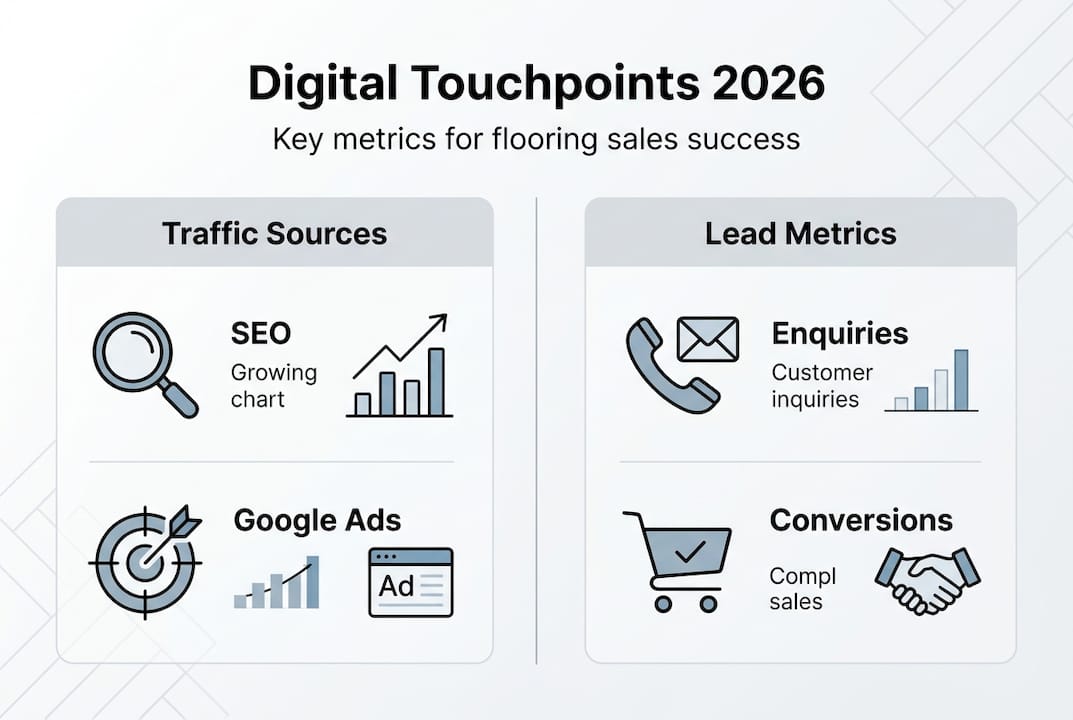
Google Analytics tracks website visitors, their behaviour, and which pages generate the most enquiries. You can see which traffic sources bring the highest quality leads. Call tracking systems assign unique phone numbers to different marketing channels, revealing whether enquiries originate from Google Ads, organic search, or email campaigns.
Tracking and optimisation of digital touchpoints significantly improve lead conversion. Regular analysis identifies underperforming channels that need refinement or reallocation of budget. It also highlights successful tactics worth expanding.
Steps to optimise based on data insights start with establishing baseline metrics for each touchpoint. Monitor performance weekly or monthly to spot trends. Test changes to ad copy, website layouts, or email subject lines to see what improves results. Implement winners and discard losers systematically.
Pro tip: Use call tracking to identify which digital touchpoints lead to actual enquiries and sales. This data reveals the true value of each channel beyond website clicks, helping you invest in tactics that generate real business.
- Improve SEO by updating service pages with location specific keywords and fresh content
- Refine ads by testing different headlines, descriptions, and landing pages to boost click through rates
- Update website content regularly with new project photos, customer reviews, and product information
- Optimise email campaigns by segmenting your list and personalising messages based on customer interests
- Enhance mobile experience by ensuring your website loads quickly and forms work smoothly on smartphones
- Simplify contact processes by reducing form fields and offering multiple ways to get in touch
- Add live chat to answer questions instantly and capture leads outside business hours
Regular optimisation creates a continuous improvement cycle. Small changes compound over time, gradually increasing the effectiveness of every digital touchpoint. Businesses that measure and refine consistently outperform those that set and forget their digital marketing.
Best digital touchpoint strategies for flooring retailers in the UK
Top tactics for flooring businesses include search engine optimisation, Google Ads, email marketing, and website optimisation. Each strategy addresses different customer needs and stages of the buying journey. Integrated approaches combining these tactics deliver the strongest results.
SEO builds long term visibility by improving your rankings for searches like “carpet fitters in Manchester” or “luxury vinyl tile suppliers.” It attracts customers actively researching flooring options. Google Ads capture high intent searches immediately, placing your business at the top of results for competitive keywords. Email marketing nurtures leads over time, keeping your business visible until customers are ready to buy. Website optimisation ensures visitors have a smooth experience that encourages enquiries.
| Strategy | Key benefits | Typical costs | Best use cases |
|---|---|---|---|
| SEO | Long term visibility, organic traffic, builds authority | £800-£2000/month | Attracting local customers researching flooring options |
| Google Ads | Immediate visibility, high intent leads, measurable ROI | £500-£3000/month ad spend | Capturing customers ready to request quotes or book consultations |
| Email marketing | Nurtures leads, promotes offers, builds relationships | £200-£600/month | Staying top of mind with past enquirers and existing customers |
| Website optimisation | Improves conversions, enhances user experience, reduces bounce rates | £1500-£5000 one time | Ensuring visitors can easily find information and contact you |
Consistent branding across all touchpoints reinforces your business identity and builds recognition. Your logo, colour scheme, and messaging should remain uniform whether customers encounter you through Google Ads, your website, or social media. Fast website performance is non negotiable. Pages that load in under three seconds keep visitors engaged, while slow sites drive potential customers to competitors.
Flooring businesses successfully using digital touchpoints to increase leads often combine local SEO with targeted Google Ads campaigns. They create service pages optimised for specific flooring types and locations, then drive traffic through paid search. Email campaigns showcase recent projects and seasonal promotions, converting past enquirers into buyers.
- Align your Google Ads landing pages with ad copy to maintain message consistency and improve quality scores
- Use SEO strategies to target long tail keywords like “eco friendly carpet installation in Bristol”
- Segment email lists by customer interests, sending LVT content to those who browsed vinyl products
- Implement schema markup on your website to enhance search result snippets with ratings and contact details
- Create dedicated landing pages for Google Ads campaigns to improve conversion rates
- Leverage email marketing to re engage past enquirers with new product launches or special offers
- Optimise your Google Business Profile with current photos, accurate hours, and prompt review responses
Integrating these strategies creates a unified customer experience. Someone clicking your Google Ad should land on a relevant page with clear next steps. Email subscribers should recognise your brand immediately. Every touchpoint should reinforce your expertise and make contacting you effortless.
Discover expert digital services to transform your flooring business
Understanding digital touchpoints is the first step. Implementing effective strategies requires expertise, time, and ongoing optimisation. Truth Digital specialises in helping flooring retailers and installers across the UK maximise their online presence and generate more enquiries through tailored digital marketing.
Our team creates high performing websites, manages Google Ads campaigns, and implements SEO strategies designed specifically for the flooring industry. We understand your customers, your market, and the digital touchpoints that drive real business results.
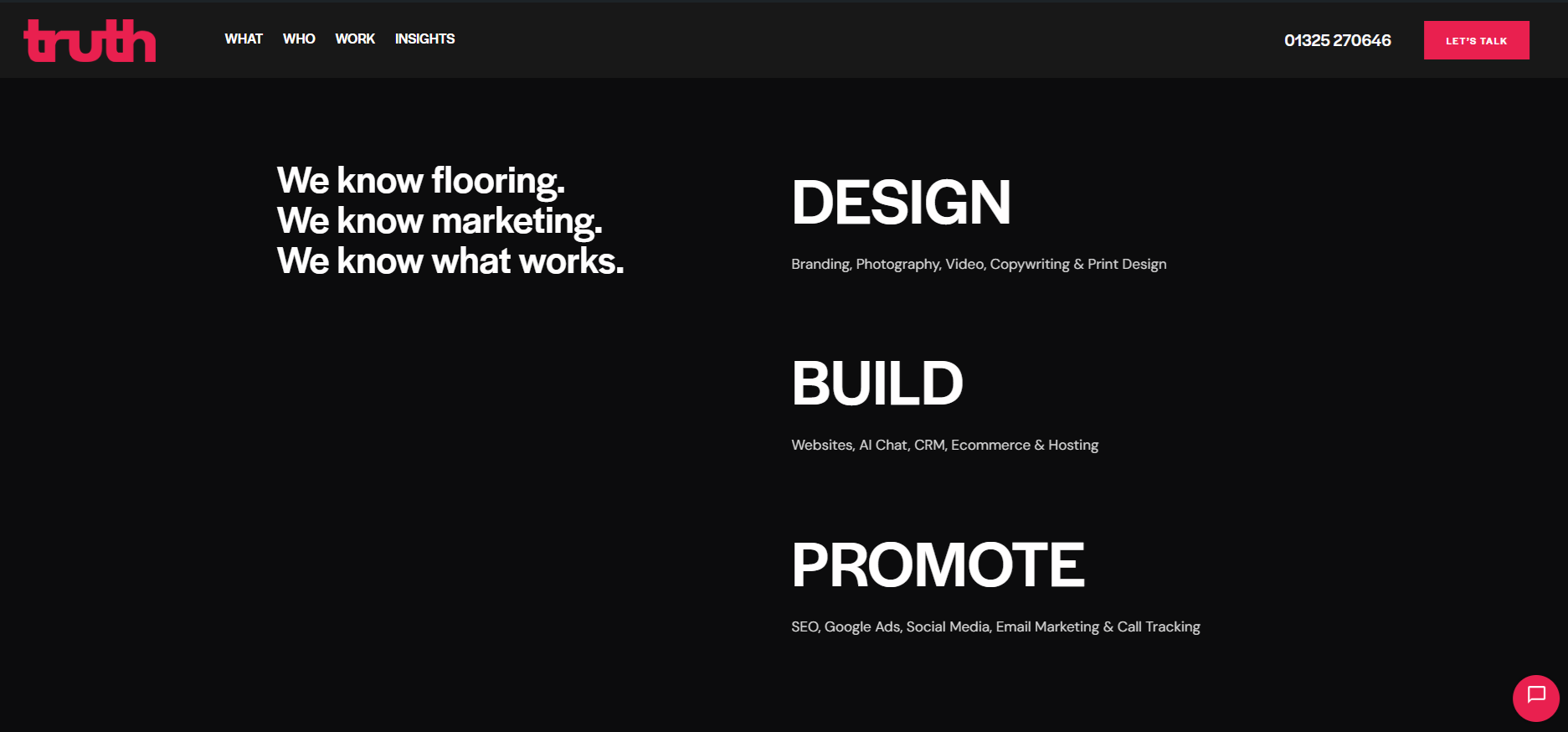
Partner with professionals who know flooring digital marketing inside out. From design services that showcase your products beautifully to SEO strategies that boost your local visibility, we handle the technical details while you focus on serving customers. Our Google Ads management delivers qualified leads ready to request quotes. Take the next step to transform your digital touchpoints and grow your flooring business.
Frequently asked questions
What are digital touchpoints in flooring?
Digital touchpoints are online interactions like websites, ads, social media, and emails that influence customer decisions. They shape the customer’s experience and journey in choosing flooring products. Each touchpoint provides information, builds trust, or prompts action throughout the buying process.
How can I track the effectiveness of my digital touchpoints?
Use tools like Google Analytics and call tracking to measure website traffic and lead sources. Regularly review metrics such as conversion rates and click through rates to assess effectiveness. Set up goals in Analytics to track form submissions, phone calls, and other valuable actions that indicate touchpoint success.
Which digital channel works best for flooring businesses?
No one channel is best; a mix of SEO, Google Ads, and email marketing drives the best results. Consistency across channels enhances customer trust and engagement. SEO builds long term visibility, Google Ads captures immediate demand, and email nurtures leads over time.
What common mistakes should flooring businesses avoid with digital touchpoints?
Ignoring mobile optimisation and slow website speed reduces engagement significantly. Neglecting to update content regularly and not tracking touchpoint performance wastes marketing budget. Failing to integrate channels leads to disjointed customer experiences that erode trust and reduce conversion rates.