
TL;DR:
- Successful flooring rebrands are rooted in thorough customer research and consistent messaging that connects the old and new identities.
- Brands like Tapi and Shaw Floors demonstrate that trust and genuine storytelling, supported by data, drive market recognition and customer loyalty.
Rebranding a flooring business is one of the highest-stakes decisions you can make. Get it right and you earn fresh customer loyalty, higher enquiry volumes, and a stronger market position. Get it wrong and you risk alienating the customers who built your reputation in the first place. The UK flooring market is crowded, competitive, and increasingly driven by online discovery. Standing out takes more than a new logo. This article breaks down real-world rebranding examples from the flooring sector, highlights the patterns that drove success, and gives you a practical framework to avoid costly mistakes.
Key Takeaways
| Point | Details |
|---|---|
| Put customers first | Successful rebranding starts with genuine research into your current clients’ opinions and needs. |
| Tell your brand story | Heritage, values, and authenticity connect with audiences more deeply than visuals alone ever can. |
| Unify, don’t confuse | Consistent logos, messaging and experiences across platforms boost trust and recognition. |
| Change at the right pace | Phased updates help avoid sudden market backlash and allow smoother stakeholder adjustment. |
| Learn from mistakes | Avoid common pitfalls by testing messaging changes before launch and keeping loyal customers informed. |
What makes a rebrand succeed or fail in flooring?
Most flooring rebrands fail for the same reasons. They start with aesthetics rather than strategy. A new colour palette arrives before anyone has spoken to a single existing customer. Messaging shifts abruptly, leaving loyal clients confused and competitors better positioned.
Brand strategy missteps often stem from poor customer understanding and lack of continuity. That pattern plays out across the flooring industry repeatedly. The businesses that avoid it share a common approach: they research before they redesign.
Successful rebrands in flooring share three core ingredients:
- Customer research conducted before any visual changes begin
- Consistent messaging rolled out across every touchpoint simultaneously
- A clear story that connects the old identity to the new one
Getting your branding essentials right from the outset means understanding what your current customers value most. That insight shapes everything else.
Timing matters too. A rebrand launched during a company crisis lands differently from one launched during a period of growth. Customers read context. If your new identity arrives alongside service disruption, they will associate the two.
Pro Tip: Before changing anything visible, survey your ten most loyal customers. Ask what three words they would use to describe your business. Their answers often reveal the brand story you have been sitting on for years.
Your digital branding guide strategy and your visual identity tips should both flow from that foundational research stage, not the other way around.
Tapi: Using trust and customer voice to rocket from challenger to leader
Tapi Carpets & Floors entered a market dominated by larger, more established retailers. Rather than trying to outspend them, Tapi did something smarter. They let their customers do the talking.
The campaign centred on real Trustpilot reviews, brought to life through a creative concept involving animated talking shoes. Every media touchpoint, from TV to social to in-store, used authentic customer language rather than polished marketing copy.
Tapi ran the largest-ever UK flooring brand campaign using authentic customer language and ‘talking shoes’ creative, aiming for mainstream trust and market leadership. The results were significant.
| Metric | Before campaign | After campaign |
|---|---|---|
| Brand awareness (national) | Challenger tier | Mainstream recognition |
| Trust score visibility | Low public profile | Front-of-mind among buyers |
| Media scale | Regional presence | Largest flooring brand campaign in UK history |
| Creative format | Standard retail ads | Customer-generated language and storytelling |
What made this work was not the creative format alone. It was the strategic decision to prioritise earned credibility over claimed credibility.
Key takeaways from the Tapi case:
- Aggregate your best customer reviews and look for recurring language
- Use that language in your marketing rather than internal copywriting
- Apply the same tone consistently across all channels
- Trust-based campaigns perform better over time than one-off product promotions
“The most powerful thing Tapi did was resist the urge to control the message. They handed the creative brief to their customers and built a campaign around it. That takes confidence.”
Pro Tip: Start collecting tagged reviews by service type (carpet fitting, LVT installation, sanding) so you can use specific social proof at each stage of the buying journey. This is how you boost brand awareness with evidence rather than assertion.
WFCA: Unifying multiple brands under one identity
The World Floor Covering Association presents a very different rebranding challenge. Rather than refreshing a single consumer-facing identity, WFCA needed to consolidate several sub-brands and entities into one coherent system.
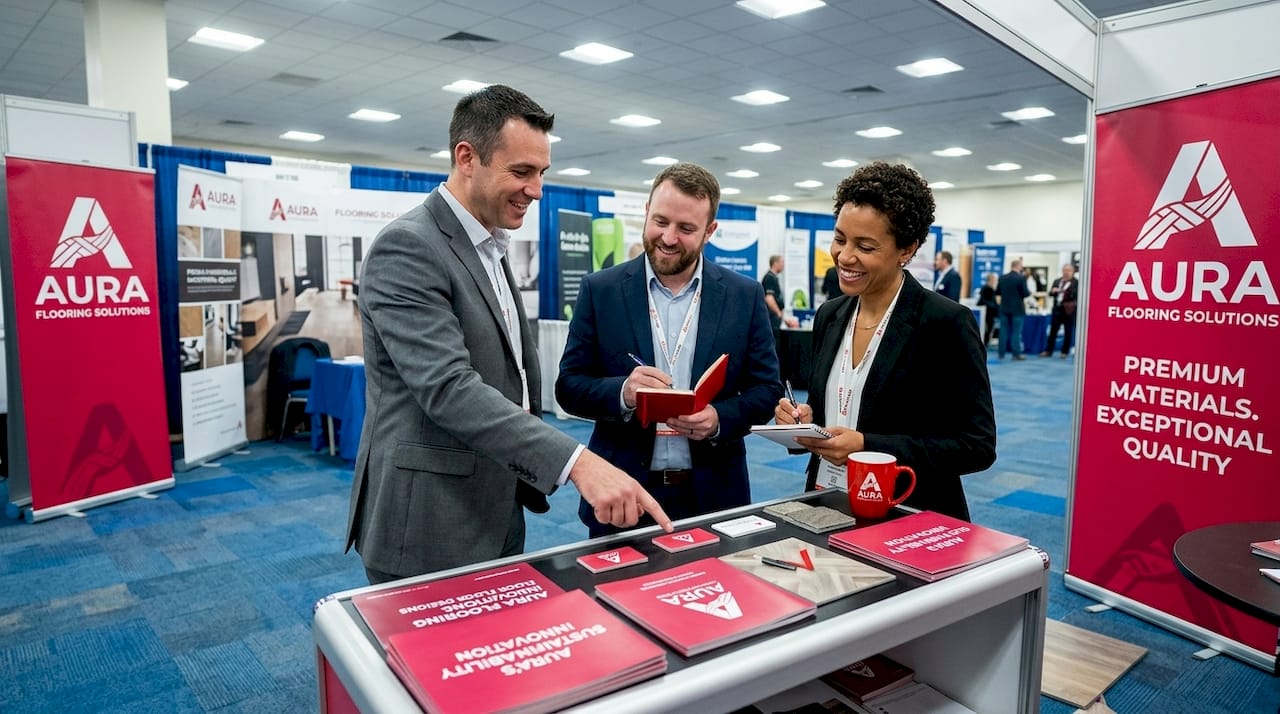
This type of rebrand is as much an internal challenge as an external one. Staff, partners, suppliers, and event organisers all needed to operate under the same visual and messaging framework simultaneously.
WFCA unified its brand, updated logos, and rolled out changes across digital, print, and events to reinforce a single, recognisable identity. The phased approach was central to making it work without causing confusion.
| Approach | Without phased rollout | With phased rollout |
|---|---|---|
| Partner clarity | Conflicting materials in circulation | Single, consistent visual language |
| Staff adoption | Inconsistent usage | Guided transition with clear timelines |
| Customer perception | Brand fragmentation | Stronger unified positioning |
| Digital consistency | Multiple outdated assets online | Coordinated updates across all channels |
The lessons here apply directly to flooring businesses that have expanded through acquisition, launched sub-brands for commercial versus domestic services, or operate across multiple locations under loosely connected identities.
Key actions WFCA took that you can replicate:
- Audited all existing brand assets before creating new ones
- Created a brand guidelines document shared with all stakeholders
- Prioritised digital updates first, then print and events
- Communicated the “why” behind the rebrand to partners and members
Understanding graphic design in branding is not just about looking professional. It is about ensuring that every touchpoint reinforces the same story. When a customer sees your van, your website, and your invoice, they should all feel like they come from the same business.
Flooring businesses evaluating their materials and finishes during a rebrand may also find it useful to review how product choices map to brand positioning. Just as hardwood and epoxy floors communicate different values to buyers, your brand identity communicates something specific about the kind of business you are.
Shaw Floors: Research-led refresh with consumer insight at its heart
Shaw Floors is one of the most instructive examples in flooring rebranding because their approach was unusually rigorous. They did not rely on trends, competitor observation, or internal preference. They commissioned detailed consumer research first.
Shaw Floors based its latest rebrand on comprehensive consumer research, aiming for sharper distinction and improved customer experience in products, messaging, and website. The findings surprised even the internal team.
Consumers placed far more value on lifestyle aspiration than product specification. They wanted to see how flooring fitted into real homes, real rooms, and real lives rather than reading technical comparisons. This insight reshaped not just the visual identity but the entire content strategy.
What changed as a direct result of the research:
- Website imagery shifted from product close-ups to room-based lifestyle photography
- Product naming and descriptions were simplified to reflect how customers actually speak
- In-store displays were redesigned around room vignettes rather than sample boards
- Staff training incorporated the new messaging framework so every conversation felt consistent
The quick wins came within weeks. Engagement metrics on the redesigned website improved significantly. Long-term, the brand recognition improvements were more durable because they were built on genuine insight rather than guesswork.
Pro Tip: If formal research feels out of reach financially, run a simple four-question survey through your email list or social channels. Ask how customers describe your business to a friend, what they value most, what nearly stopped them buying, and what they wish you offered. Four questions, honest answers, and you have the foundation for a credible rebrand.
Flooring businesses thinking about their broader content strategy will find drip marketing insights useful here. A rebrand is not a single announcement; it is a series of touchpoints that gradually shift perception. Your digital marketing guide should reflect the new identity consistently at every stage.
One aspect often overlooked during a rebrand is how your existing service quality communicates brand values. Showcasing skilled work such as the benefits of professional floor refinishing can reinforce a premium positioning far more effectively than updated typography alone.
Ajax Flooring: Building market trust through narrative, not just logos
Ajax Flooring provides a compelling example of how heritage and storytelling can anchor a rebrand. Established businesses sometimes feel pressure to appear modern by discarding their history. Ajax took the opposite approach.
The company’s name traces back to HMS Ajax, a Royal Navy vessel with a strong record of service. Rather than treating this as irrelevant backstory, Ajax wove it into their brand narrative. It became a signal of reliability, longevity, and trustworthiness. Qualities that matter enormously in a sector where customers are inviting tradespeople into their homes.
Ajax Flooring’s rebrand woven around service history, company name, and heritage narrative created lasting market trust and customer selection. Their case shows what happens when a visual refresh is supported by a genuine story.
Key elements of narrative-led rebranding:
- Identify the authentic story behind your business name, founding, or specialism
- Connect that story to a customer benefit rather than leaving it as pure history
- Use the narrative consistently across all written and visual communications
- Train staff to tell the story naturally in sales conversations and consultations
“Customers do not just buy flooring. They buy confidence in the person fitting it and the business standing behind it. Heritage narrative is a shortcut to that confidence.”
Narrative-led rebranding also feeds directly into your marketing funnels. A strong origin story works at the awareness stage, where customers are comparing businesses they know little about. It helps you stand out without discounting or competing purely on price.
Lessons from failed rebranding: What flooring brands should avoid
The case studies above show what works. But the flooring sector also offers cautionary examples. Rebrands that ignore loyal customer identity or move too fast risk backlash and loss of credibility. Learning from those failures is just as valuable as studying the successes.
The most common triggers for a failed flooring rebrand are:
- Changing the name or logo without explaining why
- Dropping heritage cues that loyal customers associate with quality and trust
- Moving too quickly from announcement to full rollout without a transition period
- Launching a new visual identity without updating the website, social profiles, and signage simultaneously
- Failing to brief staff before the public launch, resulting in inconsistent communication
- Prioritising what the owners prefer over what the customers actually respond to
A practical rebrand checklist to reduce risk:
- Complete customer and competitor research before any design work begins
- Define your brand values in plain language and test them with real customers
- Create a phased rollout plan with clear milestones and ownership
- Update all digital assets before or simultaneously with offline materials
- Brief staff first, customers second, and the wider market third
- Set measurable goals: enquiry rate, trust scores, return visits, time on site
Pro Tip: Use your visual identity in rebranding process as an opportunity to audit every customer touchpoint. Many flooring businesses discover outdated assets they had forgotten about, old social profiles with legacy branding, invoice templates with an older logo, van livery that does not match the current website.
Why context and empathy beat creative flair in flooring rebrands
We work with flooring businesses across the UK, and we have noticed a consistent pattern. The rebrands that underperform almost always have one thing in common. They prioritised the visual outcome over the transition experience.
A stunning new website means little if your team still describes the business using old language. An impactful TV campaign creates confusion if the showroom still carries the old identity. Flooring customers research online, visit in person, and make decisions based on the total impression. Every inconsistency costs you confidence.
The brands in this article that succeeded did not win because they hired the best designers. Tapi won because they trusted their customers enough to hand over creative control. Shaw Floors won because they were willing to be surprised by what their research revealed. Ajax won because they had the discipline to honour their history rather than discard it in pursuit of a trend.
Our view is straightforward. Empathy and context are the genuine differentiators in rebranding. Understanding how your existing customers feel about change, how your staff will explain the new positioning, and how your market will interpret the timing matters more than the specific shade of blue you choose for your logo.
Test new messages with core audiences before you commit to a full launch. Run A/B versions of landing page copy. Trial new imagery in email campaigns before it goes on the website. Small experiments reduce large risks.
If you want to understand how a specialist flooring digital agency approaches brand strategy differently from a generalist, the answer usually comes down to context. We know this market. We know what customers search for, what makes them trust a business, and what makes them click away.
Ready to transform your flooring brand?
Rebranding done right opens real commercial opportunities: more enquiries, stronger differentiation, and greater customer loyalty over time. But the path from intention to outcome requires experienced support.
At Truth Digital, we work exclusively with flooring businesses. We understand the sector’s buying behaviours, competitive dynamics, and the digital touchpoints that drive real enquiries. Whether you need a new website that reflects your refreshed identity, an SEO strategy that builds your visibility as your brand evolves, or a full digital marketing plan to support your rebrand rollout, we can help. Explore our design services for flooring brands, discover how our SEO for flooring companies approach drives measurable growth, and review our website success stories to see what is possible. Let’s talk about your rebrand.
Frequently asked questions
What is the first step in rebranding a flooring company?
Start by researching your existing customers and competitors to clarify what makes your brand unique and where it needs to evolve. Shaw Floors based its rebrand on exactly this kind of comprehensive consumer research, and the results were measurably stronger for it.
How long should a flooring brand rebrand take?
Effective rebrands typically take several months for thoughtful research, design, and phased rollout to avoid market confusion. WFCA’s brand rollout was deliberately phased across websites, social media, and print to maintain consistency throughout the transition.
How do you measure success in a flooring rebrand?
Monitor customer trust scores, enquiry rates, and online engagement to assess measurable impact after launch. Tapi’s rebrand outcomes were tracked through trust metrics and engagement data, providing clear evidence of performance against objectives.
How can flooring brands ensure customers embrace their new identity?
Communicate change honestly, involve stakeholder voices early, and phase your updates to maintain loyalty throughout the transition. Abrupt rebrands without empathy risk real backlash; pacing and story continuity are the practical tools that prevent it.