TL;DR:
- Effective social media posts for flooring companies combine visual storytelling, educational content, and time-sensitive offers to generate local enquiries and build trust.
- Consistently posting at least four times weekly, using before-and-after photos, testimonials, and FAQs, enhances engagement and authority among potential clients.
- Focusing on process explanations, local targeting, and clear calls to action maximizes conversions and positions your business as a trusted local flooring expert.
Social media content for flooring companies is defined as platform-specific posts designed to showcase products, installations, and expertise to generate local enquiries and build brand trust. The best examples of flooring business social posts combine visual storytelling with educational content and time-sensitive offers across Instagram, Pinterest, and Facebook. Canva makes it straightforward to produce polished visuals without a design team. Hootsuite and Instagram Analytics help you track what resonates and when to post. Get this right and social media stops being a chore and starts generating real quote requests.
Examples of flooring business social posts that actually work
The most effective flooring social media examples fall into six clear categories. Each serves a different purpose in your sales funnel, from building awareness to driving direct enquiries.
- Before-and-after transformation posts. These are your highest-performing content type. Visual content drives lead generation and reach for flooring companies more than any other format. Show the worn carpet, then the finished engineered oak. Let the contrast do the work.
- Customer testimonials and reviews. Screenshot a Google review or film a 30-second clip of a happy client walking through their new room. This builds social proof fast. Pair it with a photo of the finished floor for maximum impact.
- Educational posts. Explain expansion gaps, subfloor preparation, or the difference between LVT and LVP. Customers who understand the process trust you more and ask fewer price-only questions.
- Promotional posts. Limited-time offers, seasonal sales, and clearance events. These need a clear call to action and a deadline. Vague discounts get ignored.
- Mood boards and style inspiration. Curated images showing how a particular floor looks in different room settings. Pinterest and Instagram Stories work well for this format.
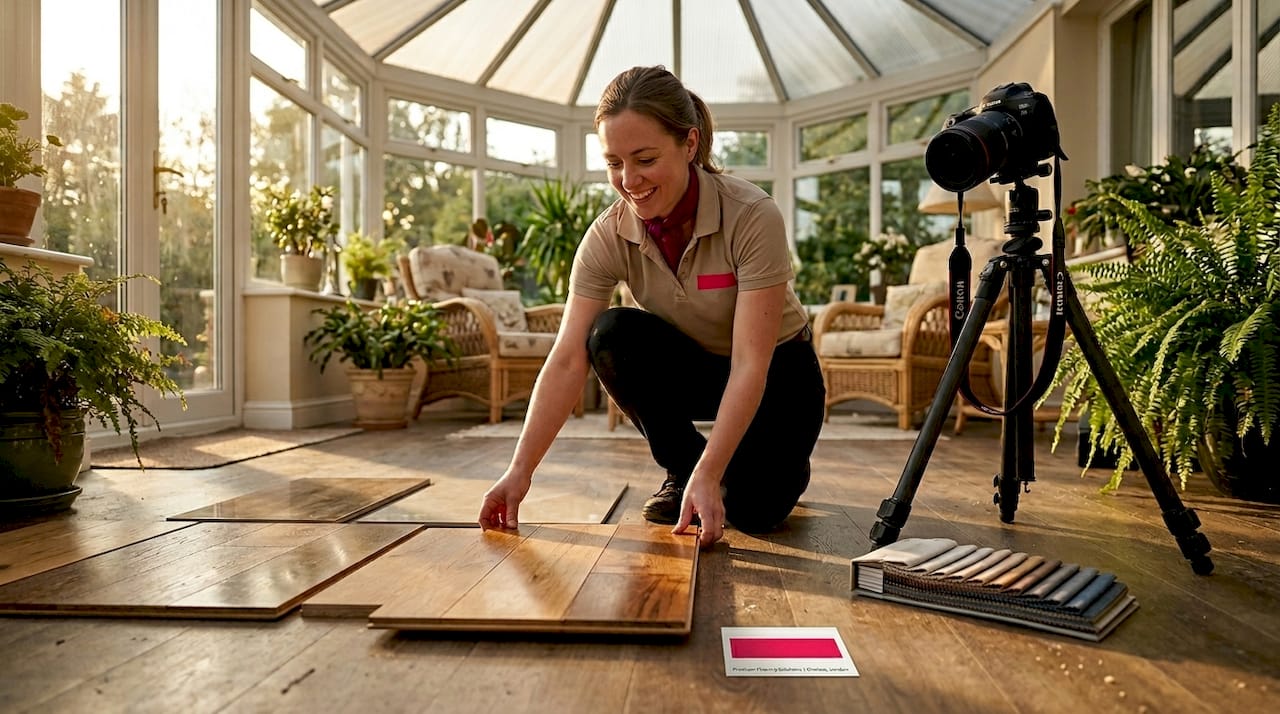
- Behind-the-scenes content. Photos of your team acclimatising boards, laying underlay, or setting out a room. Behind-the-scenes posts humanise your business and improve engagement meaningfully.
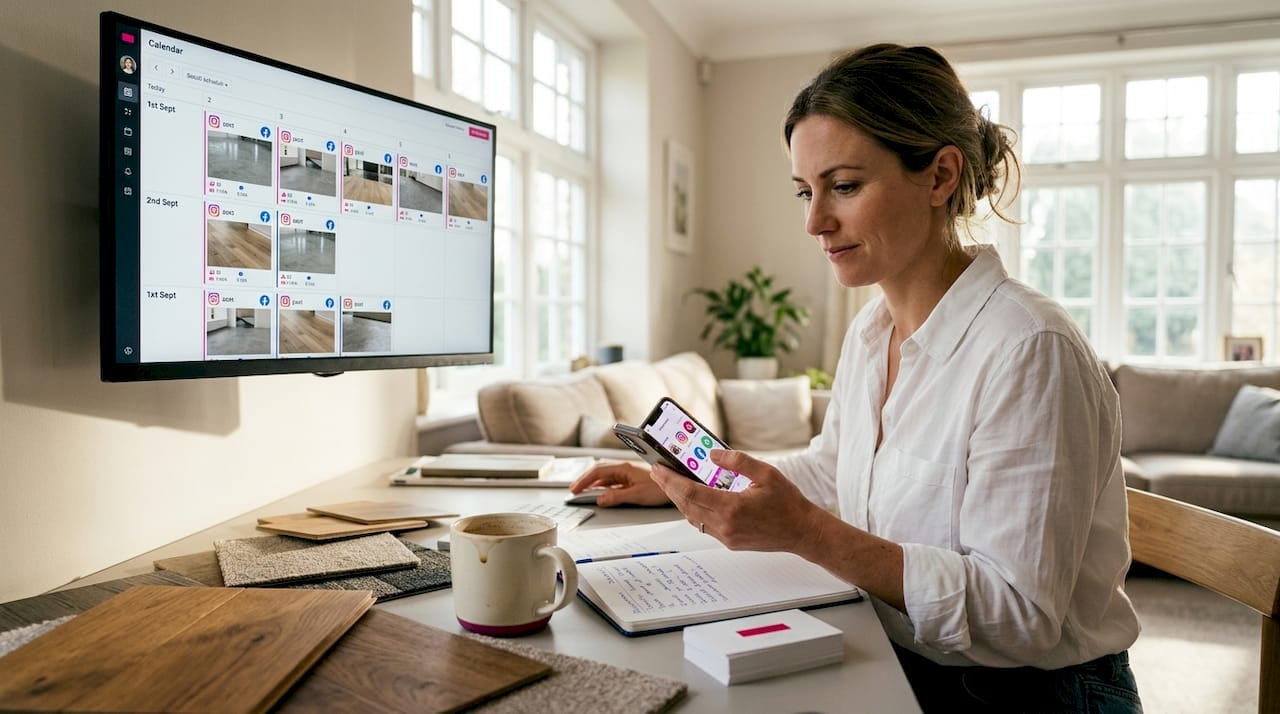
Pro Tip: Post a minimum of four times per week across Instagram and Facebook. Use Hootsuite or Buffer to schedule content in batches so you are not scrambling for ideas daily. Consistency matters more than perfection.
Mixing these formats across your weekly schedule gives you a balanced social presence that educates, entertains, and converts without feeling repetitive or pushy.
How to create compelling before-and-after and project showcase posts
Before-and-after content is the single most shareable format in flooring social media. Here is how to produce it properly.
- Shoot the “before” deliberately. Do not grab a quick photo on arrival. Get down low, use natural light, and capture the full extent of the problem. Worn edges, lifting seams, and discolouration all tell a story that justifies your quote.
- Document the process in stages. Photograph subfloor prep, underlay installation, and the first boards going down. Carousel posts on Instagram that show multiple stages consistently outperform single-image posts.
- Capture the “after” at the same angle. Match your camera position exactly to the before shot. The visual contrast lands harder and looks more professional.
- Include the client’s reaction. A short video of the homeowner seeing the finished room for the first time is gold. It is authentic, emotional, and far more persuasive than any caption you could write.
- Show what failure looks like alongside the fix. Documenting installation failures alongside professional outcomes reassures customers about quality and justifies your pricing. A photo of a poorly laid floor from a previous contractor, followed by your correction, is one of the most trust-building posts you can publish.
- Write captions that explain the value. Do not just say “new floor fitted.” Say “We replaced a 20-year-old carpet with 18mm engineered oak over a concrete subfloor in Harrogate. The client had been quoted by two other companies who said it could not be done. It took us two days.”
- Tag the location. Always geotag your posts. Local customers searching for flooring installers in their area will find you through location tags on Instagram and Facebook.
Pro Tip: Use your phone’s portrait mode for the finished floor shot. It creates a shallow depth of field that makes the floor look premium without any editing skills required.
Ways to use educational posts and FAQs to build trust and authority
Educational content is the most underused format in flooring social media for companies. Most businesses post only finished jobs. The ones that explain the process win more enquiries at higher margins.
- Turn blog posts into carousel content. Repurposing blog content into carousel posts or short videos increases content lifespan and amplifies social reach. Take a 1,000-word guide on subfloor preparation and break it into eight slides. Each slide covers one point. The last slide is your call to action.
- Cover the questions customers ask before they call. What is the difference between solid and engineered wood? How long does LVT last in a kitchen? Can you lay new flooring over existing tiles? Answer these directly and concisely.
- Explain technical terms in plain language. Expansion gaps, moisture barriers, and click-lock systems all sound intimidating to homeowners. A 60-second Reel explaining why expansion gaps matter builds credibility without being condescending.
- Use FAQ-style posts to anticipate objections. Format these as a question in the caption and the answer in the post body or first comment. This format performs well on Facebook where longer text gets read.
- Share behind-the-scenes installation insights. Show your team checking moisture levels with a damp meter before laying boards. Explain why this step matters. Customers who see this level of care are far less likely to haggle on price.
- Address commercial clients separately. Commercial flooring content must highlight durability, suitability for high-traffic environments, and a professional consultation process. A post aimed at a restaurant owner reads very differently from one aimed at a homeowner.
Educational posts also support your SEO. When you repurpose content from your website into social posts, you drive traffic back to your site and signal topical authority to Google. This is a direct connection between your flooring SEO strategy and your social content calendar.
Leveraging promotional and seasonal posts to drive urgency and sales
Promotional content works when it is specific, time-limited, and visually strong. Generic “call us for a quote” posts generate almost no response.
- Lock in pricing with a deadline. One flooring importer ran a promotion valid from May to June 2026, locking in prices to counteract cost-of-living pressures. The result was a measurable increase in quote requests. That is a direct lesson: urgency tied to a real-world reason converts better than a vague discount.
- Advertise seasonal clearance events. End-of-season stock, discontinued ranges, and sample sales all make strong promotional posts. Use Canva to create a branded graphic with the product name, original price, and sale price clearly visible.
- Pair promotions with testimonials. A promotional post that includes a customer quote from a previous job carries far more weight than a price announcement alone. Combine the two in a single carousel.
- Use geo-targeted content for local impact. Geo-targeting strategies make your promotional posts relevant to the specific towns and postcodes you serve. A post that mentions “free measuring and fitting quote in Leeds this week” outperforms a generic national offer every time.
- Make the call to action unmissable. Every promotional post needs one clear next step. “DM us to book” or “Click the link in bio to get your quote” are both specific and low-friction. Avoid asking people to do two things at once.
Promotional posts work best when they appear no more than twice a week. Flooding your feed with offers trains your audience to ignore you. Space them out and make each one feel like a genuine opportunity.
What I have learned from working with flooring businesses on social media
After working with flooring companies across the UK on their digital marketing, the pattern is clear. The businesses that generate consistent enquiries from social media are not the ones with the biggest budgets. They are the ones that post consistently, mix their content types, and treat every post as a chance to demonstrate expertise rather than just advertise.
The biggest mistake I see is businesses posting only finished floors with no context. A beautiful herringbone floor with the caption “just finished this one” tells the viewer nothing useful. It does not explain the challenge, the material, the location, or why they should call you. Add that context and the same image becomes a compelling case study.
I also think flooring businesses underestimate how much customers want to understand the process. Posts that explain why you acclimatise boards for 48 hours, or why subfloor prep matters more than the floor itself, consistently generate comments and saves. That engagement signals authority to the platform algorithm and puts you in front of more local buyers.
The data side matters too. Check Instagram Analytics and Facebook Insights every fortnight. Look at which post types get the most saves and profile visits. Those are your buyers. Double down on what works and cut what does not. Social media for flooring companies is not about going viral. It is about being the most trusted local option when someone is ready to buy.
— John
How Truth Digital helps flooring businesses win on social media
If you are looking to turn your social media presence into a genuine source of enquiries, the foundation matters. A well-built website that loads fast and converts visitors is what your social posts should be pointing to.
At Truth Digital, we build flooring business websites designed specifically to convert the traffic your social content generates. We also manage Google Ads for flooring companies to complement your organic social strategy with paid reach. Every service we offer is built around one goal: more enquiries for your flooring business. Get in touch and let us show you what is possible.
FAQ
What types of posts work best for flooring businesses on social media?
Before-and-after transformation posts, educational content explaining materials and installation, and time-limited promotional offers consistently generate the highest engagement and enquiry rates for flooring businesses on Instagram and Facebook.
How often should a flooring business post on social media?
Posting four to five times per week across Instagram and Facebook is a practical target. Use scheduling tools like Hootsuite or Buffer to plan content in advance and maintain consistency without daily effort.
How do I make promotional posts more effective?
Tie every promotion to a specific deadline and a real reason, such as a price lock or clearance event. Pair the offer with a customer testimonial and a single clear call to action to maximise response rates.
Can educational posts really generate flooring enquiries?
Yes. Posts that explain technical topics such as subfloor preparation, expansion gaps, or LVT durability build trust and attract customers who are further along in the buying process and less likely to negotiate purely on price.
Should flooring businesses target commercial and residential clients differently on social media?
Commercial flooring content should focus on durability, high-traffic suitability, and the consultation process, while residential content should lead with visual appeal and lifestyle outcomes. Separate content strategies for each audience produce better results than a one-size-fits-all approach.