


TL;DR:
- Call tracking links every inbound call to its marketing source, helping flooring businesses optimize campaigns and budgets. It improves lead attribution, identifies underperforming channels, and enhances follow-up timing for higher conversion rates. Implementing DNI and integrating call data with CRM enables smarter marketing decisions and increased ROI.
Call tracking is attribution technology that links every incoming phone call to the exact marketing source that generated it, whether that is a Google Ads campaign, an organic search result, a Facebook ad, or a yard sign. For flooring businesses, where 70–80% of home service leads arrive by phone, ignoring this data means making budget decisions based on guesswork. That is a costly habit. This article explains why use call tracking in flooring marketing is a question worth answering properly, and how platforms like CallRail, WhatConverts, and ResponseTap give flooring companies the visibility they need to spend smarter and close more jobs.
Why call tracking matters for flooring businesses
Call tracking for flooring is not just a technical add-on. It is the difference between knowing which campaigns pay for themselves and which ones quietly drain your budget. Most flooring businesses run Google Ads, invest in SEO, post on social media, and hand out business cards at trade shows. Without call tracking, you cannot tell which of those activities is actually generating enquiries.

The core benefit is attribution clarity. When a customer rings about a hardwood floor installation, call tracking software assigns that call to the specific source that brought them to you. That might be a Google Ads click, a Google Business Profile visit, or an organic search for “LVT flooring installer near me.” You see the source, the time of call, the duration, and in many cases a recording of the conversation.
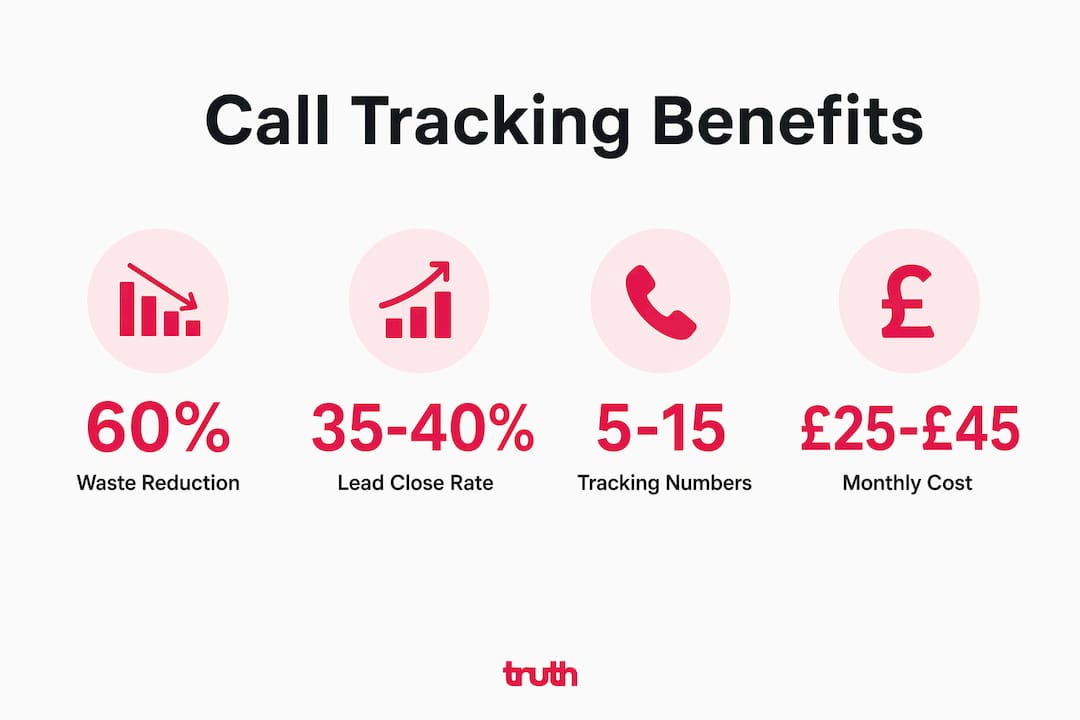
Most flooring marketing budgets waste 40–60% of spend on channels that do not generate effective phone leads. Call tracking identifies those underperforming campaigns quickly, so you can redirect that budget to what is actually working. For a business spending £1,500 a month on digital marketing, that is a significant saving.
Beyond budget efficiency, call tracking improves lead follow-up. 60% of flooring leads convert between day 3 and day 14, making the timing of your follow-up critical. When you know exactly when calls come in and which campaigns drive the highest-intent enquiries, you can build follow-up sequences that match buyer behaviour rather than guessing.
Here is what call tracking specifically delivers for flooring companies:
- Lead source clarity. Know whether your carpet enquiries come from Google Ads, Facebook, or your website’s organic traffic.
- Budget reallocation. Cut spend on channels that generate low-quality or zero calls, and reinvest in those that convert.
- Offline source tracking. Assign unique numbers to yard signs, leaflet drops, and referral cards to measure offline marketing properly.
- Call recording for training. Review how your team handles enquiries and identify where sales conversations break down.
- Caller behaviour data. See call times, repeat callers, and missed calls to spot patterns and plug gaps in your response process.
Pro Tip: Set up a dedicated tracking number for your Google Business Profile listing. It is one of the highest-intent sources for flooring enquiries, and most businesses never measure it separately.
What call tracking technology should flooring shops consider?
The industry term for the core technology behind most call tracking platforms is dynamic number insertion, or DNI. DNI shows different tracking numbers to website visitors depending on where they came from, giving you precise visibility into which online campaigns produce calls. A visitor arriving from a Google Ads click sees one number; a visitor arriving from organic search sees another. The calls route to the same destination, but the data is captured separately.
Static numbers work differently. You assign a fixed unique number to a specific offline source, such as a printed flyer or a showroom window display, and that number never changes. Most flooring businesses use a combination of both.
Here is a comparison of the main call tracking approaches:
| Feature | Dynamic number insertion (DNI) | Static tracking numbers |
|---|---|---|
| Best for | Online campaigns (Google Ads, SEO, social) | Offline sources (print, signage, referrals) |
| Number changes | Yes, per visitor session | No, fixed per source |
| Setup complexity | Moderate (requires website script) | Low |
| Data granularity | High (campaign, keyword, session level) | Medium (source level only) |
| Cost | Higher (more numbers in rotation) | Lower |
Most contractors use 5–15 tracking numbers covering their key marketing channels. Platforms typically cost £25–£40 per month plus £2–£5 per tracking number monthly. For a flooring business running Google Ads, SEO, Facebook, and a couple of offline sources, a budget of £60–£80 per month covers a solid setup.
Key features to look for beyond basic call attribution include CRM integration, Google Ads conversion import, call recording, sentiment analysis, and keyword spotting within transcripts. Sentiment analysis and keyword spotting add new layers of insight, letting you search recordings for phrases like “how much does it cost” or “when can you start” to identify high-intent callers automatically.
Compliance with call recording consent laws is non-negotiable. In the UK, you must inform callers that their call may be recorded. A short disclaimer at the start of the call, either spoken by your team or played as an automated message, satisfies this requirement. Get this right from day one.
Pro Tip: Start with DNI covering your Google Ads and organic traffic before adding complexity. These two sources alone will reveal where the majority of your online leads originate.
How to implement call tracking in your flooring campaigns
Getting call tracking live does not require a technical background. It requires a clear process and a bit of discipline in the first few weeks.
-
Choose your platform. CallRail, WhatConverts, and ResponseTap all serve the UK market well. Select one that integrates directly with Google Ads and your CRM.
-
Acquire your tracking numbers. Set up numbers for each channel you want to measure. Start with Google Ads, organic search, and your Google Business Profile. Add offline sources once the core setup is running.
-
Install the DNI script on your website. Your chosen platform will provide a short JavaScript snippet. Add it to every page of your site, ideally via Google Tag Manager to keep things tidy.
-
Update your ad campaigns. In Google Ads, replace your standard phone number with your tracking number. This is how call conversion data passes into Google Ads to enable automated bidding improvements and lower your cost per acquisition over time.
-
Connect your CRM. Platforms like HubSpot, Pipedrive, and Salesforce accept call data via native integrations or Zapier. When a call comes in, a contact record is created automatically, saving your team manual data entry.
-
Set up missed call alerts. Configure your platform to notify your team immediately when a call is missed. Given that 60% of leads convert between day 3 and day 14, a missed call followed by a same-day callback is still a winnable lead.
-
Review data monthly. Look at call volume by source, average call duration, and lead quality per channel. Correlate this with your ad spend to calculate a true cost per qualified lead. Adjust budgets accordingly.
For flooring businesses running Google Ads, the integration between call tracking and Google’s bidding algorithms is particularly powerful. You can read more about Google Ads for flooring and how call data feeds into smarter campaign performance.
Pro Tip: Track calls as conversions in Google Ads only when the call duration exceeds 60 seconds. Shorter calls are often wrong numbers or price-only enquiries that rarely convert to jobs.
Common pitfalls when using call analytics for flooring
Getting call tracking set up is the easy part. Getting value from it consistently is where most flooring businesses fall short.
The most common mistake is tracking too many sources too soon. If you assign numbers to every possible channel before you understand your core data, you end up with a confusing dashboard and no clear action to take. Focus on high-intent sources first, specifically Google Ads and Google Business Profile, before expanding to Facebook, Bing, or offline sources.
A second pitfall is measuring call volume without measuring call quality. A campaign that generates 30 calls per month but only two qualified leads is worse than a campaign generating 12 calls with eight qualified leads. Use call recordings and sentiment data to score lead quality, not just count calls. Caller intent, project specifics, and spending timeframe revealed through conversation analysis are the real indicators of lead value.
- Never skip the legal compliance step. A missing recording disclaimer can create real problems.
- Do not ignore missed calls in your reporting. A high missed call rate on a paid campaign is money wasted.
- Avoid changing tracking numbers too frequently. Consistency matters for Google Business Profile and local SEO citations.
- Review recordings regularly, not just when something goes wrong. Monthly listening sessions with your sales team improve scripts and close rates over time.
Call tracking is most valuable when it is integrated deeply with your existing marketing platforms and CRM. Without that integration, you are collecting data but not acting on it. The businesses that see the biggest ROI improvements are those that close the loop between call data and campaign decisions.
Contractors with disciplined follow-up close 35–40% of leads versus 15–20% without it. Call tracking gives you the timing and context to make that follow-up disciplined rather than reactive.
What I have learned from call tracking in flooring marketing
Working with flooring businesses across the UK, the single biggest shift I see when call tracking goes live is confidence. Before it, business owners are making budget calls based on gut feel. After it, they know exactly which campaigns are paying for themselves and which are not.
The businesses that get the most from call tracking are not the ones with the most sophisticated setups. They are the ones that review their data every month and actually change something based on what they find. That discipline, correlating call volume, lead quality, and cost per call on a regular cycle, is what separates businesses that grow from those that stay flat.
My honest advice: do not overcomplicate it. Start with Google Ads and your Google Business Profile. Get those two sources tracked properly, connect the data to your CRM, and spend 30 minutes a month reviewing what you see. That alone will improve your marketing decisions more than any other single change. You can see real examples of this in action through call tracking success stories from businesses in the flooring sector.
The flooring market is competitive. Knowing your numbers is not optional any more. It is how you stay ahead.
— John
How Truth Digital helps flooring businesses with call tracking
At Truth Digital, we set up and manage call tracking as part of a broader digital marketing system built specifically for flooring companies.
We integrate call tracking with Google Ads management and SEO for flooring businesses so that every enquiry is attributed, every campaign is measured, and every pound of your marketing budget is accountable. We also build and develop flooring business websites with DNI scripts pre-installed, so tracking is live from day one. If you want to know which of your marketing channels is actually generating jobs, not just traffic, get in touch and we will show you exactly how to set it up.
FAQ
What is call tracking and how does it work for flooring?
Call tracking is attribution technology that assigns unique phone numbers to different marketing sources, linking incoming calls to the exact campaign or channel that generated them. For flooring businesses, this means knowing whether a carpet enquiry came from Google Ads, organic search, or a yard sign.
How much does call tracking cost for a flooring business?
Call tracking platforms typically cost £25–£45 per month plus £2–£5 per tracking number. A flooring business covering five to ten channels can expect to spend £60–£90 per month in total.
Does call tracking integrate with Google Ads?
Yes. Passing call conversion data to Google Ads allows the platform’s automated bidding to optimise for calls as well as clicks, which lowers cost per acquisition over time. It is one of the most impactful integrations available to flooring advertisers.
Is call recording legal in the UK?
Call recording is legal in the UK provided callers are informed that their call may be recorded. A short verbal or automated disclaimer at the start of the call satisfies this requirement. Compliance with consent laws is non-negotiable and should be built into your setup from the start.
How many tracking numbers does a flooring business need?
Most flooring businesses need between five and fifteen tracking numbers to cover their key channels. Start with Google Ads, organic search, and Google Business Profile, then add numbers for Facebook, offline print, and referral sources as your setup matures.