

TL;DR:
- Customer testimonials are crucial for flooring websites as they build trust and boost conversions. Strategically placed testimonials, especially near enquiry forms, significantly improve lead generation and sales. Collecting authentic, specific feedback promptly after service enhances credibility and influences purchasing decisions.
Customer testimonials are the single most effective trust signal a flooring retailer can place on its website. In the flooring industry, where buyers are committing hundreds or thousands of pounds to a purchase they cannot easily reverse, social proof is not a nice-to-have. It is the mechanism that converts a browsing visitor into a paying customer. The role of testimonials in flooring retailer websites goes beyond decoration. Star rating blocks and quote testimonials placed near booking forms increase conversion rates by 12%–28%. That figure alone should reshape how you think about your website layout.
How do testimonials influence trust and purchasing decisions on flooring websites?
70% of consumers will not buy from a brand they do not trust. For flooring retailers, that statistic carries real weight. A visitor landing on your site has no prior relationship with you. They are comparing you against competitors, weighing up price, and asking themselves one question: “Can I trust these people in my home?”

Testimonials answer that question before you do.
The psychological mechanism here is social proof. When a prospective buyer reads that Sarah from Nottingham had her oak engineered flooring fitted on time, within budget, and was delighted with the finish, they project themselves into that scenario. The more specific and relatable the detail, the stronger the effect.
“The team arrived exactly when they said they would, laid our herringbone LVT in a day, and left the place spotless. We’ve already recommended them to three neighbours.”
— Karen T., Leeds
That kind of testimonial works because it is specific. It names a product, a location, an outcome, and a secondary behaviour (referral). Authentic testimonials with specific details like customer names and neighbourhoods enhance perceived legitimacy far more than generic praise.
What does not work is the vague, polished quote: “Great service, would recommend.” It reads as scripted. Visitors skip it.
- Use full first names and town or city where the customer agrees
- Include the product type fitted (carpet, LVT, hardwood)
- Capture the specific outcome: speed, cleanliness, price accuracy
- Let the customer’s natural voice come through without heavy editing
Pro Tip: Place your strongest testimonial directly above your main enquiry form. Testimonials near forms can lift booking form completion from 4% to 7%, effectively doubling your lead flow from the same traffic.
What are the most effective ways to collect flooring testimonials?
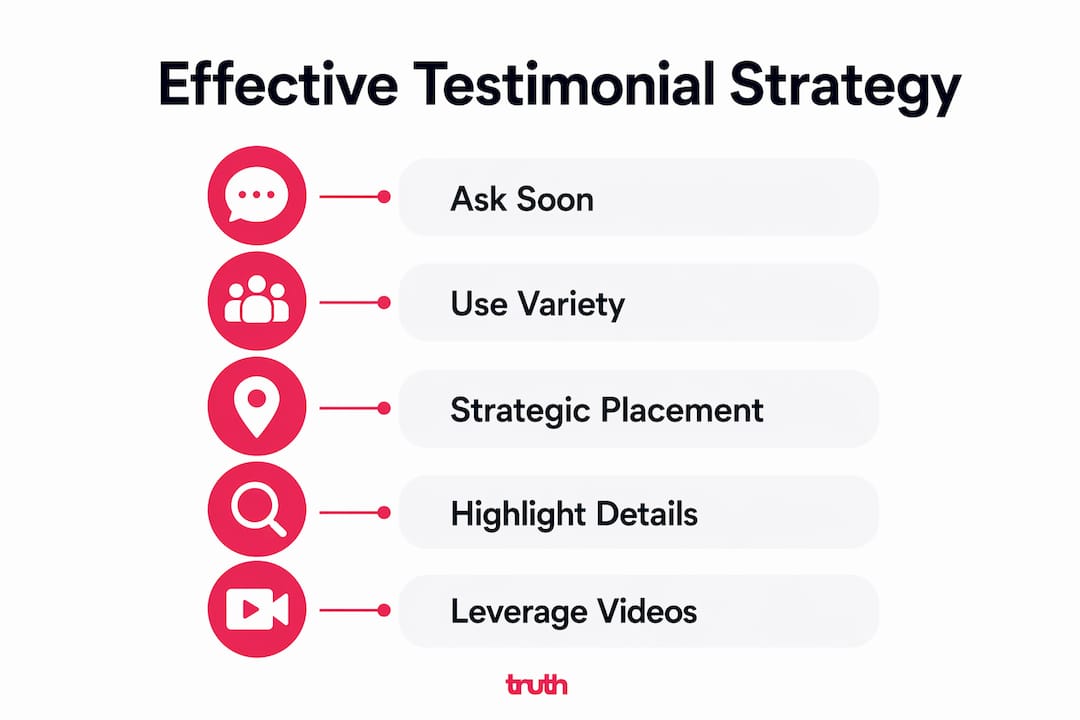
Timing is everything. The conversion window for collecting testimonials is narrow. Ask within 30 minutes to 2 hours of job completion and your response rate is high. Wait 24 hours and it drops to 14%. Wait a week and it falls to 6%. The customer is still in the warm glow of a freshly fitted floor when your fitter walks out the door. That is the moment to ask.
Here is a practical collection process you can implement this week:
- Ask in person first. Your fitter or installer asks the customer directly: “Would you be happy to leave us a quick review?” A verbal yes makes the follow-up text or email feel expected rather than cold.
- Send a text within the hour. Keep it short. Include a direct link to your Google Business Profile or a testimonial form on your website. Do not make them search for where to leave feedback.
- Give them a prompt. Ask: “Could you mention the type of flooring fitted, how the team performed, and whether you’d recommend us?” Prompts produce specific, useful testimonials rather than one-liners.
- Follow up once by email. If they did not respond to the text, a single follow-up email 48 hours later is acceptable. Beyond that, leave it.
- Curate what you collect. Not every testimonial belongs on your website. Choose those that mention specific products, locations, or outcomes. These build local credibility and help with flooring service pages that target specific search terms.
Choosing the right testimonial formats
Written quotes are the baseline. But variety increases trust. Video testimonials deliver stronger trust signals than written reviews because they convey emotion, show real finished work, and are harder to fake. A 60-second phone video of a customer standing in their newly fitted living room is worth more than ten written quotes.
Star ratings give visitors an at-a-glance signal before they read a single word. Combine all three formats and you cover every type of visitor: the scanner, the reader, and the sceptic.
Pro Tip: Tools like Trustpilot, Google Reviews, and Birdeye all integrate with most website platforms. If you are building or rebuilding your flooring website, ask your developer to pull in your Google review feed automatically so your testimonials stay current without manual updates.
How do different testimonial display strategies compare for flooring websites?
Placement matters more than volume. This is the insight most flooring retailers miss. You can have 200 glowing reviews and still convert poorly if they are buried in a footer carousel that nobody scrolls to.
Here is how the main display strategies compare:
| Placement | Engagement level | Conversion impact |
|---|---|---|
| Star block in hero/header area | High | Up to 28% uplift |
| Quote row mid-page (3–5 quotes) | High | 15%–20% uplift |
| Video testimonial near CTA button | High | Up to 23% uplift |
| Sidebar testimonial widget | Medium | 5%–10% uplift |
| Footer carousel | Near zero | Negligible |
| Dedicated testimonials page only | Low | Minimal direct uplift |
Testimonial carousels in footers show near-zero engagement. The same testimonial placed directly above a form lifts conversion by 23%. The content is identical. The placement is everything.
The proven layout for a flooring website is straightforward:
- A star rating block in the hero section (e.g. “4.9 stars from 143 Google reviews”)
- A row of 3–5 short quote testimonials mid-page, ideally after your services section
- One video testimonial placed just above or beside your main call-to-action button
On the question of quantity, 8–12 high-quality testimonials with photos and location details outperform a list of 100+ generic ones. A massive list signals that you are trying too hard. A curated selection signals confidence. Pair your testimonials with flooring portfolio content and you give visitors both the social proof and the visual evidence they need to commit.
What practical steps can flooring retailers take right now?
You do not need a full website rebuild to start using testimonials more effectively. These steps work whether you are starting from scratch or improving an existing site.
- Audit your current placement. Open your homepage. Where are your testimonials? If they are in the footer or on a separate page that requires two clicks to reach, move them. Put your best quote above your enquiry form today.
- Set up a post-job text sequence. Write a template message your team can send within an hour of completing a job. Include a direct link. Test it on your next five jobs and measure how many responses you get.
- Collect video testimonials from your next three happy customers. Ask them to record a short clip on their phone. A genuine, slightly imperfect video builds more trust than a polished written quote. Authentic, unscripted testimonials consistently outperform scripted ones in trust-building and conversion.
- Add trust signals alongside testimonials. Display verified Google reviews and manufacturer certifications near your calls to action. These act as secondary reassurance signals that reinforce what your testimonials say. Certifications from bodies like the Contract Flooring Association (CFA) or Karndean and Amtico installer accreditations carry real weight with buyers.
- Review and refresh quarterly. Testimonials go stale. A quote from 2021 tells visitors your business was good five years ago. Keep your featured testimonials recent. Aim to rotate in new ones every three months.
- Integrate testimonials into your email marketing. When you follow up with enquiries or past customers, include a short testimonial in the email body. It reinforces trust at every touchpoint in the conversion funnel, not just on your website.
Pro Tip: When writing your testimonial request prompt, ask customers to mention the specific room, the product they chose, and one thing that surprised them positively. That last question produces the most compelling quotes because it captures genuine, unexpected delight.
Why most flooring businesses are leaving conversions on the table
I have reviewed dozens of flooring retailer websites over the years, and the pattern is almost always the same. There is a testimonials page buried in the navigation, a footer carousel that nobody sees, and a homepage that leads with product ranges rather than proof that real customers trust this business.
The mistake is treating testimonials as a compliance exercise rather than a conversion tool. Flooring buyers are anxious. They are letting strangers into their home, spending significant money, and hoping the finished result matches what they imagined. A well-placed, specific testimonial from someone in their town, describing a product they are considering, removes that anxiety faster than any product description can.
What I have seen work consistently is the combination: a star rating in the hero, a quote row mid-page, and a video near the CTA. Add a manufacturer accreditation badge and a link to your online reviews guide and you have a trust stack that covers every type of visitor. The businesses that test this layout and iterate on it are the ones that see measurable enquiry growth. The ones that leave testimonials in the footer wonder why their traffic does not convert.
— John
How Truthdigital helps flooring businesses turn testimonials into enquiries
Testimonials are only as powerful as the website and marketing system around them. At Truthdigital, we build flooring websites designed specifically to showcase social proof where it converts, not where it gets ignored.
Our email marketing for flooring businesses service helps you nurture leads with testimonial-led sequences that keep your business front of mind long after a visitor first lands on your site. We also build and develop flooring company websites with testimonial placement baked into the UX from day one. No retrofitting. No guesswork. If you want a website that actually converts your traffic into enquiries, let’s talk.
FAQ
What is the role of testimonials in flooring retailer websites?
Testimonials serve as social proof that builds trust with prospective buyers who have no prior relationship with your business. Placed strategically near booking forms and calls to action, they directly increase enquiry and conversion rates.
How many testimonials should a flooring website display?
8–12 high-quality testimonials with customer names, locations, and product details is the recommended range. A list of 100 or more can undermine credibility rather than strengthen it.
When is the best time to ask a customer for a testimonial?
Ask within 30 minutes to 2 hours of completing the job. Response rates drop to 14% at 24 hours and just 6% at one week, so timing the request while the customer is still engaged is critical.
Do video testimonials perform better than written ones for flooring businesses?
Yes. Video testimonials convey emotion, show real finished work, and are harder to fake than written quotes. They perform well on websites, Google Business Profiles, and social media, making them one of the most versatile trust assets a flooring business can collect.
Where should testimonials be placed on a flooring website for maximum impact?
The most effective layout is a star rating block in the hero section, a row of 3–5 quote testimonials mid-page, and a video testimonial near the main call-to-action button. Footer carousels show near-zero engagement and should be avoided.

