


Website speed determines whether potential flooring customers complete enquiries or abandon your site for competitors. Research reveals that 1-second delays reduce conversions by 7%, directly impacting revenue for carpet retailers, wood flooring installers, and LVT specialists across the UK. This article explores how website performance influences customer behaviour, explains Core Web Vitals metrics that measure speed, and provides actionable optimisation strategies to boost enquiries and sales in 2026. You will discover why mobile performance matters most, which technical improvements deliver fastest results, and how speed enhancements strengthen SEO rankings whilst building customer trust.
Key takeaways
| Point | Details |
|---|---|
| Speed drives conversions | Every second of delay costs flooring businesses up to 7% in potential sales and enquiries |
| Core Web Vitals matter | LCP, CLS, and INP metrics directly measure user experience and influence Google rankings |
| Mobile performance critical | Most flooring customers browse on mobile devices, making mobile speed optimisation essential |
| Technical fixes deliver results | Image formats, caching, and CDN implementation provide measurable speed improvements |
| SEO benefits compound | Faster websites rank higher, attract more organic traffic, and generate better customer engagement |
The impact of website speed on flooring business success
Slow websites cost flooring businesses thousands in lost revenue each month. When potential customers search for carpet fitting services or luxury vinyl tile installations, they expect immediate information. A delay of just three seconds causes 53% of mobile visitors to abandon your site entirely, taking their enquiry to faster competitors.
The financial consequences extend beyond immediate lost sales. Conversion rates drop 7% for each second of delay, meaning a flooring retailer generating 50 monthly enquiries could lose 14 potential customers annually from a two-second slowdown. This compounds over time, affecting annual revenue targets and growth projections.
Customer behaviour studies reveal that 48% abandon slow sites and immediately visit competitors offering similar flooring products. For businesses investing heavily in Google Ads or SEO to attract visitors, slow page loads waste marketing budgets by failing to convert traffic into enquiries. One major retailer increased revenue by £100,000 monthly after reducing load times from 4.2 to 1.8 seconds, demonstrating tangible returns from speed optimisation.
Flooring businesses face unique challenges with product imagery. High-resolution photos showcasing wood grain patterns or carpet textures often create massive file sizes that slow page rendering. Without proper optimisation, these essential visual elements become conversion barriers rather than sales tools. Many flooring companies unknowingly lose customers whilst making common website mistakes that technical improvements could easily resolve.
“A 1-second delay in page load time can decrease conversions by 7%, directly impacting revenue for businesses relying on online enquiries.”
Key effects of slow website speed include:
- Lost enquiries from impatient customers seeking immediate information
- Reduced trust as visitors perceive slow sites as outdated or unprofessional
- Higher bounce rates that signal poor user experience to search engines
- Damaged reputation when customers share negative experiences with others
- Wasted advertising spend converting fewer visitors into paying customers
Mobile users prove particularly sensitive to speed issues. Flooring customers browsing during commutes or whilst visiting showrooms expect instant access to product details, pricing information, and contact forms. Delays frustrate these time-pressed visitors, causing them to seek alternatives before your content finishes loading.

Understanding core web vitals and their role in flooring website performance
Google measures website quality through Core Web Vitals metrics that quantify user experience. These three measurements determine how search engines rank flooring websites and directly influence customer satisfaction. Understanding each metric helps prioritise technical improvements that deliver measurable business results.
Largest Contentful Paint (LCP) tracks how quickly main content becomes visible. For flooring websites, this typically measures when hero images or product galleries appear. Google recommends LCP under 2.5 seconds, yet many flooring sites exceed 4 seconds due to unoptimised imagery. Slow LCP frustrates visitors waiting to see carpet samples or wood flooring options, increasing abandonment rates before customers view products.
Cumulative Layout Shift (CLS) measures visual stability during page loading. Flooring websites often suffer poor CLS when images load without predefined dimensions, causing text and buttons to jump unexpectedly. This frustrates customers attempting to click enquiry forms or navigate product categories. A CLS score below 0.1 indicates stable loading, whilst scores above 0.25 create jarring experiences that reduce trust and conversions.
Interaction to Next Paint (INP) replaced First Input Delay in 2024, measuring responsiveness when customers click buttons or submit forms. Flooring businesses need INP under 200 milliseconds to ensure smooth interactions. Slow INP causes delayed responses when customers select product filters, add items to wishlists, or complete contact forms, creating friction that discourages enquiries.
| Metric | Good Threshold | User Impact | Common Flooring Site Issues |
|---|---|---|---|
| LCP | Under 2.5 seconds | Content visible quickly | Large unoptimised product images |
| CLS | Below 0.1 | Stable layout | Images without defined dimensions |
| INP | Under 200ms | Responsive interactions | Heavy JavaScript from plugins |
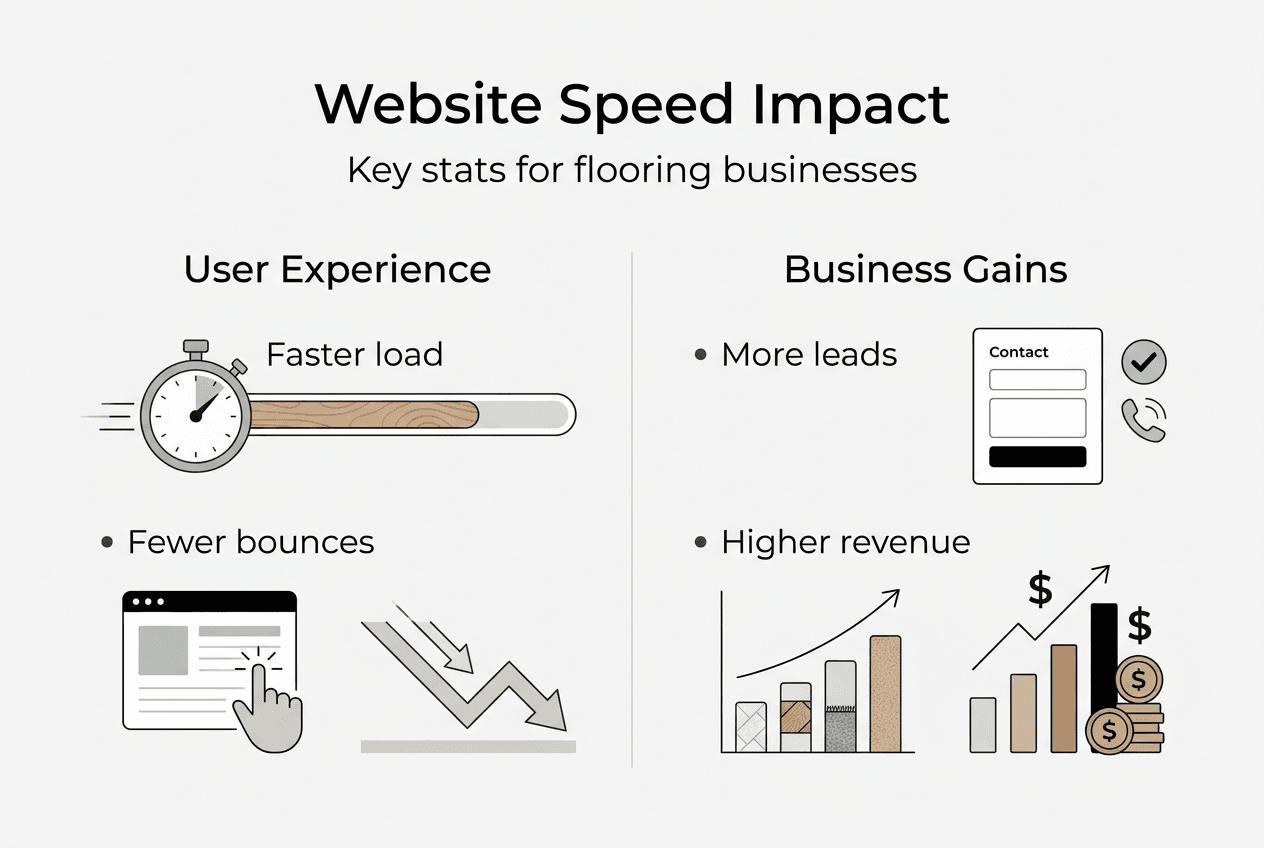
Research shows sites meeting Core Web Vitals thresholds experience 24% fewer abandonments, translating directly to increased enquiries for flooring businesses. One carpet retailer improved LCP from 3.8 to 1.9 seconds and saw monthly enquiries rise from 42 to 58, a 38% increase attributed primarily to speed enhancements.
Pro Tip: Predefine width and height attributes for all product images and videos to prevent layout shifts that damage CLS scores and frustrate customers browsing flooring options.
Mobile performance requires particular attention since most flooring customers browse on smartphones. Core Web Vitals scores differ significantly between desktop and mobile devices, with mobile typically performing worse due to slower network connections and less powerful processors. Prioritising mobile optimisation ensures the majority of potential customers experience fast, stable websites that encourage enquiries.
Optimisation priorities based on current data:
- Address LCP first if main content takes over 2.5 seconds to appear
- Fix CLS immediately if layout shifts disrupt customer browsing
- Improve INP when form submissions or product filters feel sluggish
- Monitor mobile scores separately as they typically lag behind desktop performance
Flooring businesses implementing ecommerce website fundamentals benefit from understanding how Core Web Vitals influence both customer experience and search rankings. Technical improvements targeting these metrics deliver compound benefits across multiple business objectives.
Practical steps to improve your flooring website speed in 2026
Implementing proven optimisation techniques transforms slow flooring websites into fast, conversion-focused platforms. These actionable strategies address common performance bottlenecks whilst maintaining visual quality essential for showcasing products effectively.
- Convert images to AVIF format, which reduces file sizes by 50% compared to JPEG whilst maintaining quality for carpet textures and wood grain details
- Implement lazy loading so product images load only when customers scroll to them, dramatically improving initial page speed
- Enable browser caching to store static resources locally, reducing load times for returning visitors browsing multiple product categories
- Deploy a content delivery network to serve content from servers geographically closer to UK customers, minimising data travel distance
- Audit and remove unnecessary third-party scripts from booking systems, chat widgets, and analytics tools that slow page rendering
- Compress CSS and JavaScript files to reduce data transfer requirements without affecting functionality
- Optimise server response times through quality hosting providers specialising in flooring business requirements
| Optimisation Area | Before Implementation | After Implementation | Business Impact |
|---|---|---|---|
| Average load time | 4.2 seconds | 1.8 seconds | 57% reduction |
| Bounce rate | 68% | 41% | 40% fewer abandonments |
| Monthly enquiries | 42 | 58 | 38% increase |
| Mobile Core Web Vitals | Failing | Passing | Improved rankings |
Pro Tip: Conduct monthly audits using Google PageSpeed Insights to identify new performance issues before they impact conversions, and monitor Core Web Vitals through Search Console for ongoing visibility into user experience metrics.
Mobile-first optimisation proves critical since 73% of flooring website traffic originates from smartphones. Prioritise mobile performance by testing on actual devices, not just desktop browsers with mobile emulation. Ensure touch targets meet minimum size requirements, forms remain easily completable on small screens, and product images scale appropriately without quality loss.
Flooring websites face unique challenges with heavy product imagery showcasing intricate carpet patterns, wood grain variations, and tile textures. Balance visual quality against file size by using modern formats, appropriate compression levels, and responsive image techniques that serve different resolutions based on device capabilities. This maintains the visual appeal essential for flooring sales whilst eliminating speed penalties.
Combining technical improvements with user experience enhancements delivers optimal results. Fast loading means nothing if navigation confuses customers or product information remains difficult to find. Integrate speed optimisation within broader website strategy that prioritises customer needs, clear calls-to-action, and streamlined enquiry processes.
Flooring businesses running paid advertising campaigns particularly benefit from speed improvements. When flooring ads boost sales, fast landing pages convert clicks into enquiries more effectively, reducing cost per acquisition and improving return on advertising spend. Slow pages waste advertising budgets by losing customers before they view offers.
How faster website speed benefits flooring SEO and customer engagement
Speed improvements deliver compound benefits extending beyond immediate conversion gains. Search engines reward fast websites with higher rankings, whilst customers engage more deeply with responsive platforms that respect their time and attention.
SEO advantages from improved website speed:
- Higher search rankings as Google uses speed as a ranking factor, particularly for mobile searches
- Increased organic traffic when improved rankings place flooring businesses above slower competitors
- Better crawl efficiency allowing search engines to index more pages within allocated crawl budgets
- Enhanced mobile search visibility crucial for local flooring queries from customers near showrooms
- Improved quality scores for paid search campaigns, reducing cost per click for advertising
Customer engagement metrics improve dramatically when websites respond instantly to interactions. Faster sites experience lower bounce rates and higher conversions, with visitors spending more time exploring product ranges, reading installation guides, and comparing flooring options. This deeper engagement signals quality to search engines whilst building customer confidence that encourages enquiries.
“Google uses page speed as a ranking factor in its search algorithm, meaning faster websites gain competitive advantages in search results over slower alternatives.”
Flooring businesses benefit from speed improvements across multiple customer touchpoints. Visitors arriving from organic search, paid advertising, or social media all experience faster loading that reduces friction in the customer journey. This consistency builds trust and reinforces professional brand perception essential for high-value flooring purchases.
Mobile speed particularly influences local search visibility. When customers search for “carpet fitters near me” or “wood flooring installers,” Google prioritises fast, mobile-friendly websites in local results. Improving mobile Core Web Vitals increases visibility for these high-intent searches that drive showroom visits and telephone enquiries.
Happier customers leave positive reviews and refer friends when websites provide smooth, frustration-free experiences. Speed contributes to overall satisfaction by demonstrating professionalism and respect for customer time. These indirect benefits compound over months and years, building reputation and market position that slower competitors struggle to match.
Integrating SEO and speed optimisation strategies maximises returns from both efforts. Technical improvements supporting fast loading also enhance crawlability, whilst content optimisation for search relevance benefits from reduced bounce rates that speed delivers. Flooring businesses implementing good ecommerce website features recognise speed as foundational to both customer experience and search performance.
Boost your flooring website speed with Truth Digital
Optimising website speed requires specialised technical knowledge and ongoing maintenance that most flooring businesses lack internal resources to handle effectively. Truth Digital provides comprehensive website development for flooring businesses focused on speed, performance, and conversion optimisation tailored specifically to the flooring sector.
Our team builds fast, responsive websites that meet Core Web Vitals thresholds whilst showcasing your flooring products beautifully. We handle technical complexities including image optimisation, caching implementation, and mobile performance tuning, allowing you to focus on serving customers rather than troubleshooting website issues. Combined with web hosting for flooring websites optimised for speed and reliability, plus SEO for flooring companies that leverages performance improvements for better rankings, Truth Digital delivers complete digital solutions that drive enquiries and sales growth in 2026.
FAQ
How does website speed affect flooring customer conversions?
Slower websites frustrate visitors, causing conversion rates to drop by up to 7% for each second of delay. Fast sites keep customers engaged, reducing bounce rates and increasing the likelihood visitors complete enquiry forms or telephone your business. Speed directly impacts revenue by determining whether potential customers stay long enough to learn about your flooring services.
What are the main Core Web Vitals I should optimise for my flooring website?
Largest Contentful Paint (LCP), Cumulative Layout Shift (CLS), and Interaction to Next Paint (INP) represent the critical metrics measuring user experience. LCP tracks how quickly main content appears, CLS measures visual stability during loading, and INP quantifies responsiveness to customer interactions. Improving these metrics enhances user experience whilst reducing bounce rates that cost enquiries.
How can I test and monitor my flooring website’s speed effectively?
Use Google PageSpeed Insights to analyse both mobile and desktop performance, identifying specific issues affecting Core Web Vitals scores. Search Console provides ongoing Core Web Vitals reports showing real user experience data across your entire website. Regular monthly audits help identify new performance issues before they significantly impact conversions or search rankings.
Does using a content delivery network really help flooring websites in the UK?
Yes, CDNs reduce data travel distance by serving content from servers geographically closer to UK visitors, significantly improving load times. This leads to faster page rendering and better user experience regardless of whether customers browse from London, Manchester, or Edinburgh. CDNs prove particularly valuable for flooring businesses serving customers across multiple UK regions.

