TL;DR:
- Most UK flooring businesses remain invisible in local search results despite offering quality products and skilled installation. Claiming and optimizing a verified Google Business Profile that accurately reflects your business type is essential to attract high-intent customers and increase footfall. Ongoing profile management, detailed visuals, and consistent content updates are key to maintaining visibility and converting local searches into leads.
Most flooring retailers and installers in the UK offer exceptional products and skilled work, yet they remain invisible to the very customers searching for them right now. If your business doesn’t appear in Google Maps, the Local Pack, or local search results, you’re handing those enquiries to a competitor. It doesn’t matter how good your showroom looks or how many years of experience you have. Local discoverability is the foundation everything else is built on, and this guide gives you the practical steps to get it right.
Key Takeaways
| Point | Details |
|---|---|
| Verify your Google profile | Unverified profiles are invisible to customers searching locally. |
| Configure for your business type | Choose the correct service area or shopfront setting, not both, for best results. |
| List all services | Ensure your full range of services is accurately listed for higher visibility and leads. |
| Optimise visuals and details | Complete your profile with photos, business info, and service details to build trust. |
| Keep it active | Update regularly and respond to reviews to maintain your ranking and reputation. |
Why local listings matter for UK flooring businesses
When someone types “carpet fitter near me” or “LVT flooring shop in Leeds,” Google doesn’t just return a list of websites. It serves a Local Pack: three prominently displayed business listings with ratings, addresses, and phone numbers. Below that, Google Maps results dominate the screen. If your business isn’t in that mix, you’re missing the highest-intent customers in your area. These aren’t casual browsers. They’re ready to buy.
Local search drives footfall and phone calls at a rate that most other marketing channels simply can’t match for flooring businesses. A customer searching for “wood flooring installer in Bristol” has already made a key decision: they want professional installation. Your job is to show up when they search.
The single most important step is claiming and verifying your Google Business Profile (GBP). As Google confirms, customers can only find your Business Profile on Google after verification. Without it, you’re invisible. Full stop.
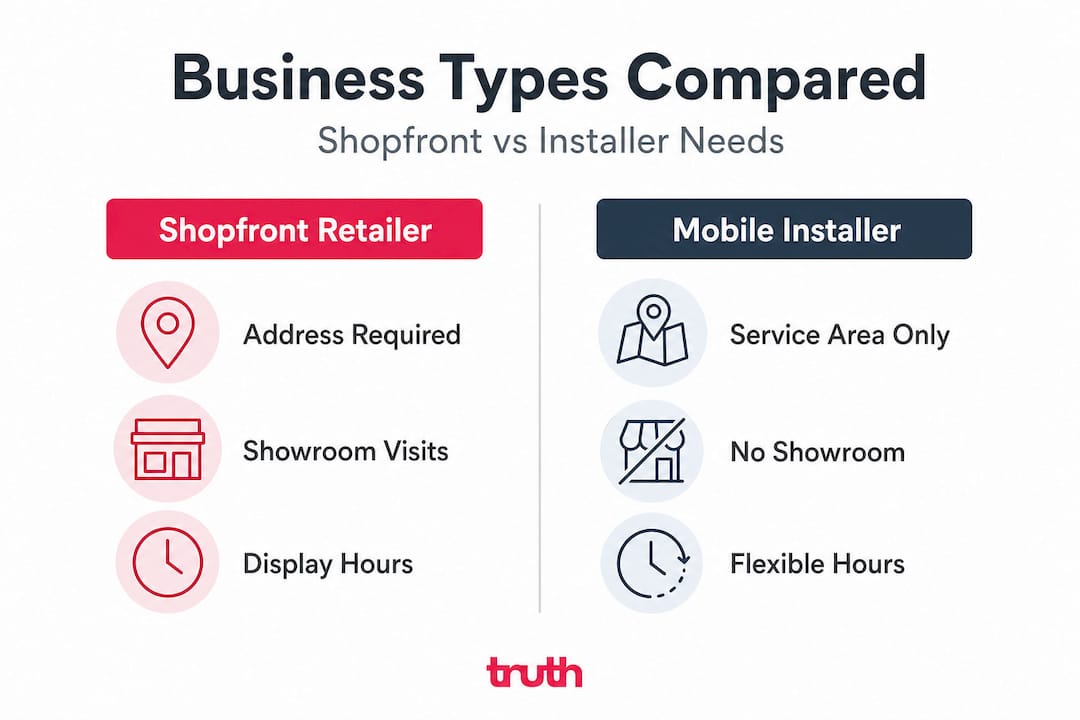
There’s also an important distinction between business types. A flooring retailer with a physical showroom operates differently from a mobile installer who travels to customers. The table below breaks down how each type should approach their local listing.
| Business type | Address displayed | Service area set | Best suited for |
|---|---|---|---|
| Shopfront retailer | Yes | Optional | Showrooms, carpet shops |
| Service area business | Hidden or optional | Yes (required) | Mobile fitters, installers |
| Hybrid (both) | Yes | Yes | Shops that also fit |
Getting this right from the start avoids headaches later. If you’re a mobile installer and you accidentally register as a shopfront, Google may flag your listing or customers may arrive at an address where no business exists.
Your local listing doesn’t work in isolation either. It pairs directly with onsite SEO for flooring and the content on your website. Think of it as two signals pointing at the same target. When your listing and your website must-haves are aligned, Google is far more confident about ranking you.
Key reasons local listings are non-negotiable for flooring businesses:
- Google Maps is the first place most local customers check
- The Local Pack appears above standard organic results
- Reviews on your GBP directly influence buying decisions
- Listings display your phone number, making calls effortless
- Searchers with high purchase intent are precisely who you reach
Now that you understand why being visible locally is mission-critical, let’s examine what you’ll need to succeed before optimising your listing.
Start here: What you need before claiming your flooring shop listing
Preparation saves a lot of frustration. Before you log in to Google and start setting up, gather everything you need so the process is clean and complete.
Here’s what to have ready:
- Your official business name, exactly as it appears on your signage or registration
- Your business address (or your service area if you’re a mobile installer)
- A working phone number that connects to your business
- Your website URL
- Business opening hours for every day of the week
- A selection of quality photos (more on this shortly)
- Details of every service you offer, including specific flooring types
One thing that catches flooring businesses out is the verification method. Google offers several verification options, including video verification, which works for physical shopfronts, service area businesses, and hybrid businesses. Video verification has become one of the more common methods and requires you to show Google your business in real time, including your exterior signage, equipment, or branded vehicle.
Pro Tip: Before attempting video verification, stage a short walkthrough of your premises or van. Have your business card in frame, show any branded signage, and ensure good lighting. Google reviewers need to be confident your business is legitimate, so the clearer your video, the faster your approval.
The service area vs shopfront decision is one many flooring installers get wrong. If customers don’t come to your home or office, you should not display your address. Set up a service area instead, covering the postcodes or towns you operate in. This is especially important for sole traders or small installation teams working from a residential address.
| Information needed | Shopfront retailer | Mobile installer |
|---|---|---|
| Physical address | Required | Optional (can hide) |
| Service area | Optional | Required |
| Phone number | Required | Required |
| Business hours | Required | Required |
| Photos | Interior + exterior | Van + project work |
Avoid the common mistake of rushing past these decisions just to get listed quickly. Mistakes here cause duplicate listings, verification failures, and listing suspensions later. We’ve seen it happen to flooring businesses more than once. Taking an extra 30 minutes now saves hours of support requests later.
It’s also worth reviewing common flooring website mistakes at this stage. Your website and GBP need to tell the same story: same business name, same phone number, same address. Inconsistencies confuse Google and reduce trust.
With everything in hand, it’s time to claim and configure your shop or business correctly, step by step.
Step-by-step: Claim, verify, and configure your listing
Follow this process carefully. Each step matters.
- Go to Google Business Profile and sign in with a Google account linked to your business.
- Search for your business name. If a listing already exists (Google sometimes creates unverified ones), claim it. If not, create a new one.
- Enter your business name exactly as it appears in the real world. No keyword stuffing. “Johnson Carpets” not “Johnson Carpets Best Carpet Fitter Leeds.”
- Choose your business category. Start with the most accurate primary category (e.g., “Carpet retailer” or “Floor sanding and refinishing service”).
- Select your business type: shopfront, service area, or both.
- If you’re a service-area business, enter your coverage postcodes or towns. Service area configuration works best when you’re specific rather than vague.
- Enter your phone number and website URL.
- Set your opening hours accurately. Include special hours for bank holidays if relevant.
- Choose and complete your verification method.
As Google’s GBP guidance makes clear, hiding your address is an option for eligible service-area businesses, particularly useful for mobile fitters working from home. This protects your privacy and prevents customer confusion.
Unverified profiles simply don’t show up. Your listing is invisible until verification is complete. That’s not a technicality; it’s a fundamental barrier to local discoverability.
Pro Tip: Use your real, everyday business name. Google’s guidelines prohibit adding keywords to your business name to game rankings. Listings that do this get flagged, suspended, or edited by Google. It’s not worth the risk.
Once verified, connect your listing to your broader digital marketing for flooring strategy. Your GBP is one piece. It works harder when supported by organic search activity and a well-structured website.
With your listing live, the next priority is making it irresistibly detailed and conversion-ready for potential customers.
Optimise your listing: Services, categories, and visuals that win trust
Getting listed is step one. Getting chosen is step two. The difference comes down to how complete and compelling your profile looks to a potential customer.
Start with your primary and secondary categories. “Flooring” is too broad. Choose something like “Carpet retailer,” “Wood floor installation service,” or “Tile contractor” depending on your specialism. Secondary categories let you cover additional services, so a shop that sells LVT and also installs it can reflect both.
Next, add your services. Google My Business lets you list predefined and custom services so your profile accurately reflects everything you offer. Don’t just list “flooring.” Break it down: carpet supply, carpet fitting, engineered wood installation, LVT fitting, floor sanding, stair rods, underlay supply. Each service is a potential match for a customer search.
Images are one of the most underused tools in a flooring shop’s GBP. Strong visuals build trust before a customer ever calls you. Here’s what to include:
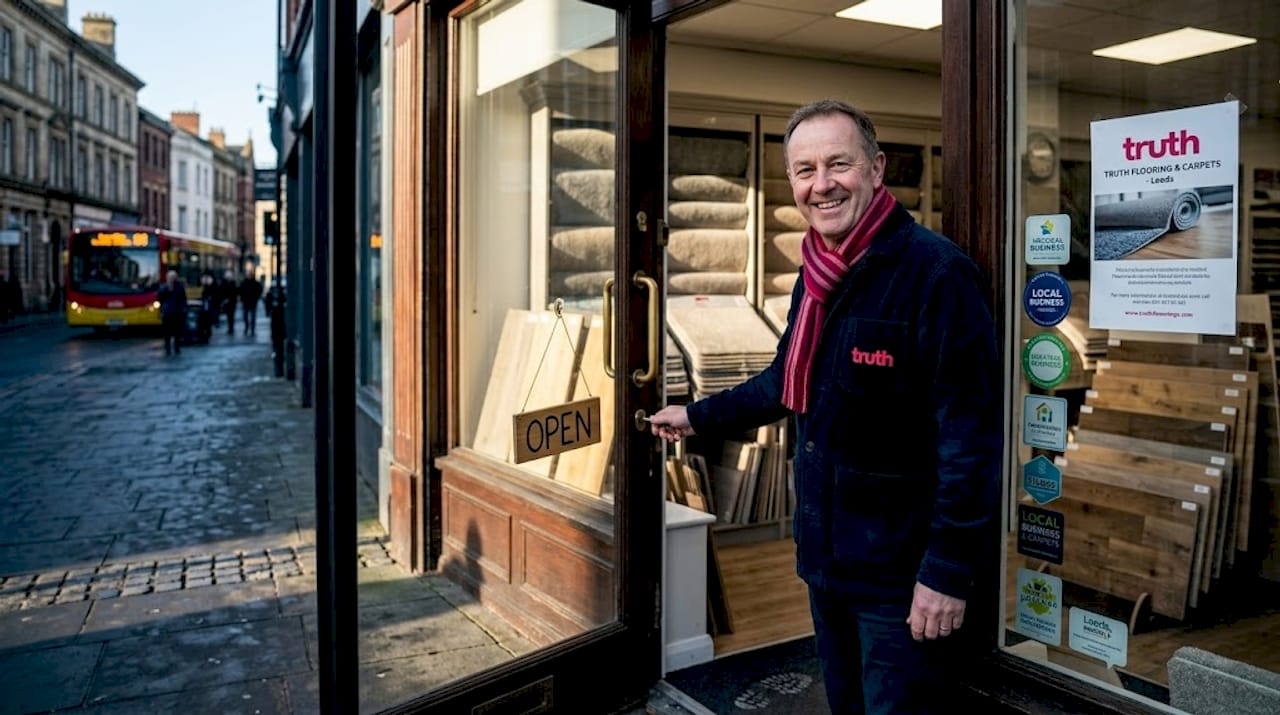
- Exterior shot of your shop or unit (ideally with clear signage)
- Interior shots showing product displays or your showroom floor
- Branded van or vehicle if you’re a mobile installer
- Before and after shots of real installations
- Team photos to humanise the business
- Close-ups of key product ranges (carpet, wood, LVT tiles)
Good photos make a measurable difference. Customers compare listings in seconds. A profile with 15 high-quality images looks significantly more credible than one with a single blurry exterior shot. Check our tips on flooring photo galleries for more on getting this right.
| Listing element | Basic profile | Optimised profile |
|---|---|---|
| Categories | 1 generic category | 1 primary + 2 secondary |
| Services | None listed | Full service breakdown |
| Photos | 1 exterior | 10+ varied, high quality |
| Reviews | None or few | Regular, responded to |
| Posts | None | Monthly updates |
| Hours | Basic | Full + special hours |
| Q&A | Empty | Pre-answered key questions |
Google Posts are also worth using. You can publish updates about new product arrivals, seasonal offers, or recent project work. These appear on your profile and signal to Google that your business is active. Combined with regularly updating your website content, this activity sends consistent freshness signals to Google.
Once your listing is optimised, check common issues and maintain your presence for lasting results.
Beyond set-up: Troubleshooting and ongoing management tips
Even a well-set-up profile needs attention over time. Here are the most common issues we see and how to fix them.
- Duplicate listings. If your business appears more than once on Google, merge or request removal of the duplicate. Duplicate listings split your reviews and confuse customers.
- Inconsistent NAP (name, address, phone). If your listing says “Johnson’s Carpets” but your website says “Johnsons Carpet & Flooring Ltd,” that inconsistency weakens your local ranking. Align everything.
- Missing or wrong services. If you’ve recently added LVT installation or floor sanding to your offering, update your GBP immediately. Outdated service listings cost you enquiries.
- Unresponded reviews. Ignoring reviews, especially negative ones, signals poor customer care. Respond professionally to every review, positive or negative.
- Outdated photos. Replace poor-quality images with fresh, well-lit shots regularly. Aim to add new photos at least once per quarter.
Pro Tip: Set a monthly reminder to log in to your GBP and check for any suggested edits from the public (yes, anyone can suggest changes to your listing). Review and approve or reject them each month.
You control your digital first impression. Keep it current.
As highlighted throughout this guide, GBP verification is the non-negotiable starting point, but ongoing management is what separates visible, trusted flooring businesses from ones that fade into obscurity. Your SERPs performance on Google is directly affected by how active and accurate your profile remains. And your website needs to mirror it consistently.
With everything running smoothly, here’s our view on what really makes flooring shops thrive with local search.
Our perspective: What most flooring shops get wrong and what actually works
We work exclusively with flooring businesses across the UK. We see the same patterns repeatedly. The biggest mistake isn’t failing to claim a listing. It’s treating the listing as something you set up once and never touch again.
A flooring shop that does this is leaving real enquiries on the table every month. Google rewards active, accurate, and engaging profiles. An abandoned profile, even a verified one, loses ground to competitors who actively manage theirs.
The second most common error is installers using false or borrowed addresses to appear more “local” to specific towns. Google’s systems detect this. Listings using addresses where no legitimate business activity occurs get suspended. It’s a short-term tactic with a long-term cost. Use your real service area instead. Specify the towns and postcodes you genuinely serve.
What actually works is consistency and authenticity. Genuine photos of your real installations. Honest responses to every review, including the difficult ones. Regular posts about seasonal products or recent projects. Detailed, accurate service listings. These actions compound over time. A flooring shop that maintains this discipline for 12 months consistently outperforms competitors who only optimised their listing once.
We’d also strongly encourage you to make your unique selling point visible in every field available, not just your website. If you specialise in engineered oak fitting or commercial LVT installation, say so explicitly in your business description, your services, and your posts. Generic profiles get generic results.
Refreshing your content across both your GBP and website isn’t busywork. It’s one of the most reliable ways to hold and improve your local position over time.
Turn your listings into leads with expert support
Getting your Google Business Profile right is a great start, but the flooring businesses generating consistent enquiries don’t stop there.
They pair their local listings with ongoing SEO for flooring companies and precisely targeted Google Ads management to capture demand at every stage of the customer journey. At Truth Digital, we specialise entirely in digital marketing for UK flooring businesses. We know the search terms your customers use, the questions they ask, and the moments they’re ready to buy. Whether you need help configuring your listing, tracking performance, or building a strategy that turns local visibility into real sales, we’re here to support you every step of the way. Get in touch and let’s talk about what’s possible for your business.
Frequently asked questions
How do I hide my home address if I’m an installer and not a shop?
Google allows you to hide your address for service-area-only flooring businesses where customers never visit your location. Simply select the service-area option during profile setup and leave your address hidden.
What’s the fastest way to verify a Google Business Profile for a flooring shop?
Video verification is often the quickest route for shops and mobile installers. Show your premises, business signage, or branded vehicle clearly, and Google typically processes it faster than postal verification.
Should I list all my services or just pick one for my Google Business Profile?
List every relevant service you offer. Google lets you add predefined and custom services to your profile, and each one is an additional opportunity to match a customer’s search.
What happens if I don’t finish verification?
Your flooring business profile won’t appear in Google search results or Google Maps until verification is complete. Customers simply cannot find you.
Can I use a PO Box or virtual office address?
No. Google’s eligibility requirements are strict on this point. PO Boxes and virtual office addresses are not accepted as valid business locations for local listings.