
TL;DR:
- Effective flooring keyword research identifies search phrases that match customer intent, boosting qualified inquiries. Prioritizing local, long-tail, and material-specific keywords aligns content with buyer needs, increasing conversions. Regular analysis using tools like Google Search Console ensures your SEO remains relevant and competitive.
Keyword research for flooring is the process of identifying the exact search phrases potential customers use to find flooring services, then prioritising which terms to target based on intent, competition, and search volume. Done well, it connects your website to people who are ready to buy, not just browse. Tools like Google Search Console, Ahrefs, and WordStream sit at the centre of any serious flooring SEO workflow. Without this foundation, you are guessing which pages to build and which services to promote online.
What is keyword research for flooring businesses?
Keyword research for flooring is the practice of segmenting search terms into service and material categories, then layering in local intent to match where a homeowner is in their buying journey. A customer searching “hardwood floor installation in Manchester” is far closer to hiring than someone searching “types of wood flooring.” Both are valuable, but they require different content and different pages. The goal is not to rank for every term. It is to rank for the right terms at the right time.

This process is also known in the SEO industry as keyword analysis or keyword mapping, and it underpins every other decision you make about your website. Which pages to build, what headings to use, how to write your meta titles — all of it flows from keyword research. Flooring businesses that skip this step often end up with websites that attract traffic but generate no enquiries.
Flooring keywords signal customer intent, budget, and readiness to hire. Aligning your website content with these exact phrases turns traffic into qualified leads. That is the core value of keyword research for any flooring retailer or installer operating in the UK market.
How does keyword intent shape your flooring SEO strategy?
Search intent is the single most important factor in choosing which keywords to target. Get it wrong and you attract visitors who will never convert, no matter how well your site is built.
There are two primary intent types to understand:
- Informational intent: The searcher wants to learn. Examples include “what is LVT flooring,” “how long does carpet installation take,” or “difference between laminate and vinyl.” These queries suit blog posts, guides, and FAQ pages.
- Transactional intent: The searcher wants to hire or buy. Examples include “epoxy floor installers near me,” “carpet fitting Leeds,” or “LVT flooring supply and fit Birmingham.” These queries suit dedicated service or product landing pages.
Mapping keywords to funnel stages allows you to match content format to intent, which avoids the common mistake of mixing the two. A blog post targeting “what is LVT flooring” will not convert someone searching “LVT fitters in Bristol.” Sending transactional traffic to an informational page is one of the most common reasons flooring websites generate poor-quality leads.
Pro Tip: Before you write any new page, check the top three Google results for your target keyword. If they are all blog posts, Google reads that query as informational. If they are all service pages with contact forms, it is transactional. Match your format to what Google already rewards.
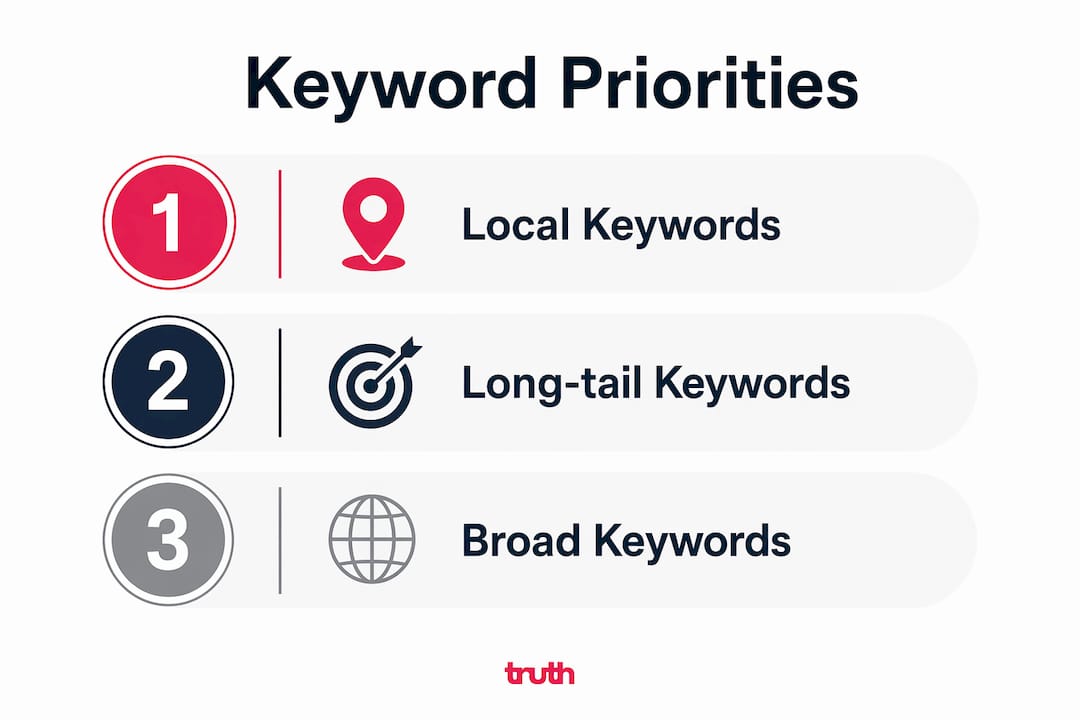
Broad, long-tail, and local keywords: which should you prioritise?
Not all keywords carry the same weight for a flooring business. Understanding the three main types helps you allocate your time and budget more effectively.
| Keyword type | Example | Search volume | Competition | Purchase intent |
|---|---|---|---|---|
| Broad | flooring installation | High | High | Low |
| Long-tail | engineered oak flooring installation | Low | Low | High |
| Local | carpet fitters in Sheffield | Medium | Medium | Very high |
Broad keywords build authority and visibility over time, but they are expensive to rank for and attract a wide mix of searchers. “Flooring installation” could be searched by a homeowner, a student writing an essay, or a competitor researching the market.
Long-tail keywords have lower search volume but attract people who know exactly what they want. Someone searching “engineered oak flooring supply and fit Nottingham” is not browsing. They are comparing quotes. Long-tail and local keywords carry higher purchase intent and lead quality, which makes them the priority for most flooring businesses with limited SEO budgets.
Local modifiers are the most powerful tool in a flooring company’s keyword arsenal. Patterns like “service + city” or “flooring type + near me” reduce competition significantly and attract ready-to-hire customers. A page targeting “vinyl plank flooring fitters in Leicester” will outperform a generic “flooring services” page almost every time, because it matches the homeowner’s exact search at the exact moment they are ready to act.
Pro Tip: Build your keyword list around the combination of material, service, and location. “Laminate flooring installation Bristol,” “carpet supply and fit Leeds,” and “LVT fitters Manchester” are the patterns that generate real enquiries. Start with your top three services and your top three locations, then expand from there.
How to use Google Search Console and other tools for flooring keyword research
A structured workflow separates businesses that rank consistently from those that publish content and hope for the best. Here is the process we recommend at Truthdigital.
Start with Google Search Console. GSC reveals actual queries your site already ranks for, including terms you may not have targeted deliberately. Filter by impressions to find keywords with high visibility but low click-through rates. These are quick wins.
Identify content gaps. Look for queries where you appear on page two or three. A targeted update to an existing page is often faster than creating a new one. GSC is used in loops: identify queries, map pages, update content, and track results over time.
Expand with seed patterns. Take your top services and materials, then combine them with location names and intent modifiers. “Hardwood floor sanding + city,” “LVT installation + near me,” “carpet fitting + postcode area.” Tools like Ahrefs or WordStream validate these patterns with volume and difficulty data.
Analyse the SERP structure. Checking local pack versus organic SERPs tells you which content format Google expects. A “near me” query often triggers a map pack, meaning your Google Business Profile matters more than a blog post for that term.
Cluster and prioritise. Group related keywords by intent and page. One page should own one primary intent. Avoid targeting “LVT flooring cost” and “LVT fitters near me” on the same page. They serve different searchers.
Track and refine. Keyword performance shifts. Review GSC data monthly and adjust pages that are losing ground. SEO is not a one-time task. It is an ongoing cycle.
Pro Tip: Use the “Queries” tab in Google Search Console filtered by a specific page URL. This shows you exactly which terms are driving impressions to that page, revealing whether your content is attracting the right intent or drifting into irrelevant traffic.
How to apply keyword research to your flooring website
Knowing your keywords is only half the job. The other half is building a website structure that puts those keywords to work. You can learn more about this in our guide to onsite SEO for flooring businesses.
Intent-matched landing pages for specific materials and services outperform generic service pages by matching homeowner search behaviour more precisely. A page dedicated to “laminate flooring installation” will rank better for that term than a broad “our services” page that mentions laminate in passing.
Here is how to apply keyword research across your site:
- Create material-specific pages. Build separate pages for carpet, LVT, engineered wood, laminate, and any other materials you supply. Each page targets its own keyword cluster.
- Add location pages for each area you serve. A page for “carpet fitters in Leeds” and a separate page for “carpet fitters in Bradford” both capture local intent. Localised pages capture geographic search intent that a single generic page cannot.
- Align meta titles and H1 headings with your target keyword. If the page targets “engineered wood flooring Manchester,” that phrase should appear in the title tag, the H1, and naturally within the first paragraph.
- Use internal links to reinforce topical authority. Link your laminate page to your blog post about “laminate vs LVT.” Link your location pages to your relevant service pages. This signals to Google that your site covers the topic in depth.
- Add alt text to flooring images. A photo of a herringbone oak floor should carry alt text like “engineered oak herringbone flooring installation Birmingham.” This contributes to keyword relevance without affecting the reading experience.
Keyword mapping drives site architecture decisions, internal link structure, and which pages to optimise or create. Treat it as your site’s blueprint, not an afterthought. You can also read our guide on writing flooring service pages that convert visitors into enquiries.
Common mistakes in flooring keyword research
Even experienced marketers make these errors. Avoiding them saves months of wasted effort.
- Ignoring local modifiers. Targeting “carpet installation” nationally when you serve three cities is a waste of resources. Local intent keywords convert at a far higher rate for service-based businesses.
- Publishing blog content for transactional queries. If someone searches “LVT fitters near me,” they want a service page with a phone number, not a 1,500-word article about LVT flooring history.
- Misreading “near me” SERPs. Local modifiers change the expected SERP layout, often requiring Google Business Profile and local pack optimisation rather than content pages. Many flooring marketers write blog posts for terms where a map listing would serve them better.
- Targeting vanity keywords. Ranking for “best flooring in the UK” sounds impressive but rarely generates local enquiries. Focus on terms with clear commercial intent and geographic relevance.
- Never revisiting keyword data. Search behaviour changes. New competitors enter your market. Google updates its algorithms. Monthly reviews of GSC data keep your strategy aligned with reality.
Pro Tip: AI and natural language processing tools can identify keyword clusters from flooring search data and distinguish informational from transactional queries. Use them to audit competitor content and find gaps your site can fill.
What I have learned from working with flooring businesses on keyword research
The biggest mistake I see flooring businesses make is treating keyword research as a one-off task. They do it once, build a few pages, and move on. Six months later, they wonder why their rankings have stalled.
Keyword research is a prioritisation process, not a list-building exercise. The businesses that grow consistently online are the ones that review their Google Search Console data every month, update pages that are slipping, and build new content around emerging search patterns. I have seen flooring companies double their organic enquiries simply by adding location-specific pages they had overlooked and fixing intent mismatches on existing pages.
Local SEO and targeted content marketing work best when they are built on solid keyword data. A well-researched keyword list tells you where to invest your time. It tells you which services to promote, which locations to target, and which questions your customers are asking before they pick up the phone. That intelligence is worth more than any paid advertising campaign. You can explore how this connects to broader organic search strategy for UK flooring retailers.
The flooring businesses winning on Google right now are not the ones with the biggest budgets. They are the ones with the clearest understanding of what their customers are searching for.
— John
How Truthdigital helps flooring businesses with keyword research and SEO
At Truthdigital, we work exclusively with flooring businesses across the UK. Keyword research sits at the core of everything we do, from building new websites to running ongoing SEO campaigns.
We identify the exact search terms your customers use, map them to intent-matched pages, and build or optimise your site to rank for them. Whether you are a carpet retailer in Leeds, an LVT installer in London, or a sanding specialist in Bristol, we tailor the strategy to your services and locations. Our SEO for flooring companies service covers keyword research, on-page optimisation, local SEO, and monthly performance reporting. If you want qualified leads from Google, let us talk.
FAQ
What is keyword research for flooring?
Keyword research for flooring is the process of identifying the search phrases potential customers use to find flooring services, then prioritising which terms to target based on intent, search volume, and competition. It forms the foundation of any flooring SEO strategy.
Why is keyword research important for flooring businesses?
Without keyword research, your website targets guesswork rather than real customer demand. Aligning content with exact search phrases turns organic traffic into qualified enquiries from homeowners ready to hire.
What are the best keywords for flooring businesses?
The best keywords combine a flooring material or service with a local modifier, such as “LVT fitters Manchester” or “carpet installation Leeds.” Long-tail and local keywords carry higher purchase intent and generate better-quality leads than broad terms.
Which tools are best for flooring keyword research?
Google Search Console is the starting point, as it shows real queries your site already ranks for. Ahrefs and WordStream expand your keyword list with volume and difficulty data, helping you validate and prioritise terms before investing in content.
How often should flooring businesses review their keywords?
Monthly reviews of Google Search Console data are the minimum. Search behaviour shifts, competitors enter the market, and Google updates its ranking signals regularly. Treating keyword research as an ongoing process rather than a one-time task keeps your strategy effective.