TL;DR:
- Cross-selling flooring products involves recommending complementary items to enhance the customer’s purchase and experience. Mastering diagnostic selling, comprehensive inspections, and tiered packages fosters trust, increases sales, and builds enduring relationships. Post-installation follow-up maintains momentum, encourages repeat business, and transforms customers into long-term advocates.
Cross-selling flooring products is defined as the practice of recommending complementary products and services alongside a customer’s primary flooring purchase to increase order value and improve their overall experience. Done well, it transforms a single-product transaction into a complete flooring solution. This guide to cross-selling flooring products covers the core techniques used by top-performing flooring retailers: diagnostic selling, full-area inspection, good/better/best package presentation, structured in-home rituals, and post-installation follow-up. Tools like the Roomvo visualiser and CRM platforms make these strategies easier to execute at scale. Master these methods and you will sell more, earn more referrals, and build lasting customer relationships.
Guide to cross-selling flooring products: the diagnostic selling foundation
Diagnostic selling is the most effective starting point for any cross-selling strategy in flooring retail. Rather than pitching products immediately, you ask targeted questions to understand the customer’s specific situation before making a single recommendation. Floor Covering News describes a structured framework where sales reps ask tailored questions and write down answers to focus product pitches on customer needs rather than generic selling.
The questions that matter most cover four areas:
- Traffic and lifestyle: How many people live in the home? Are there children or pets? High-traffic households need more durable products, which opens the door to premium LVT or commercial-grade carpet.
- Design goals: What colours, styles, or finishes are they drawn to? This reveals whether accessories like matching skirting boards or transition strips are relevant.
- Budget: What is their overall budget for the project? Knowing this helps you position tiered packages confidently rather than guessing.
- Existing flooring: Which rooms are they replacing now, and which might need attention in the next year or two? This is where future cross-sell seeds are planted.
Writing down the answers is not just good practice. It signals to the customer that you are listening, which builds trust faster than any sales script. Cross-selling works best when it is framed as diagnosing and solving customer needs rather than simply selling more products. That mindset shift repositions you from salesperson to trusted adviser.
Pro Tip: Ask “What frustrates you most about your current floor?” before any product discussion. The answer almost always reveals a cross-sell opportunity, whether that is noise reduction underlay, scratch-resistant coating, or a specialist cleaning kit.
Why should you inspect all flooring areas during a visit?
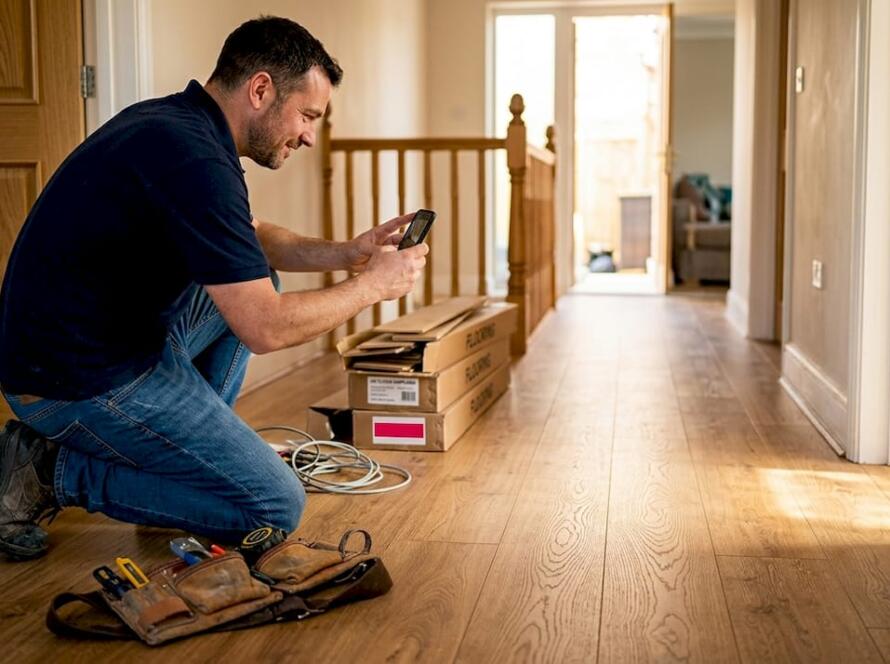
Inspecting every room in the home, not just the one the customer initially called about, is one of the highest-return habits in flooring sales. FCNews recommends inspecting all flooring areas with permission to identify additional products and referral opportunities, broadening the scope well beyond the initial project.
The key word is permission. Ask diplomatically: “Would you mind if I took a quick look at the rest of your flooring while I’m here? It helps me give you a more accurate quote and flag anything that might need attention.” Most customers say yes. And when they do, you gain access to a far wider set of opportunities.
Here is what a thorough inspection typically uncovers:
- Additional rooms ready for replacement. A hallway or bedroom that looks tired but was not mentioned. Customers often do not think to ask about multiple rooms until you point out the option.
- Area rug opportunities. Hard flooring in a living room or dining room often benefits from a quality rug for warmth and acoustics. This is a straightforward add-on with strong margins.
- Window treatments. Many flooring retailers have referral partnerships with blind and curtain suppliers. A quick mention earns goodwill and a referral fee.
- Cleaning and maintenance products. Hardwood floors, LVT, and carpet all require specific care products. Spotting the existing floor condition lets you recommend the right kit on the spot.
Capturing exact square footage and photos of all flooring during in-home visits enables faster, more accurate future quoting and uncovers adjacent sales opportunities without rework. This is a practical detail that pays off repeatedly. When a customer calls back six months later about another room, you already have the measurements. That speed and accuracy builds confidence in your professionalism.
Obtaining permission to inspect all areas also positions you as a long-term adviser rather than a one-visit contractor. That psychological shift is significant. Customers who see you as a trusted resource return, refer friends, and accept add-on recommendations far more readily.
How does the good/better/best model increase add-on sales?
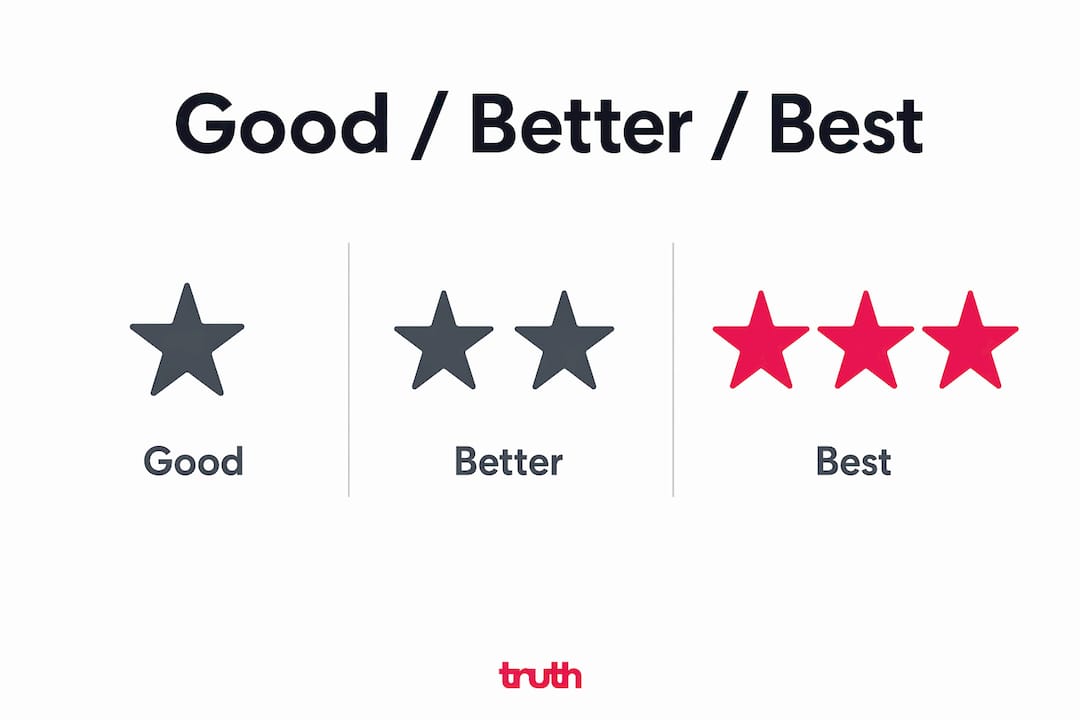
The good/better/best presentation model is one of the most reliable flooring sales techniques for increasing attach rates on accessories and upgrades. Instead of asking “Would you like to add underlay?”, you present three fully installed packages at three price points, each with different combinations of product, underlay, and finishing accessories already bundled in.
Here is how a typical three-tier structure looks for a carpet installation:
| Package | Product | Underlay | Extras | Installed price |
|---|---|---|---|---|
| Good | Entry-level carpet | Standard 8mm foam | Basic gripper | £X per m² |
| Better | Mid-range carpet | 11mm memory foam | Gripper + door bars | £X per m² |
| Best | Premium carpet | 15mm luxury pad | Gripper, door bars, stair rods | £X per m² |
Presenting three tiered installed packages transforms the cross-sell question from a yes/no decision into a choice between positive options, easing decision-making and increasing attach rates. Customers are no longer deciding whether to buy the underlay. They are deciding which level of comfort they want.
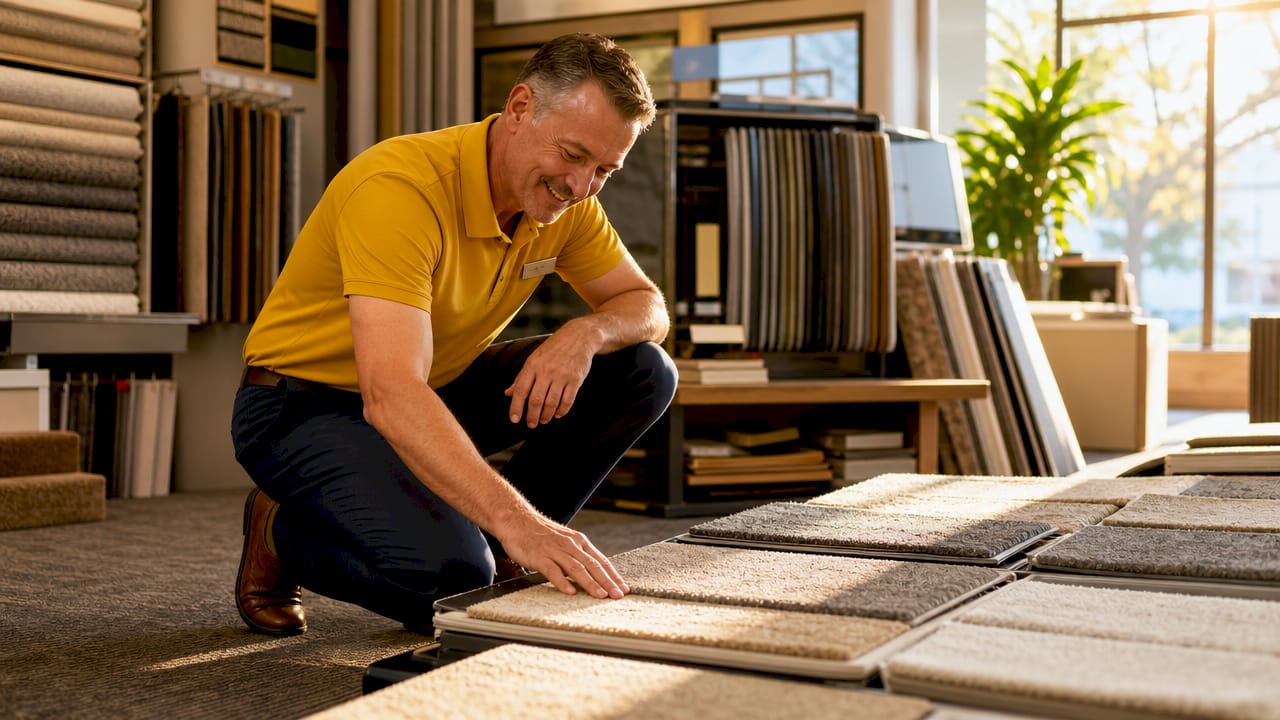
Use physical samples during this presentation. Place two underlay pads on the floor and invite the customer to step on both in bare feet. The easiest attach in flooring sales is upgrading the pad, and it is most effective when demonstrated directly via a customer barefoot step-on comparison. The sensory difference sells itself. No script needed.
Visualiser tools like Roomvo can support this stage by showing the customer how each product tier looks in their actual room using a photo from their phone. This reduces hesitation and makes the premium option feel more tangible. You can also use your flooring showroom design to display all three tiers side by side, giving walk-in customers the same structured choice before they even book a home visit.
Pro Tip: Script your transition into the three-tier presentation. Something like: “Based on what you’ve told me, I’ve put together three options that all work for your home. Let me show you what’s included in each.” This frames the presentation as personalised, not generic.
What does an effective in-home cross-selling ritual look like?
A repeatable in-home ritual removes guesswork from the sales process and gives every customer a consistent, professional experience. Pulse Sales Trainings describes a 60-minute “Sample-to-Room Close” that incorporates demos and tiered quotes to sell the finished floor with higher margins. Here is how to structure it:
- Diagnostic walkthrough (minutes 0 to 15). Ask your diagnostic questions, take notes, and inspect all flooring areas with permission. Photograph everything. This is where you gather the information that makes every subsequent step relevant.
- Sample demonstration in situ (minutes 15 to 30). Place your shortlisted samples in the actual room. Hold them against the wall, lay them on the existing floor, and let the customer walk on the underlay options. Repeatable selling rituals with demonstrations reduce uncertainty and help customers justify selecting premium add-ons. The physical experience is far more persuasive than a brochure.
- Tiered quote presentation (minutes 30 to 45). Present your good/better/best packages with installed pricing. Walk through what is included in each tier and explain the practical difference. Keep it conversational, not a lecture.
- Close with financing options (minutes 45 to 60). Summarise the customer’s preferred option, confirm the scope including any additional rooms or accessories identified during the walkthrough, and introduce any available finance or payment plans. Customers resist pressure but readily accept add-ons when benefits are clearly explained and sales teams are trained to communicate confidently.
This structure shifts the customer’s mindset from price shopping to value shopping. By the time you reach the close, they have experienced the product physically, seen three clear options, and had their specific needs addressed. The conversation is no longer about cost per square metre.
How to maintain cross-sell momentum after installation
Post-installation is where most flooring retailers leave money on the table. The sale is done, the fitter has left, and contact with the customer drops to zero. That is a missed opportunity. Cross-selling does not end post-installation; ongoing communication builds loyalty and generates future sales.
A structured follow-up sequence looks like this:
- Day 3 after installation: Send a thank-you message by email or text. Ask how the floor looks and whether they have any questions about care. Include a link to your recommended cleaning products.
- Month 1: Send a maintenance reminder with tips specific to the product they purchased. Hardwood floors need different care than LVT or carpet. Personalised advice reinforces your expertise.
- Month 6: Follow up on any rooms identified during the initial inspection that were not included in the original order. Reference your notes and photos. “You mentioned the hallway might need attention later in the year” is a powerful opener.
- Year 1 to 2: For hardwood floors, schedule a recoat or refinish reminder. For carpet, offer a professional clean. These services generate revenue and keep your brand front of mind.
CRM tools like Jobber, ServiceTitan, or a well-configured spreadsheet system can automate much of this. The goal is to make follow-up a scheduled process, not something that happens when you remember. Pair your CRM outreach with social media posts showing completed installations. Customers who see their own floor type featured are more likely to engage and share, which generates referrals at no additional cost. You can also explore cross-channel marketing strategies to keep your flooring business visible between purchase cycles.
From selling floors to solving problems: a personal view
I have worked with flooring retailers across the UK, and the pattern is consistent. The businesses that struggle with cross-selling are the ones treating it as an add-on question at the end of a pitch. The businesses that thrive have made it the entire structure of their sales process.
The diagnostic approach changes everything. When a sales rep asks about pets, lifestyle, and long-term plans before showing a single sample, the customer stops seeing them as a salesperson. They start seeing them as someone who actually understands their home. That trust is what makes a customer say yes to the premium underlay, the matching accessories, and the maintenance kit without feeling pressured.
One thing I would caution against: overloading the customer. Shopify’s research on cross-selling recommends limiting add-on suggestions to three at most. More than that and the customer starts to feel upsold rather than helped. Relevance and restraint are the difference between a customer who buys more and a customer who walks away.
The other thing I see consistently underused is role-play practice. The good/better/best presentation and the barefoot pad demo both require confidence to deliver well. Run them in your team meetings. Practise the transitions. The ritual only works if it feels natural, and natural only comes from repetition.
Measure everything. Track which add-ons are accepted most often, which diagnostic questions generate the best leads, and which follow-up timings produce the most callbacks. The data will tell you where to focus your training.
— John
How Truth Digital helps flooring businesses sell more
If you are putting these cross-selling strategies into practice, your digital presence needs to match the quality of your in-person sales process. Truth Digital works exclusively with flooring retailers and installers across the UK, helping them attract more qualified enquiries through flooring SEO and Google Ads management built specifically for the flooring sector.
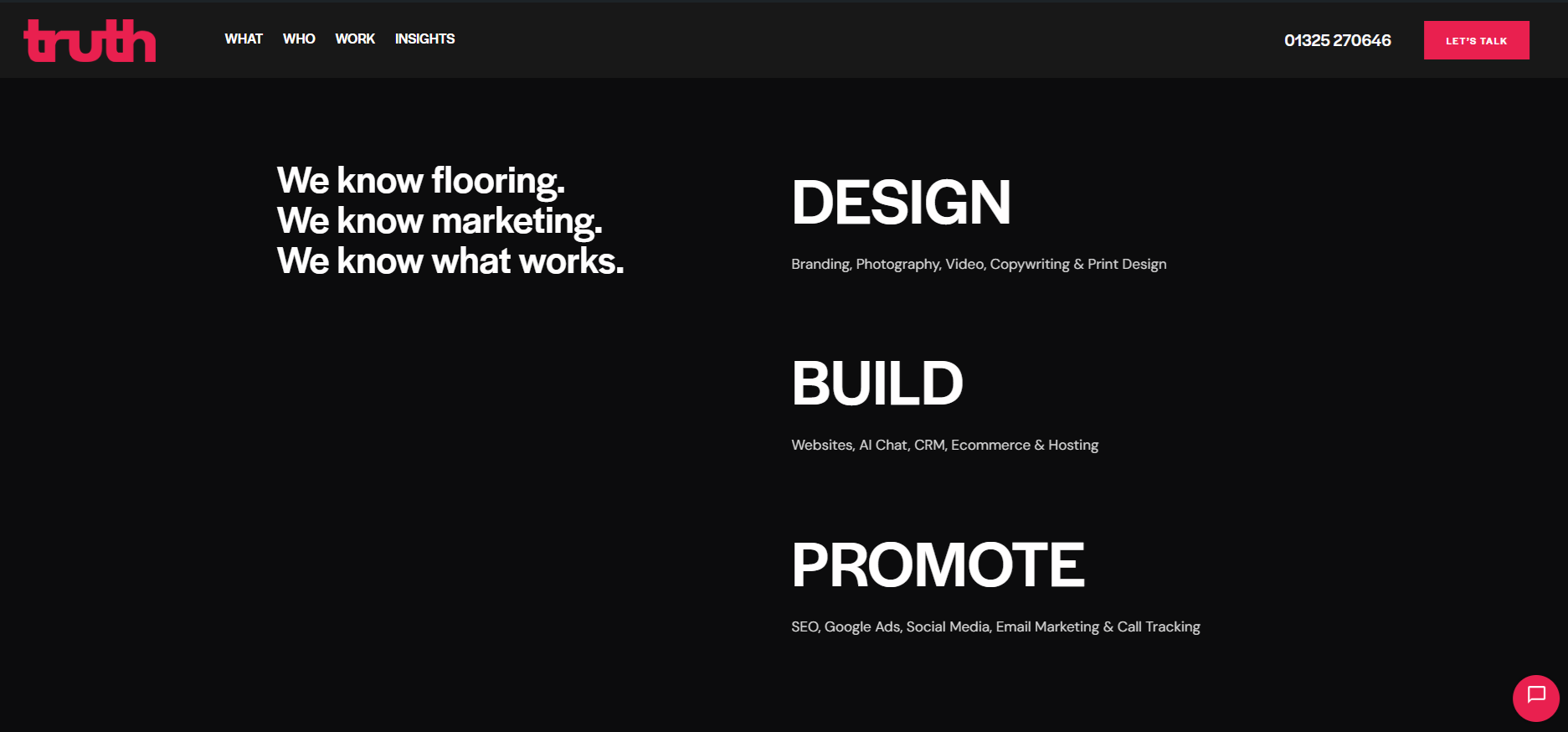
We build websites that support your sales process, from product pages that showcase your good/better/best packages to enquiry systems that feed your CRM. Our design services for flooring brands cover the marketing collateral that supports in-home presentations and post-installation follow-up. If you want a digital setup that works as hard as your sales team, get in touch with Truth Digital today.
FAQ
What is cross-selling in flooring retail?
Cross-selling in flooring retail is the practice of recommending complementary products alongside a customer’s primary purchase, such as underlay, cleaning kits, transition strips, or area rugs, to increase order value and improve the customer’s overall result.
How does diagnostic selling improve cross-sell results?
Diagnostic selling uses targeted questions about traffic, pets, design goals, and budget to identify the most relevant add-ons for each customer. Floor Covering News confirms this approach leads to better-matched recommendations and higher cross-sell acceptance rates.
What is the good/better/best presentation model?
The good/better/best model presents three fully installed packages at different price points, each bundling the core product with accessories and underlay. This turns the cross-sell from a yes/no question into a choice between options, which increases attach rates.
How many add-ons should you recommend at once?
Limit cross-sell suggestions to three at most per appointment. Recommending more than three add-ons at once reduces acceptance and can make customers feel pressured rather than helped.
When should post-installation follow-up happen?
The most effective follow-up sequence starts three days after installation with a care reminder, continues at one month with maintenance tips, and revisits unfinished rooms at six months. Recoat and refinish reminders at the one to two year mark generate repeat revenue from existing customers.