TL;DR:
- Consistent branding across website, social media, and Google Business Profile builds buyer trust.
- Local SEO and GBP optimization significantly increase targeted traffic and quality leads.
- Combining organic and paid marketing with excellent customer service drives growth and conversions.
UK flooring businesses face a real challenge online. Buyers search, compare, and decide before they ever visit a showroom. If your brand looks inconsistent, outdated, or untrustworthy on screen, you lose them. The good news is that well-executed digital branding changes that fast. From local SEO to photo galleries to paid campaigns, there are proven strategies that help flooring businesses stand out and generate more enquiries. In this article, we cover the key criteria, practical options, and real-world examples so you can make smarter decisions about your online presence. We’ve seen first-hand how a focused approach, like the work we did rebuilding The Flooring Outlet’s website, can transform a brand’s digital footprint.
Key Takeaways
| Point | Details |
|---|---|
| Consistency drives trust | Unified online brand messaging helps UK flooring businesses win more leads and loyal customers. |
| Local SEO is critical | Optimising for local search and Google Business Profile delivers the biggest gains in traffic and conversions. |
| Visual content builds credibility | Photo galleries and testimonials make your brand more relatable, increasing buyer confidence. |
| Blend organic and paid | Combining organic branding with paid campaigns gives sustained results for flooring businesses online. |
Branding foundations: Key elements for flooring businesses
Every strong online brand starts with the same building blocks. Get these right and everything else becomes easier.
For flooring businesses, the core elements are:
- A clear, professional logo that works across all screen sizes
- A consistent colour palette used on your website, social media, and ads
- A defined tone of voice that matches your customer base (whether that’s trade, residential, or luxury)
- High-quality visuals that reflect the actual products and installations you offer
These aren’t just aesthetic choices. They signal professionalism to buyers who are deciding whether to trust you with their home or commercial project. Consistent omnichannel identity and regular audits are the mechanical backbone of effective digital branding.
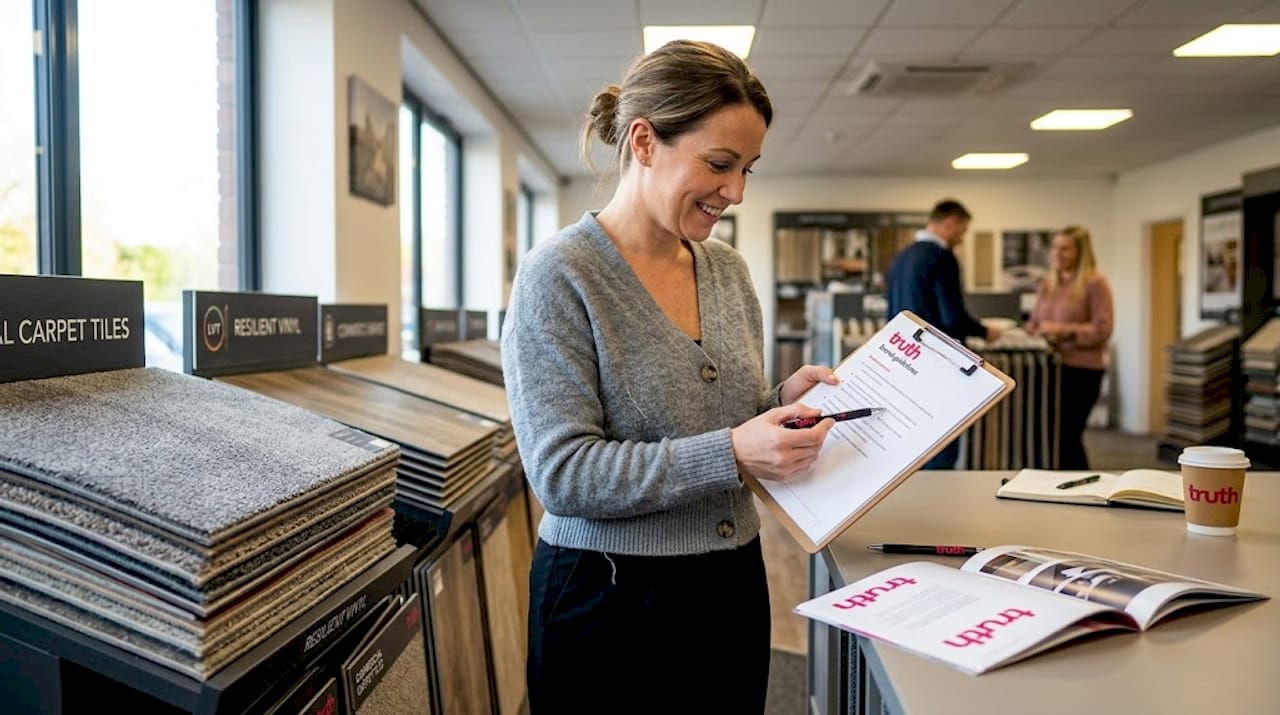
One of the most overlooked areas is your Google Business Profile (GBP). Many flooring businesses invest in a website but leave their GBP with outdated photos, inconsistent business names, or missing categories. That inconsistency erodes trust fast.
Common branding pitfalls we see regularly:
- Inconsistent messaging between website, GBP, and social profiles
- Outdated product photography that doesn’t reflect current stock
- No clear tone of voice, so the brand feels generic
- Neglected review responses that make the business look disengaged
Auditing your brand across every channel is the first practical step. Check your website, GBP, Facebook, Instagram, and any directory listings. Look for mismatched logos, different phone numbers, or conflicting descriptions. These small inconsistencies add up.
“Your brand is the sum of every touchpoint a customer encounters. One weak link can undermine the whole chain.”
Pro Tip: Use a free AI tool like ChatGPT or Google Gemini to compare your website copy, GBP description, and social bios side by side. Ask it to flag inconsistencies in tone, messaging, or contact details. It takes ten minutes and often reveals quick wins. You can also review common flooring website mistakes to identify gaps in your current setup.
SEO and Google Business Profile optimisation: Local impact
Local SEO is one of the highest-return activities a flooring business can invest in. It targets buyers who are already searching for what you offer, in the area you serve.
Generic keywords like “wood flooring” are highly competitive and expensive to rank for. Local keywords like “engineered wood flooring installer Leeds” or “carpet fitting Birmingham” attract buyers with genuine purchase intent. These searches convert at a much higher rate.
The data backs this up. Local SEO delivers over 214% traffic growth and three times more leads for UK flooring businesses compared to untargeted approaches.
| Traffic source | Average traffic increase | Lead quality | Cost over time |
|---|---|---|---|
| Local SEO (organic) | 214%+ | High intent | Reduces over time |
| Generic SEO | Moderate | Mixed intent | Moderate |
| Google Ads (paid) | Immediate | High intent | Ongoing spend |
| Social media (organic) | Variable | Lower intent | Time investment |
For your GBP specifically, focus on:
- Matching your business name, address, and phone number (NAP) exactly across all listings
- Uploading fresh project photos regularly (at least monthly)
- Selecting the most accurate primary and secondary categories
- Responding to every review, positive or negative
- Using the posts feature to share offers, new products, or completed projects
GBP optimisation is often underestimated. A well-maintained profile can appear in the local map pack for multiple flooring-related searches, giving you visibility without ad spend. Understanding local SEO essentials is the starting point for any flooring business serious about organic growth.
For businesses earlier in their SEO journey, it’s worth understanding how SEO helps small businesses build sustainable visibility over time rather than relying solely on paid traffic.
The key takeaway here is simple. Local SEO and GBP optimisation are not optional extras. They are foundational to your online brand and your lead pipeline.
Visuals and testimonials: Building trust online
Once your SEO foundations are in place, visuals and social proof become your most powerful conversion tools. Buyers can’t touch or feel flooring online. Your job is to bridge that gap.
Photo galleries and testimonials are central to flooring business digital branding. Real project photos outperform stock images every time. They show buyers what your work actually looks like in homes and commercial spaces similar to their own.
| Visual content type | Trust impact | Conversion effect | Effort required |
|---|---|---|---|
| Real project photos | Very high | Strong | Moderate |
| Stock images | Low | Weak | Low |
| Testimonial video | Very high | Very strong | High |
| Written review | High | Strong | Low |
| AR visualiser tool | High | Strong | High (initial setup) |
Key actions for visual branding:
- Build a dedicated photo gallery on your website, organised by flooring type
- Ask every satisfied customer for a photo and a review immediately after installation
- Feature testimonials prominently on your homepage and product pages
- Use before-and-after images to demonstrate transformation
Reviews deserve special attention. A flooring business with 80 Google reviews averaging 4.8 stars will consistently outperform a competitor with 12 reviews averaging 4.2 stars. Volume and recency both matter to buyers and to Google’s ranking algorithm.
Pro Tip: Consider adding an augmented reality (AR) visualiser to your website. Tools like Roomvo allow buyers to see how specific flooring products look in their own space using their phone camera. This bridges the gap between browsing online and visiting your showroom, and it significantly reduces purchase hesitation for tactile products like carpet and LVT. For more practical guidance, explore these photo gallery tips and website must-haves to strengthen your site’s conversion performance.
Multi-channel branding: From organic to paid campaigns
Visuals and testimonials build trust. Multi-channel marketing amplifies your brand to a wider audience and accelerates growth.
Different UK flooring businesses take very different approaches. UK Flooring Direct relies heavily on paid marketing for rapid reach and brand awareness, while Marldon has built its reputation primarily through organic content and SEO. Both approaches work, but they suit different business sizes and budgets.
Here’s a stepwise approach to building your multi-channel presence:
- Start with your website and GBP (the foundation)
- Build out organic SEO with local content and service pages
- Add Google Ads for immediate visibility on high-intent searches
- Use social media to showcase projects and build community
- Introduce email marketing for past customers and warm leads
- Review performance data monthly and reallocate budget accordingly
Organic channels:
- Build credibility over time
- Lower cost per lead once established
- Require consistent content and technical SEO effort
- Slower to show results initially
Paid channels:
- Deliver immediate visibility
- Highly targeted by location, product, and audience
- Require ongoing budget and management
- Results stop when spend stops
“The flooring businesses that grow fastest aren’t choosing between organic and paid. They’re using both, and they’re making sure a real person follows up every lead within the hour.”
This is a point worth emphasising. Automation and digital tools are powerful, but flooring is a considered purchase. Buyers want to speak to someone knowledgeable. The businesses that combine strong digital marketing with fast, human follow-up consistently outperform those that rely on digital alone.
We helped The Flooring Outlet build a strong brand presence from minimal online visibility using SEO, Google Ads, and email marketing working together. The results were significant precisely because the digital strategy was matched by excellent customer service on the ground. For practical guidance on paid campaigns, explore flooring Google Ads, flooring ad examples, and Google Ads strategies to understand what works in this sector.
How branding really works for UK flooring: Lessons from the front lines
Here’s what most branding guides won’t tell you. Digital polish is not the same as a strong brand.
We’ve worked with flooring businesses that had beautiful websites, consistent logos, and active social profiles, and still struggled to convert enquiries. The reason was almost always the same. The marketing promised one thing and the customer experience delivered another.
Marketing promises must align with real-world customer experience. That means response times, installation quality, aftercare, and communication all need to match what your website and ads say about you.
The flooring brands that consistently outperform their competitors do three things well. They invest in digital, they respond to leads quickly, and they follow through on every promise made in their marketing. No amount of SEO or paid ads will compensate for slow follow-up or poor service.
Conventional branding advice focuses on visuals and consistency. That’s necessary but not sufficient. The real edge comes from treating every digital touchpoint as a commitment to the customer, not just a marketing exercise. Avoiding common branding mistakes is part of it, but the bigger opportunity is building a brand that earns repeat business and referrals through genuine quality.
How to take your flooring brand further online
The strategies in this article work. But they work best when they’re planned, executed, and monitored by people who understand the flooring sector specifically.
At Truth Digital, we work exclusively with flooring businesses across the UK. We know what buyers search for, what converts, and what wastes budget. Whether you need a high-performing website, targeted SEO, or a managed Google Ads campaign, we can help you build a brand that generates consistent enquiries. Browse our flooring website success stories to see real results, or explore our flooring SEO services and Google Ads management to find the right starting point for your business. Let’s build something that works.
Frequently asked questions
What is the most important digital branding criterion for UK flooring businesses?
Consistency across all channels is the single most important factor, as mismatched messaging and visuals directly erode buyer trust and reduce lead conversion rates.
How can photo galleries improve online branding for flooring companies?
Real project photo galleries help buyers visualise your work in realistic settings, boosting engagement and building the credibility needed to convert website visitors into enquiries.
Why is local SEO more effective than generic keywords for flooring brands?
Local SEO targets buyers with genuine purchase intent, and 214%+ traffic growth alongside three times more leads demonstrates the clear advantage over broad, untargeted keyword strategies.
What’s the best mix of organic and paid branding channels for UK flooring businesses?
A combined approach consistently outperforms single-channel efforts; organic builds long-term credibility while paid channels deliver immediate targeted reach and precise audience control.