

TL;DR:
- Launching flooring webinars helps educate customers, establish authority, and generate targeted leads effectively.
- A structured 42-day planning process, audience segmentation, and interactive content maximize engagement and conversion.
- Integrating webinar platforms with CRM systems and robust promotion strategies transforms webinars into measurable revenue assets.
Launching flooring webinars is the most direct way to educate customers, build authority, and generate qualified leads for your flooring business. A webinar, in this context, is a live or pre-recorded online session, typically around one hour, where you teach, demonstrate, and engage your audience on flooring topics. Platforms like EasyWebinar, paired with CRM tools such as Salesforce and HubSpot, make it possible to run sessions that do more than inform. They capture behaviour signals, score leads, and feed your sales pipeline automatically. Done right, a flooring webinar turns your product knowledge into a lead generation engine.
How to launch flooring webinars: start with your audience
Before you record a single slide, you need to know exactly who you are talking to. Profiling a 7-element customer avatar ensures your webinar topics and offers align with real audience pains, fears, and buying triggers. Those seven elements are: demographics, pains, fears, goals, values, objections, and buying triggers.
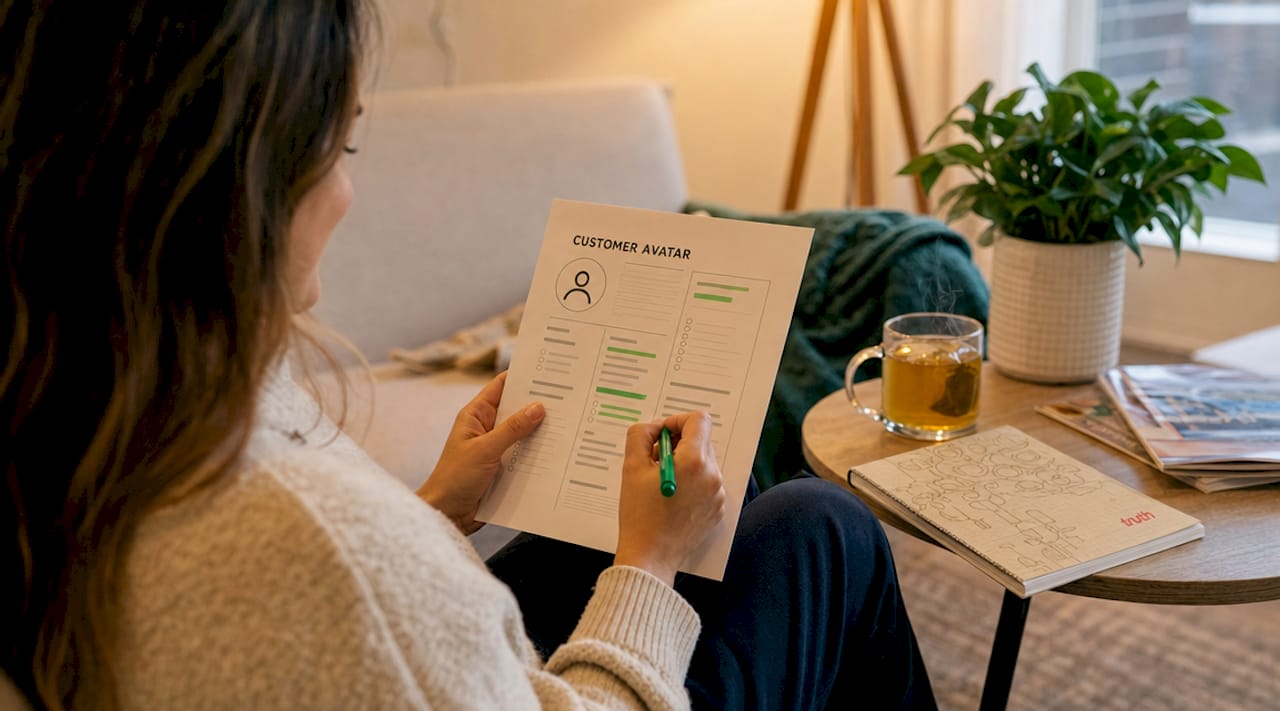
The flooring industry serves very different audiences, and each one needs a different approach. Homeowners worry about maintenance confusion, colour choices, and getting value for money. Architects and specifiers care about slip-resistance ratings, fire classifications, and warranty compliance. Independent retailers and trade professionals want product knowledge they can pass on to clients. Treating these groups as one audience produces content that resonates with none of them.
Here is how to segment your audience before planning any content:
- Homeowners: Focus on floor maintenance confusion, product longevity, and cost comparisons between carpet, LVT, and wood flooring.
- Architects and specifiers: Cover technical standards, slip-resistance requirements, and how to match flooring chemistry to specific materials.
- Trade professionals and retailers: Address installation best practices, warranty compliance, and cross-selling opportunities.
- Commercial buyers: Prioritise durability data, maintenance schedules, and total cost of ownership.
Pro Tip: Build a separate avatar document for each audience segment before you write a single slide. This saves hours of revision and stops you creating content that tries to please everyone and ends up helping no one. Truthdigital’s guide on flooring audience targeting covers this in more detail.
There is growing industry demand for specific flooring webinar topics covering technical standards, maintenance schedules, and warranty compliance. That demand tells you exactly where to start.
What webinar format should you choose?
Choosing the right format is a practical decision, not a creative one. There are three main types to consider.
| Format | Best for | Key advantage | Main limitation |
|---|---|---|---|
| Live webinar | Product launches, Q&A sessions | Real-time interaction, high trust | Requires full preparation each time |
| Simulated live | Repeat audiences, evergreen topics | Consistent delivery, scalable | Less spontaneous engagement |
| Evergreen (on-demand) | Lead magnets, SEO traffic | Runs 24/7 without your time | No live interaction |
For most flooring businesses starting out, a live webinar is the right choice. It builds trust faster and lets you respond to real questions from homeowners or trade buyers in the moment.
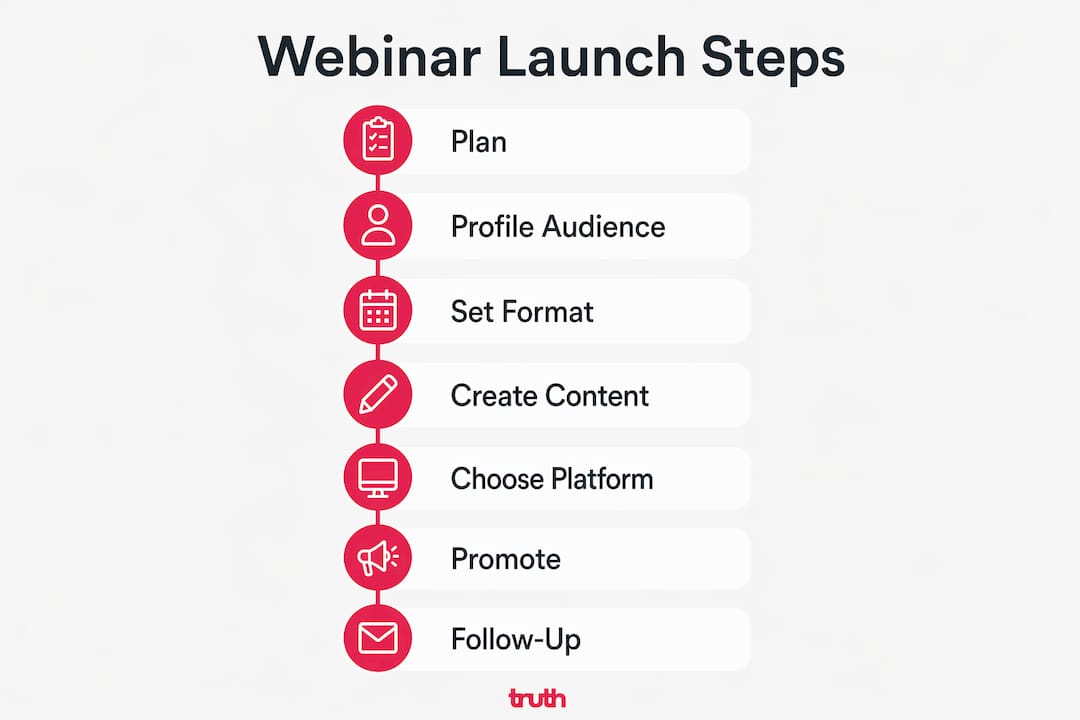
Once you have chosen your format, follow a structured timeline. A reliable webinar launch follows a 42-day timeline with clearly defined milestones. Here is the sequence:
- T-42 days: Lock your topic and confirm your speaker or presenter.
- T-28 days: Build your registration page and set up your email sequence.
- T-21 days: Open registration and begin your first promotion wave.
- T-14 days: Launch your main promotional push across email and social.
- T-7 days: Run a dry run with 3 to 5 test participants to catch tech issues.
- T-1 day: Final tech check, confirm all integrations are live.
- Day 0: Go live.
If 42 days feels too long, a compressed 14-day sprint works for testing. You skip the extended promotion window, but it lets you validate your topic and format before committing to a full campaign.
Pro Tip: Do not skip the dry run. Dry runs with 3 to 5 test participants are the single most effective way to catch audio issues, slide errors, and awkward transitions before they happen in front of real customers.
How do you create flooring webinar content that actually engages?
The content is where most flooring webinars fail. The mistake is treating the session as a product showcase. Treating webinars as teaching sessions rather than sales pitches builds trust and yields higher-quality leads, especially in a technical industry like flooring.
Effective flooring webinars focus on practical, technical education, including identifying floor types, matching cleaning chemistry to materials, and avoiding warranty-voiding mistakes. That kind of specificity is what makes attendees feel the session was worth their time.
Structure your content around the customer journey, not your product catalogue. Modern flooring businesses benefit from structuring webinars around the entire customer journey, from inspiration and shopping through to post-sale follow-up. A session on “choosing the right LVT for a busy family kitchen” serves the homeowner at the decision stage. A session on “maintaining commercial flooring to protect your warranty” serves the facilities manager post-purchase.
Use these content elements to keep engagement high throughout:
- Live polls: Ask attendees which floor type they are currently considering. This gives you real-time data and keeps people active.
- Q&A segments: Reserve at least 15 minutes at the end. Real questions from real customers are the most valuable part of any flooring webinar.
- Downloadable handouts: A one-page floor care guide or a product comparison sheet gives attendees something to keep and positions you as a resource.
- Breakout rooms: For trade-focused sessions, small group discussions on specific installation challenges create deeper engagement.
If you want to attract architects and specifiers, consider content that can earn professional accreditation. High-value educational content that earns professional accreditation attracts industry professionals and builds authority in the flooring sector. Partnering with an established education platform offloads the curriculum compliance work and raises the perceived value of your session significantly.
Which platform should you use and how do you integrate it?
Platform choice determines how much useful data you get from each session. The right platform does not just host your webinar. It feeds your CRM with the engagement signals your sales team needs.
Maximising ROI requires webinar platforms that integrate directly with CRM systems like Salesforce or HubSpot to capture engagement events for lead scoring. Those events include poll responses, handout downloads, and questions asked during Q&A. Each one tells you something about where that attendee is in their buying journey.
Here is how common platforms compare on integration capability:
| Platform | CRM integration | Lead scoring | Best use case |
|---|---|---|---|
| EasyWebinar | HubSpot, Zapier | Via Zapier workflows | Small to mid-size flooring businesses |
| Zoom Webinars | Salesforce, HubSpot | Native and third-party | Larger teams with existing CRM setups |
| GoTo Webinar | Salesforce, HubSpot | Native lead scoring | Trade and B2B flooring sessions |
| Demio | HubSpot, ActiveCampaign | Built-in engagement scoring | Marketing-led flooring businesses |
Integrating webinar platforms with CRM systems is the step most flooring businesses skip, and it is the step that turns a good webinar into a measurable revenue activity. Without it, you finish a session with a list of names and no idea who is ready to buy. With it, your sales team gets a ranked list of warm prospects before the follow-up email even goes out. Connecting this to your flooring conversion funnel makes the whole process far more predictable.
Pro Tip: Set up a simple lead scoring rule before your first webinar. Assign 10 points for registration, 20 for attendance, 30 for a poll response, and 50 for a handout download. Anyone scoring above 80 goes straight to your sales follow-up list.
How to promote flooring webinars and avoid common mistakes
Promotion is where many flooring businesses underinvest. A well-built webinar with poor promotion produces poor attendance. Promotional strategies including segmented emails and credible speaker outreach outperform generic invites in registering quality attendees. Personalised invites based on behavioural data and LinkedIn posts from speakers produce better engagement than a single broadcast email to your full list.
Here is what works:
- Segment your email list. Send homeowner-focused invites to homeowner contacts and trade-focused invites to your professional contacts. Generic invites feel irrelevant and get ignored.
- Use your speaker’s network. If you have a guest speaker, a flooring manufacturer rep, or a technical expert presenting, ask them to share the event on LinkedIn. Their credibility transfers to your webinar.
- Send three reminder emails. One at registration, one a week before, and one on the morning of the event. More than three starts to feel like pressure.
- Post on social media with specificity. “Join us for a webinar on flooring” gets scrolled past. “Learn how to avoid the three most common LVT installation mistakes” gets clicks.
The biggest mistake to avoid is turning your webinar into a sales pitch. Using the webinar as a sales pitch rather than an education tool reduces trust and lowers the quality of leads you generate. Attendees who feel sold to do not come back and do not refer others. Attendees who feel genuinely helped do both.
What I have learned from watching flooring businesses run webinars
Most flooring businesses overthink the production and underthink the follow-up. I have seen businesses spend weeks perfecting slide decks and then send a single generic email after the session. That is where the value gets lost.
Show-up rates increased from 28% to 47% when presenters focused on interaction over polished slides. That number should reframe how you spend your preparation time. Spend less time on visual polish and more time preparing genuine answers to the questions your audience is likely to ask. A presenter who speaks naturally and responds to the room will always outperform a scripted delivery.
The flooring businesses that get the most from their webinars treat each session as a data collection exercise as much as an education event. Every poll response, every question, every download tells you something about what your customers need. Use that data to improve the next session and to inform your broader digital marketing strategy.
One more thing: do not wait until everything is perfect to launch. Run a 14-day sprint, get a small audience, and learn from the live experience. The first session will not be your best. It will, however, be better than the one you never ran.
— John
Ready to put your flooring webinars to work?
Running great webinars is only part of the picture. Getting the right people to register, nurturing them after the session, and converting interest into enquiries requires a proper email marketing system behind it.
At Truthdigital, we work exclusively with flooring businesses across the UK to build and manage email marketing for flooring that supports exactly this kind of lead nurturing. From segmented campaigns to post-webinar follow-up sequences, we handle the strategy and execution so you can focus on delivering great sessions. If you want to see what this looks like in practice, take a look at our flooring marketing services or get in touch to talk through your goals.
FAQ
How long should a flooring webinar be?
A flooring webinar session is typically around one hour, including a Q&A segment at the end. This length is enough to cover a focused topic in depth without losing audience attention.
What are the best topics for flooring webinars?
The most effective flooring industry webinar topics include floor maintenance schedules, warranty compliance, product comparisons between LVT and wood flooring, and installation best practices for trade professionals. Choose topics based on the specific audience segment you are targeting.
How do I get more people to attend my flooring webinar?
Segmented email invites and LinkedIn posts from credible speakers produce the highest registration quality. Send reminder emails at registration, one week before, and on the morning of the event.
Which platform is best for hosting flooring webinars?
EasyWebinar, Zoom Webinars, and GoTo Webinar all offer CRM integrations with Salesforce and HubSpot. The best choice depends on your existing tools and whether you need native lead scoring or are comfortable using Zapier workflows.
How do I measure the success of a flooring webinar?
Track attendance rate, poll response rate, handout downloads, and post-webinar enquiries. Integrating your platform with a CRM like HubSpot allows you to score each attendee’s engagement and prioritise follow-up conversations with the warmest leads.