


TL;DR:
- Customer segmentation in flooring involves dividing buyers into distinct groups based on demographics and behaviour to improve marketing precision. It enables businesses to tailor messages to residential homeowners and professional contractors, increasing conversion rates and reducing ad spend waste. Implementing effective segmentation with proper data and automation tools leads to better lead quality, stronger customer relationships, and higher operational efficiency.
Customer segmentation in flooring is defined as the practice of dividing buyers into distinct groups based on demographics, behaviour, and purchasing needs to target marketing precisely and increase sales conversion. Without it, you are spending budget on the wrong people with the wrong message. The flooring market in 2026 is split clearly between residential homeowners and professional contractors, and treating them as one audience is a costly mistake. The residential sector holds 60.32% market share, with non-resilient flooring accounting for 55.46% of that. Knowing why customer segmentation flooring strategies matter is the first step to spending smarter and converting more.
Why customer segmentation flooring strategies deliver results
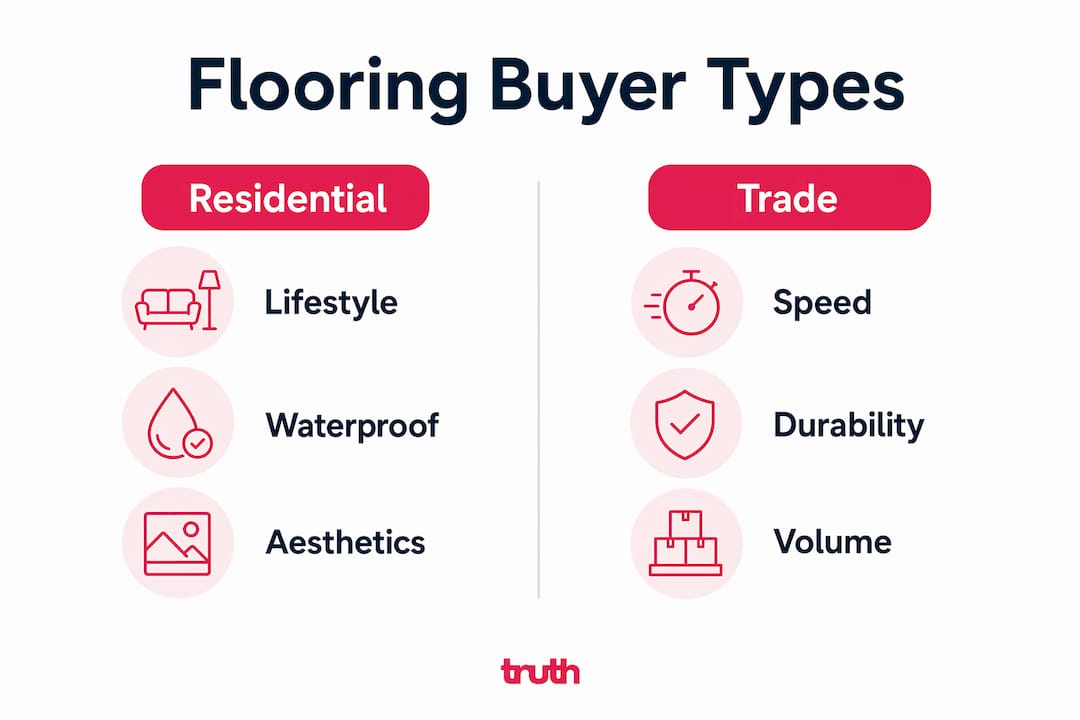
The flooring industry serves two fundamentally different buyer types. Residential homeowners make emotional, lifestyle-driven decisions. Professional contractors, remodellers, and installers make operational, efficiency-driven decisions. Marketing the same message to both groups wastes spend and dilutes relevance.

Segmentation solves this directly. It lets you match your message, channel, and offer to the specific motivations of each group. The result is higher lead quality, better conversion rates, and less wasted advertising spend.
The role of customer segmentation in flooring goes beyond simple demographics. It shapes which products you promote, which channels you invest in, and how you structure your sales process. Brands that segment well do not just market better. They build better products and stronger customer relationships.
What are the main customer segments in the flooring industry?
The flooring market splits into two primary segments: residential consumers and trade professionals. Each has distinct characteristics, buying motivations, and preferred channels.
Residential homeowners
Mohawk Industries and Bona both target homeowners aged 30–60 with household incomes above £75,000. Mohawk generates 62% of residential channel sales from this group. Bona generates 35%. This demographic makes decisions based on aesthetics, lifestyle fit, and long-term value.
Key characteristics of the residential segment:
- Age range: 30–60 years old
- Household income: above £75,000
- Buying triggers: home renovation, new build, property sale preparation
- Product preferences: waterproof, pet-friendly, and sustainable flooring options
- Primary channels: showroom visits, Google search, social media inspiration
Homeowners in this bracket increasingly prioritise waterproof, pet-friendly, and sustainable flooring. That shift in preference directly influences how you should frame product messaging and which features you lead with in ads and landing pages.
Professional contractors and installers
The trade segment is equally significant. Professional contractors and installers account for approximately 50% of total sales for major flooring retailers. This group is not browsing for inspiration. They need reliable products, fast project turnaround, and commercial credit facilities.
| Segment | Primary Motivation | Key Channel | Share of Sales |
|---|---|---|---|
| Residential Homeowners | Aesthetics, lifestyle | Showroom, Google | ~60% market share |
| Professional Contractors | Speed, reliability | Trade accounts, direct | ~50% of major retailer sales |
| Commercial Specifiers | Compliance, durability | B2B sales, specification | Growing segment |
Understanding types of flooring customers at this level of detail means you can build separate campaigns, landing pages, and offers for each group rather than blending them into one generic message.
How do behavioural and psychographic segmentation improve flooring marketing?
Demographics tell you who your customer is. Behaviour tells you where they are in their buying journey. Combining both is where flooring segmentation becomes genuinely powerful.
Effective segmentation integrates demographics with behavioural data such as project type, distribution preferences, and disruption tolerance. A homeowner mid-renovation has different needs from one in the early inspiration phase. A contractor pricing a commercial job needs different information from one fitting a domestic kitchen.
Here are the core behavioural and psychographic criteria flooring marketers should use:
- Project stage: Inspiration, specification, purchase, or post-installation maintenance
- Project type: New build, full renovation, room refresh, or repair
- Sustainability priorities: Eco-conscious buyers respond to recycled content and low-VOC messaging
- Installation preference: DIY versus professional fit influences product recommendations and upsell opportunities
- Disruption tolerance: Buyers with young families or tenants in situ need fast-fit, low-disruption products
The Tile Shop uses automated email engines triggered by buyer project stage to time messages for maximum engagement. A customer who browsed LVT samples last week gets a different email from one who requested a quote three days ago. That level of precision is only possible when you have segmented your audience by behaviour, not just demographics.
Drip marketing campaigns built around project stage segmentation consistently outperform broad broadcast campaigns. The reason is simple: relevance. When the message matches where the buyer is in their journey, they engage.
Pro Tip: Set up separate email sequences for each project stage in your CRM. Label contacts by stage at the point of enquiry and trigger the relevant sequence automatically. You will see open rates and click-throughs improve within the first month.
What are the benefits of tailoring marketing to flooring customer segments?
Segmentation is not a theoretical exercise. The benefits show up directly in your marketing performance and sales numbers.
“Flooring brands achieve higher engagement by sending targeted messages aligned with customer project stages rather than broad campaigns.” — The Tile Shop Email Automation Strategy
The concrete advantages of flooring market segmentation include:
- Higher lead quality: Targeted ads attract buyers who match your ideal customer profile, reducing time spent on low-intent enquiries
- Better conversion rates: Messaging that speaks directly to a buyer’s specific need converts at a higher rate than generic copy
- Reduced ad spend waste: Google Ads and Meta campaigns built around defined segments spend budget on the right audience, not the broadest one
- Stronger product alignment: Behavioural and channel segmentation enables better product innovation and delivery, ensuring value propositions match customer technical requirements
- Improved contractor relationships: Separating installation services from product sales builds professional trust and turns contractor channels into sales partners rather than competitors
The operational benefit for trade-focused flooring businesses is particularly underappreciated. When you segment contractors separately and market to their specific needs, such as fast-drying products and project financing, you build loyalty that drives repeat orders. Professionals require fast-drying products and project financing as standard expectations, not added extras. Segment for this and your trade sales will reflect it.
How can flooring businesses implement segmentation effectively?
Knowing the theory is one thing. Putting it into practice requires the right tools, data, and processes.
Build your data foundation
Start with what you already have. Your CRM, website analytics, and enquiry forms contain more segmentation data than most flooring businesses realise. Pull out the following:
- Customer type at point of enquiry (homeowner, contractor, commercial)
- Project type and room or space
- Product category interest (carpet, LVT, hardwood, tile)
- Geographic location for geo-targeted campaigns
- Source channel (Google Ads, organic search, referral, showroom)
Once you have this data structured, you can build audience segments in your CRM and map them to specific marketing sequences.
Separate your b2c and b2b strategies
Residential and trade customers need entirely different marketing approaches. The comparison below shows the key differences:
| Factor | Residential (B2C) | Trade Professional (B2B) |
|---|---|---|
| Primary message | Inspiration, lifestyle, aesthetics | Speed, reliability, credit terms |
| Best channel | Google Search, Instagram, showroom | Email, trade accounts, direct sales |
| Decision timeline | Days to weeks | Hours to days |
| Key objection | Price, disruption | Product availability, lead time |
| Content type | Room visuals, before/after | Technical specs, project case studies |
Use CRM and marketing automation
A CRM such as HubSpot or a flooring-specific platform lets you tag contacts by segment and trigger automated sequences based on behaviour. Connect this to your email marketing and Google Ads audiences for a joined-up approach.
AI tools are increasingly used to analyse buying patterns and predict which segment a new lead belongs to. This speeds up the segmentation process and improves accuracy over time.
Pro Tip: Add a single qualifying question to your enquiry form: “Are you a homeowner or a trade professional?” This one data point lets you route leads into the correct CRM sequence from the moment they contact you.
Segmentation is evolving faster than most flooring marketers realise
I have worked with flooring businesses across the UK for years, and the honest observation is this: most are still segmenting by product category rather than by customer type. They separate carpet from LVT in their marketing, but they send the same message to a homeowner and a contractor about both. That is not segmentation. That is product cataloguing.
The shift I am seeing in 2026 is towards behavioural layering. Businesses that started with basic demographic splits are now adding project stage, channel preference, and even disruption tolerance to their segments. The results are measurable. Open rates go up. Enquiry quality improves. Wasted ad spend drops.
The next frontier is AI-driven dynamic segmentation. Tools that automatically reassign contacts to different segments based on real-time behaviour are already available. Flooring businesses that adopt this early will have a significant advantage over those still sending monthly newsletters to their entire database.
The uncomfortable truth is that segmentation requires discipline. You have to commit to keeping your CRM clean, your segments updated, and your messaging consistent. Most businesses start well and then let it drift. The ones that maintain it see compounding returns over time.
— John
Ready to put segmentation to work for your flooring business?
At Truthdigital, we work exclusively with flooring businesses across the UK. We build the digital infrastructure that makes segmentation-driven marketing actually work, from websites that capture the right data at enquiry to Google Ads campaigns built around distinct audience segments.
Whether you need a flooring-focused website that converts both homeowners and trade professionals, or SEO for flooring that attracts the right segment through organic search, we have the tools and the track record. We also run Google Ads campaigns built specifically around flooring audience segments, so your budget reaches the buyers most likely to convert. Let’s talk about what segmentation-driven marketing can do for your business.
FAQ
What is customer segmentation in flooring marketing?
Customer segmentation in flooring is the process of dividing buyers into distinct groups based on demographics, behaviour, and project needs. It allows flooring businesses to target each group with relevant messaging, improving conversion rates and reducing wasted spend.
What are the main types of flooring customers?
The two primary segments are residential homeowners, typically aged 30–60 with higher incomes, and professional contractors or installers. A third growing segment is commercial specifiers who prioritise durability and compliance over aesthetics.
Why should flooring businesses segment residential and trade customers separately?
Residential buyers make emotional, lifestyle-driven decisions over days or weeks. Trade professionals prioritise speed, product reliability, and credit terms, often deciding within hours. Separate segmentation means separate messaging, channels, and offers for each group.
How do i start segmenting my flooring customers?
Add a qualifying question to your enquiry form to identify homeowner versus trade contacts. Then build separate CRM sequences, ad audiences, and email campaigns for each segment. Review performance monthly and refine based on conversion data.
Does segmentation improve flooring ad spend efficiency?
Segmented Google Ads campaigns target buyers who match a defined profile, which reduces irrelevant clicks and improves cost per lead. Flooring businesses using audience-specific campaigns consistently report better lead quality compared to broad, untargeted campaigns.

