TL;DR:
- Slow websites cause flooring businesses to lose potential customers, reducing engagement and revenue. Improving site speed enhances trust, search rankings, and enquiry rates, leading to better overall business performance. Regular technical optimisation and professional support are essential for maintaining fast, effective websites.
Slow websites cost flooring businesses real money. A potential customer lands on your site, waits three seconds, then clicks straight to a competitor. That enquiry is gone. In a competitive sector where shoppers compare carpet, wood flooring, and LVT options across multiple websites before picking up the phone, loading speed is not a minor technical detail. It is a direct driver of customer engagement and revenue. This article covers why speed matters, what it does to your conversion rates, how it shapes customer trust, and the practical steps you can take to fix it.
Key Takeaways
| Point | Details |
|---|---|
| First impressions count | A fast site creates immediate trust and keeps flooring customers engaged. |
| Higher conversion rates | Speedy websites consistently generate more leads and enquiries for flooring retailers. |
| Boosted search rankings | Faster loading times directly improve SEO results for UK flooring businesses. |
| Simple optimisation steps | Regular maintenance and easy upgrades can quickly enhance website speed. |
Why speed matters for flooring websites
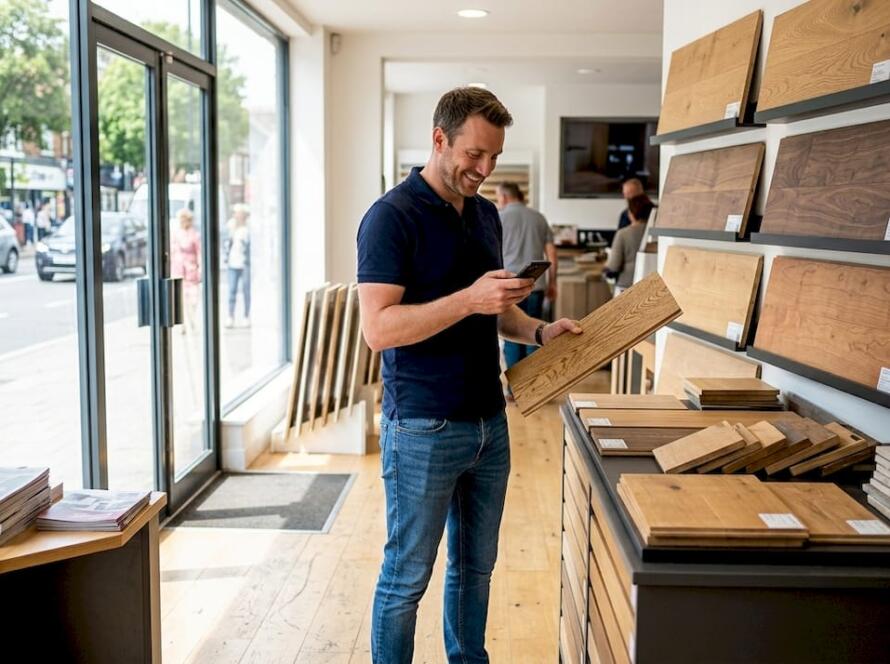
First impressions happen fast. Very fast. Research shows that 53% of mobile visits are abandoned if a page takes longer than three seconds to load. For flooring businesses, that means more than half of your mobile visitors could be leaving before they even see your product ranges.
The flooring market is visual. Customers want to browse room scenes, compare finishes, and check installation options. If your site is slow, that browsing experience never happens. They move on to someone else.
Here is what slow loading costs you directly:
- Lost first impressions before your products are even seen
- Reduced time on site, which means fewer pages viewed per visit
- Higher bounce rates that signal poor quality to search engines
- Fewer enquiry form completions
- Reduced trust in your brand before any conversation starts
Speed matters equally on desktop and mobile. Many flooring customers are searching on their phones while standing in a shop, comparing prices, or checking your reviews during a lunch break. If your desktop site is fast but your mobile version crawls, you are losing a significant portion of your audience.
“A one-second delay in page load time leads to a 7% reduction in conversions.”
— Akamai Research
Getting the basics right gives you a foundation for everything else. The flooring website essentials that drive leads all depend on a fast, stable platform underneath them. Speed is not the only factor, but without it, everything else struggles. You can also support your website performance with local business promotion strategies that feed more quality traffic to your site.
Key advantages of fast-loading flooring websites
Fast websites do not just load quickly. They perform better across almost every metric that matters to your business. Here is a breakdown of the direct advantages:

| Metric | Slow site (3+ seconds) | Fast site (under 2 seconds) |
|---|---|---|
| Bounce rate | 32% higher than average | Significantly lower |
| Conversion rate | Drops by up to 7% per second | Consistently higher |
| Google ranking | Penalised by Core Web Vitals | Rewarded in search results |
| Customer trust | Eroded before contact | Established from first visit |
| Time on site | Shorter, less engaged sessions | Longer, more product views |
The advantages compound over time. A flooring retailer with a fast site consistently outperforms a slower competitor in organic search, paid advertising quality scores, and customer satisfaction.
Key advantages in plain terms:
- Users engage longer with fast pages, which means more product browsing
- Lower bounce rates mean more visitors reach your enquiry forms
- Better Core Web Vitals (Google’s performance measures) push your pages higher in search results
- Paid ads cost less when your landing pages load quickly, because Google rewards quality
Pro Tip: Even a half-second improvement in load time can increase conversions measurably. You do not need a perfect score. You just need to be faster than your competitors.
UX improvements for flooring websites go hand in hand with speed. A fast site that is easy to navigate compounds the benefits further, keeping customers engaged and moving towards that enquiry. Similarly, understanding the website mistakes to avoid prevents you from undoing all the performance gains you work hard to achieve.
Studies show that pages loading in one second convert three times better than pages that take five seconds. For a flooring business generating 50 enquiries a month, that difference could mean doubling your lead volume without spending a single extra pound on advertising.
How site speed affects customer trust and behaviour
Trust is built quickly online. Customers make snap decisions about whether a flooring business looks credible, and your website speed is part of that judgement. A slow site signals to visitors that you are either not invested in your online presence, or that your business is disorganised. Neither helps you win enquiries.
Here is a direct comparison of how fast and slow sites affect customer behaviour:
| Customer action | Slow loading site | Fast loading site |
|---|---|---|
| First impression | Frustration and doubt | Confidence and credibility |
| Product browsing | Abandons early | Browses multiple product pages |
| Enquiry form | Rarely reaches it | More likely to complete it |
| Return visits | Unlikely | More probable |
| Recommendation | Negative word of mouth | Positive experience shared |
The psychology here is straightforward. People associate speed with competence. When your flooring website loads instantly, visitors assume you run a professional, reliable operation. That assumption carries through to the enquiry.
Steps to build trust through speed improvements:
- Audit your current load time using Google PageSpeed Insights and note your score on both mobile and desktop.
- Prioritise mobile performance first, since most flooring searches now happen on mobile devices.
- Ensure your homepage loads critical content, such as your product categories and contact details, before any decorative elements.
- Test your site from multiple locations and devices to identify inconsistencies.
- Reduce the number of third-party scripts loading on your pages, as these are a common cause of slowdowns.
“Consumers form an opinion about your website in 0.05 seconds. Speed is part of that first impression.”
— Google UX Research
When you think about your flooring website redesign tips, speed should be a non-negotiable requirement in the brief. A beautiful site that loads slowly will not convert. Additionally, improving photo galleries is a practical area where many flooring sites slow down. High-resolution images of your flooring products are essential, but unoptimised images are one of the most common causes of poor load times.
Conversion rates and enquiries: the real impact of speed
Speed is not just a technical talking point. It has a direct, measurable effect on the number of enquiries your flooring website generates. This is where the business case becomes impossible to ignore.
Consider the customer journey on a typical flooring website. A visitor searches for “engineered oak flooring London,” clicks your result, and arrives on your product page. Every second they wait increases the chance they leave. If they stay, they might browse your gallery, check your prices, look at your installation service, and eventually reach your contact form. At every point in that journey, speed either supports or undermines the experience.
Key ways speed drives more enquiries:
- Faster pages reduce friction at every stage of the customer journey
- Quicker load times keep customers in a positive mindset, which makes them more likely to enquire
- Fast contact pages and enquiry forms reduce drop-off at the final conversion step
- Better Google rankings from speed improvements bring in higher volumes of relevant traffic
Pro Tip: Test your enquiry form page specifically. Many flooring websites have fast homepages but slow contact pages loaded with tracking scripts. That final hurdle slows conversions just when you have the customer ready to act.
A/B testing is a practical method to measure how speed improvements affect your specific enquiry rates. Run a test on a faster version of a key page against your current version. The data will show you the real impact in terms your team will respond to.
Research from Google confirms that mobile conversion rates increase significantly as load times drop below three seconds. For flooring businesses competing in local search, where a few positions on Google can mean the difference between a busy and a quiet week, this is a serious commercial advantage.
The impact also extends beyond organic traffic. If you are running Google Ads for carpets, wood flooring, or LVT, your Quality Score is influenced by landing page experience. A fast, relevant page earns a better Quality Score, which lowers your cost-per-click and improves your ad position. Speed therefore saves you money on paid campaigns as well as generating more organic enquiries.
How to optimise your flooring website for speed
Knowing why speed matters is one thing. Doing something about it is another. Here are the proven steps flooring businesses can take to improve site performance.
-
Optimise all images before uploading them. Use formats like WebP, compress files without losing visible quality, and set appropriate dimensions so images are not resized by the browser.
-
Choose a fast, reliable hosting provider. Shared hosting plans are often cheap but overcrowded. A managed hosting solution built for performance will make a noticeable difference to load times, particularly during peak browsing hours.
-
Enable browser caching and compression. These technical settings allow repeat visitors to load your site faster and reduce the amount of data transferred on each visit.
-
Minimise the number of plugins and third-party scripts running on your site. Each one adds loading time. Audit them regularly and remove anything that does not serve a direct purpose.
-
Use a content delivery network (CDN). A CDN stores copies of your site on servers across multiple locations, so visitors receive content from a server close to them rather than one in a distant location.
-
Regularly test your site speed using tools like Google PageSpeed Insights, GTmetrix, and Pingdom. Each tool provides specific, actionable recommendations.
-
Check your site regularly for issues through proper website maintenance. Speed can degrade over time as plugins update, new content is added, and site complexity grows.
If you are noticing signs you need an update, slow loading is often one of the clearest indicators that your site needs professional attention. Clear website structure advice can also help, since a logical site architecture reduces the number of resources needed to serve each page.
If your in-house team does not have the technical skills to address these issues, outsourcing to a specialist is a sensible investment. The return from better performance will far outweigh the cost of professional support.
What most flooring businesses overlook about site speed
Here is the insight we see repeatedly when working with flooring retailers and manufacturers. Most invest in how their site looks. Very few invest in how it performs.
A new site design with beautiful room scenes and polished photography is a worthwhile investment. But if those images are not optimised, if the hosting is standard shared infrastructure, and if no one is monitoring page speed on an ongoing basis, that attractive site will underperform. Often, the business owner does not know this is happening because no one is checking the data.
Speed also has a significant and underappreciated effect on local SEO. When customers search for flooring in your area, Google’s algorithm weighs site performance as part of its ranking decision. A faster site that covers onsite SEO for flooring properly will outrank a slower competitor even when other factors are equal. Local search visibility is one of the most valuable digital assets a flooring business can build, and speed is foundational to it.
The competitive angle is worth highlighting. Many independent flooring retailers and manufacturers are competing against national chains with large marketing budgets. A fast, well-optimised website is one area where a focused independent business can genuinely compete and win. A national chain with a bloated website loaded with scripts and features will lose to a nimble local site that loads in under two seconds.
Speed should not be a one-time project. It should be a standing priority. Review it quarterly, build it into every new feature you add to your site, and make it part of the conversation when you commission any new development work.
Take your flooring website performance to the next level
If this article has highlighted gaps in your current site, you are not alone. Most flooring websites we review have significant speed improvements available. And those improvements translate directly into more enquiries, better rankings, and stronger customer trust.
At Truth Digital, we build and manage websites specifically for flooring retailers and manufacturers across the UK. Our website development for flooring service is focused on performance from the ground up, with clean code, optimised images, and a build process designed to hit strong Core Web Vitals scores. We also offer fast web hosting tailored for flooring businesses, so your site runs reliably and quickly without you having to manage the technical side. If you are ready to turn your website into a consistent source of enquiries, let’s talk.
Frequently asked questions
How fast should a flooring website load to maximise enquiries?
A flooring website should load in under three seconds to maximise customer engagement and enquiry rates, with under two seconds being the ideal target for competitive local markets.
Does site speed affect search engine rankings for flooring businesses?
Yes, site speed is a confirmed Google ranking factor through its Core Web Vitals system, and faster flooring websites consistently achieve better positions in local and national search results.
What are the best tools for checking my flooring website speed?
Google PageSpeed Insights, GTmetrix, and Pingdom are the most widely used tools, each providing specific, actionable recommendations to improve load times and overall performance.
Will optimising images make a noticeable impact on site speed?
Yes, image optimisation is one of the single biggest gains available, particularly for flooring websites that rely on high-quality product and room scene photography to engage customers.